Personalised medicine?
'How do you treat the HIV-positive, diabetic, schizophrenic patient presenting with chest pain? By making the necessary information available for personalised medicine'

'How do you treat the HIV-positive, diabetic, schizophrenic patient presenting with chest pain? By making the necessary information available for personalised medicine'

Agfa HealthCare presents its entire Computed Radiography (CR) solutions range at ECR 2008 in Vienna. From desktop and compact solutions to groundbreaking Computed Radiography systems that fill the gap between CR and DR (Direct Radiography), the company is able to offer its customers the right solution for every facility of any size.

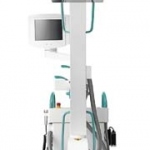
A new volumetric X-ray application, showcased at the European Congress of Radiology in Vienna, Austria, provides physicians with multiple high-resolution slice images of the human anatomy, including the chest, abdomen, extemities and spine.
Bayer Schering Pharma presented the latest data from a health-economic evaluation of Primovist in the diagnosis of liver metastases. The results indicate that MRI using the liver-cell-specific contrast medium can lead to cost savings due to improved surgical treatment planning and less need for changes during operations.

Over the last three decades CT has become a premier diagnostic tool for the evaluation of the acute patient. Over the past ten years in Israel, we have seen an overwhelming increase in the volume of CT examinations in the emergency department (ED).

The Virtual Physiological Human By Hans-Ulrich Kauczor MD PhD, Director and Chairman of Radiology at Heidleburg University Clinic, and radiologists Frederik Giesel MD MBA and Hendrik von Tengg-Kobligk MD of the German Cancer Research Centre in Heidleburg, Germany.

The Visage Thin Client product range on show at the ECR provides a fully-integrated system with advanced tools for 2-D, 3-D, and 4-D image review and interpretation, post-processing, data management, and image distribution.

For individualised radiotherapy, high-precision delineation and characterisation of the tumour is critical. If highest radiation doses are delivered in a targeted fashion, the chance of tumour cell kill increases and tumour control probability is enhanced.

Molecular imaging aims at the in vivo quantitative visualisation of molecules and molecular events that occur at cellular level. The potential towards clinical translation is huge, because the same modalities used in medical imaging are used in molecular imaging investigations.

By Professor Robert D Speller, Head of the Radiation Physics Group, University College London, and Dr Alessandro Olivo, of the Medical Physics & Bioengineering Dept. University College London

Healthcare is in a dynamic state of change — and so is the healthcare industry, in which there is an increasing trend towards integrating scientific disciplines.

The Uliazpi Foundation in Spain, which studies and cares for severely mentally retarded patients, carried out an interesting study to identify bone mineral density values in a group of its patients, compare these with the general population and investigate the possible influence on these values on certain clinical variables and therapeutic regimens.

Professor Rémy-Jardin MD PhD heads the Department of Radiology and is Chairman of the Department of Thoracic Imaging at the Calmette Hospital, University Centre of Lille. She is also Professor of Radiology in Lille University's Medical Faculty.

In the course of the `Interreg III´ Italian-Albanian collaborative project, which is financed by the European Union and the Italian Apulia region, an Albanian screening programme for breast and cervical tumours will be established. The initiative aims at improving the public health system of Albania, regarding the training and the technical equipment needed for such screening projects.

Advanced Research Technologies Inc. ("ART") announced the first sale of SoftScan® optical breast imaging system to the Sunnybrook Health Sciences Centre ('Sunnybrook") in Toronto, Canada. Sunnybrook is the first health centre to purchase a SoftScan imaging system since the Canadian company received regulatory approval for commercialization in Europe and Canada for its optical breast imaging…

Evolving from an award-winning project carried out by undergraduates of the Technion-Israel Institute of Technology, Israel's leading University for science and technology, a new non-invasive device for detecting early stage respiratory irregularities is momentarily in development. The novel respiration monitor is intended to immediately detect deterioration in lung ventilation of ICU patients.

GE Healthcare recently acquired Image Diagnost International GmbH, an IT provider specialised on developing integrated software solutions for mammography workflow and image processing. With this acquisition GE Healthcare expands its capabilities in offering clinicians and national screening services an even more expanded portfolio for the detection of breast cancer.

Brenda Marsh reports on the country's flourishing and expanding breast screening programme

Siemens Medical Solutions, which launched Ysio wi-D - its first digital X-ray unit equipped with a wireless detector - at Medica, said it combines all the advantages of digital X-ray imaging with the flexibility of an X-ray film cassette.
Sweden — Sectra, which develops IT systems and products for radiology, mammography and orthopaedic surgery, has announced an agreement with Swedish research firm Synthetic MR AB, developer of analysis and imaging methods for synthetic magnetic resonance, for its new software-based technology to be offered as a clinical application in Sectra's PACS for radiology.
Stereoscopic digital mammography, a new diagnostic technique capable of producing three-dimensional (3-D) in-depth views of breast tissue, could significantly reduce the number of women who are recalled for additional tests following routine screening mammography.
EH correspondent H-C Pruszinsky reports

USA - MRI is playing an increasingly important role in breast cancer screening in the US, especially in the screening of high risk patients. It has proven to be more sensitive than mammography examinations, but is less accurate in the differentiation between benign and malignant lesions.

Radiologists frequently have limited time when examining mammography images, especially under screening conditions. In addition to their training and experience, the computer can offer beneficial support in the detection of breast cancer, due to special Computer Aided Detection (CAD) software solutions
by Dr Feldkamp, Duisburg, Germany. Russian article