


The Gamma Knife goes to work in Paris
A major public hospital has become the first in Paris to be equipped with a Gamma Knife, the device that enables the surgeon to operate on the brain with no blade or blood involved.

A major public hospital has become the first in Paris to be equipped with a Gamma Knife, the device that enables the surgeon to operate on the brain with no blade or blood involved.
On average, European countries possess 17 MRI machines per one million people. With only 9.4 MRI machines per million people, France ranks between Portugal and Turkey, putting it among the least well-equipped in Europe, according to the Société Française de Radiologie.

How low? During the GE Healthcare Lunch Symposium of GE Healthcare at this year’s ECR in Vienna, Michael Maher, Professor of Radiology at the University College, Cork, provided an answer: 1.2 millisievert – at least for abdominal CT scans in patients with Crohn’s disease.

HI-RTE allows the assessment and real-time colour display of tissue elasticity. The current generation ultrasound modality has proven applications in breast, prostate, thyroid and pancreatic disease and where diagnostic biopsy is indicated, HI-RTE allows more accurate localization and targeting of lesions.
Medison and Samsung Electronics have come together and announced a new corporate identity for the healthcare business of Samsung – Samsung Medison. The combined company, built from Korea’s leading diagnostic ultrasound equipment and one of the world’s largest and most technologically-advanced electronics and consumer goods companies, has set out its vision of transforming itself into a…

Every medical congress is an opportunity for the manufacturers to showcase their products. This year’s congress of the German Röntgen Society was no exception -- and one innovation particularly caught the attention of our European Hospital team: positron emission mammography, PEM for short.

No imaging modality is infallible -- not even mammography, the golden standard for early detection of breast cancer. Particularly in women with dense breast tissue, the diagnostic quality of conventional mammography frequently suffers in terms of sensitivity and specificity. However, the evolution of digital systems has produced technologies that optimise sensitivity as well as specificity and…
Dr Bill Svensson believes that elastography has the potential to improve diagnosis of breast cancer, reduce the number of false positives in the detection of the condition and also lead to fewer biopsies performed as accuracy of imaging improves further. This June he highlighted the potential of elastography and the developments in the imaging modality at two sessions at the United Kingdom…

Researchers the world over are advancing positron emission tomography (PET) as an effective method of early detection for Alzheimer’s disease, a currently incurable and deadly neurological disorder. Three studies presented at SNM’s 58th Annual Meeting are providing new insights into the development of Alzheimer’s disease while opening the door to future clinical screening and treatments.
Research introduced at SNM’s 58th Annual Meeting may lead to much-needed cardiovascular disease screening for diabetic patients at risk of ischemic heart disease, a disorder marked by significantly reduced blood flow in the heart. Ischemia of the myocardium, or cardiac muscle, can signal diminished oxygenation of the heart tissue and trigger a heart attack if left untreated.

Although the overall rates of childhood tuberculosis (TB) are decreasing in the European Union (EU) and the European Economic Area (EEA), childhood TB is actually rising in certain countries.

Although powerful, new, targeted treatments are regularly introduced to cancer clinics, choices for the first-line treatment of invasive breast cancer normally lie between preventive surgery and chemotherapy. A recent American study used genomic prediction combining multiple signatures to determine outcomes to standard chemotherapy.

Bypass surgery figures declined again in 2010. Reason: Most coronary heart disease (CHD) patients are being treated by removal of the obstruction followed by stent implantation -- a situation criticised by Professor Jochen Cremer, first Vice President of the DGTHG (German Society for Thoracic and Cardiovascular Surgery).
Biomarkers – mainly defined as surrogates serving as indicators for specific biological states – play an ever-increasing role in neuroscience and especially in the management of multiple sclerosis, scientists reported today at the 21st Meeting of the European Neurological Society (ENS) in Lisbon. In analyzing gene expression patterns, immunological changes and imaging abnormalities,…

Hitachi Medical Corporation is delighted to announce that its HI VISION Avius ultrasound platform has been selected as a recipient of the iF product design award 2011 and is proud to now carry the iF design quality label.

Shimadzu, world-wide manufacturer of diagnostic imaging equipment, has introduced the first wireless flat-panel detector (FPD) for its mobile, fully digital X-ray system MobileDaRt Evolution. This new CXDI-70C detector generation is the next evolutionary step for mobile X-ray applications.

CardioFocus, Inc., developer of the Endoscopic Ablation System for the transcatheter treatment of Atrial Fibrillation (AF), convened international leaders in electrophysiology to discuss the advantages of direct optical visualization to guide catheter ablation for the treatment of paroxysmal AF.

ENCITE experts are very pleased to meet the imaging community at the European Molecular Imaging Meeting (EMIM) 2011 in Leiden/NL. The congress brings together top European scientists from various disciplines working in diverse fields of molecular imaging to discuss latest research discoveries and possible translations into medical practice.

Scientists of the Charité – Universitätsmedizin Berlin and the Max-Delbrück-Center for Molecular Medicine (MDC) Berlin-Buch have developed a highly efficient approach for imaging the beating human heart. The images produced in one of the world's most powerful MRI systems whose power is equivalent to 150.000 times the earth’s magnetic field are of a much higher detail than cardiac images…

This March, Heinz-Dieter Hilgers arrived for his once-monthly check-up at Ruhrlandklinik in Essen. Last June, his situation was far less relaxed. Suffering chronic obstructive pulmonary disease (COPD) for almost two years, he had been listed for a lung transplant since April 2009. During his wait for an organ, his illness increased.

Neurocardiology – especially atrial fibrillation (AF) – was the key topic during a press conference held during the 55th Annual Congress of the Germany Society for Clinical Neurophysiology and Functional Imaging (DGKN) this March. For good reason: Worldwide, there are around six million AF sufferers -- and it is one of the most common causes of stroke because this cardiac irregularity can…
Philips and Corindus Inc. today announced an alliance agreement to add Corindus’ robotic-assisted system for the minimally invasive treatment of obstructed coronary arteries (also known as percutaneous coronary interventions) to Philips’ interventional cardiology solutions.

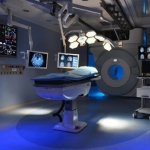
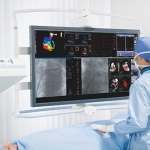
State-of-the-art operating theatres are shifting from X-rays to the display of images on monitors. The variety of different picture sources is also increasing, ranging from boom and endoscopy cameras to C-arms or PACS (Picture Archiving and Communication) systems. Thus the trend is to use an image management system to display the various surgical images on just one monitor.

Stroke, breast cancer detection, sports medicine – the clinical programme is an impressive illustration of this year’s congress theme: Radiology is diversity. Florian Schneider asked the joint congress Presidents, Professor Bernd Hamm (Berlin) and Professor Walter Hruby (Vienna) to highlight the major topics at this, the largest medical imaging event (attendance around 7,000) in the…

Delegates at the UKRC 2011 will examine who should deliver 21st century imaging services in the UK, when the relationship between radiologists and radiographers will be the focus of a keynote debate. The session ‘This house believes that radiologists have given up enough of their professional role to radiographers’ will also see delegates vote on this issue.