Lab automation
The Netherlands - Automating a laboratory is a very individual process with varying demands and needs. In most cases, the new systems have to be matched with existing instrumentation.



The Netherlands - Automating a laboratory is a very individual process with varying demands and needs. In most cases, the new systems have to be matched with existing instrumentation.
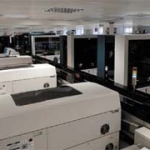
Barcelona, Spain - The Hospital Clinic is a tertiary level University Hospital that provides a broad range of services, from basic healthcare coverage to 550,000 people, to academic and advanced research activities. Hospital Clinic is a leading institution in certain pathologies, being the reference for Spain in different areas.
Boston Scientific Corporation has announced results from a pooled analysis of patients from its TAXUS IV and TAXUS V randomised clinical trials to compare the safety and efficacy of the TAXUS Express Paclitaxel-Eluting Coronary Stent System in diabetic versus non-diabetic patients.
Three types of human heart cells have been grown from cultures derived from embryonic stem cells, by a team of Canadian, US and UK scientists.
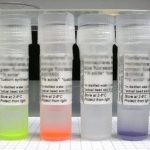
The recent marketing of "at home" genomic tests for disease risk may be premature, according to Dr. Kenneth Offit, MD, MPH, Chief of the Clinical Genetics Service at Memorial Sloan-Kettering Cancer Center (MSKCC). "Health professionals are now faced with the prospect of their patients coming to the office, a DNA profile in hand, asking for preventative management tailored to their…
The complete takeover of hospital laboratories through private laboratory service providers is rapidly changing the nature of German laboratories. Taking a closer look at these developments, it becomes apparent that several trends are developing.
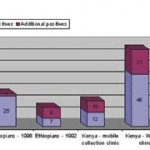
By Tamar Jehuda-Cohen PhD, Biomedical Engineering Department, Technion Institute of Technology, Haifa, Israel
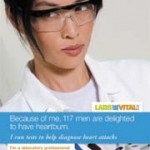
Labs are Vital is a global initiative managed in the United Kingdom by a steering group that includes the Royal College of Pathologists, Association of Clinical Pathologists, Association for Clinical Biochemistry, Institute of Biomedical Science, British In Vitro Diagnostics Association and Abbott Diagnostics.

Automating a clinical laboratory is complicated and expensive.

99.9% of our DNA is shared with all other humans. Only about 0.1% of our DNA makes us individual
In partnership with European Hospital, DNA Art UK will supply the winner with a 90 x 60cm canvas of his or her own DNA, in a colour selected from a choice of nine (or in customised hues)
During the formal launch ceremony in Brussels, Belgium, representatives of the European Commission acknowledged Lab Tests Online as a valuable patient-centered website, providing health information that meets the highest quality standards. Approximately 1.5 million users visit the non-commercial, peer-reviewed website each month to access accurate, reliable and easy to understand information…
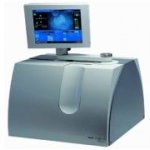
Recently in February, Leica Microsystems, Wetzlar, Germany, acquired Bal-Tec AG, Liechtenstein-based manufacturer of optical instruments. This transaction will allow Leica to expand its product portfolio for EM (electron microscopy) specimen preparation significantly.

Type 2 diabetes poses one of the greatest public health threats of the 21st century. The majority of the western world is in the grips of a diabetes epidemic driven by type 2 diabetes that goes hand in hand with the escalating incidence of obesity. Alarmingly, in some working class and poor communities, the disease is so prevalent that its victims almost take it as a matter of course.
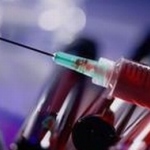
A new test, developed at the University of Leeds, searches for a heart-type fatty acid-binding protein (H-FABP) which is released into the circulation following heart injury. The test seems to be more accurate in identifying patients with heart damage at an earlier course of their illness.

The first Czech test-tube baby was born, woman in childbed delivered smoothly on 4th November 1982, and healthy baby-boy was 51 cm tall, and weighed 3.65 kg. A medical team from Moravian town of Brno led by embryologist Milan Dvorak and gynecologist Ladislav Pilka was behind all this happy-ended artificial fertilization quarter a century ago.
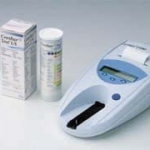
Roche's product portfolio includes three systems for urinary diagnostics, all of which use the proven Combur test strips.

The project “Clean Hands” is Germany's contribution to the WHO initiative “Clean care is safe care”. “Clean Hands” aims at improving hand hygiene in German hospitals in order to significantly reduce nosocomial infections.
Europe's biggest microscopy, imaging and analysis event
Rising costs, budgets and regulatory requirements have shaken up all medical areas except one — laboratory medicine. Now the wind has changed direction, affecting in-house labs, lab service providers and even manufacturers of related tools, as Daniela Zimmermann discovered during a meeting with Thomas Pracht, Managing Director of Olympus Life Science Europa GmbH.
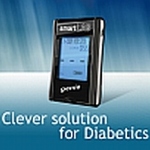
Heidelberger-Medical-Marketing GmbH (HMM) presented the first CE-Certified and EU-Registered blood glucose meter for self-monitoring with Bluetooth technology, the smartLABgenie at Medica on Wednesday.
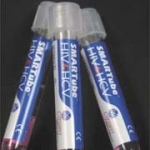
SMARTube technology enables super-stimulation of lymphocytes, which leads to enhanced production of antibodies in vitro. This enables better and earlier detection of infections.
Opening up new dimensions in ergonomics and mobility — in close cooperation with leading neurosurgeons, Leica designed a new swivel arm for its M525 OH4 surgical microscope that offers 36% more reach than comparable instruments.
The DCA Vantage Analyser from Siemens Medical Solutions Diagnostics is a user-friendly, point-of-care (POC) patient management platform for diabetes.

Omega-3 may protect children at high risk of developing type 1 diabetes, according to a study published in the Journal of the American Medical Association.