News • Smart Platforms
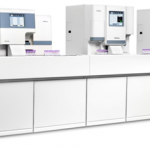
Mindray: A solution for high efficient labs
Mindray is delighted to present you its latest innovations.



Mindray is delighted to present you its latest innovations.

ELITechGroup Molecular Diagnostics and Precision System Science, Co., Ltd (PSS), a leading global provider of laboratory instruments for nucleic acid extraction, jointly announced the upcoming CE-IVD marking of ELITe InGenius for IVD applications in Europe and the upcoming availability of the instrument as Laboratory Use Equipment in the US.

Did you know that we offer around 1200 features on laboratory medicine? No? Then you might want to browse through our compilation of interesting articles on pathology, chemistry or management and many more.

During the past 15 years, liquid chromatography tandem mass spectrometry (LC-MS/MS) has evolved into a vital technology used to perform routine tests in many clinical laboratories. Historically, LC-MS/MS had been used primarily by research, pharmaceutical, or commercial laboratories; however, advances in the technology, decreasing costs for basic systems, intelligible software, an increased…
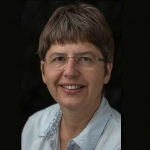
The field is neither tedious nor monotonous; it’s fascinating every day, Professor Katharina Rentsch emphasises, when explaining the need to attract students to this often overlooked but intreguing and varied discipline.
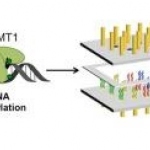
Chemists at Caltech have developed a new sensitive technique capable of detecting colorectal cancer in tissue samples—a method that could one day be used in clinical settings for the early diagnosis of colorectal cancer.
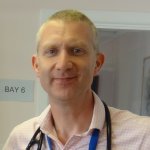
A growing number of clinical tests are being delivered in community hospitals with more patients receiving quicker, accurate diagnoses closer to home, without stays in acute hospital beds. Professor Daniel Lasserson, an Associate Professor in the Nuffield Department of Primary Care Health Sciences at Oxford University, shares the opinion that using point-of-caretesting (POCT) to facilitate high…
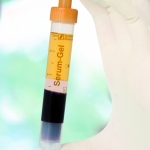
Blood sampling via intravenous catheters frequently occurs because patients in intensive care already have intravenous catheters in place, and patients admitted to accident and emergency units are immediately set up with intravenous catheters – providing easy access to blood.

Bringing liquid chromatography and tandem mass spectrometry (LC-MS/MS) testing into clinical laboratories has been a slow process but continues to show promise to help improve patient care. The medical device industry is on the edge of fundamental breakthroughs that can help drive the adoption into more mainstream clinical laboratories. We recently sat down with Dr Bori Shushan, Mass Spectrometry…
When trialled in Swansea, Wales, Matrix Assisted Laser Desorption Ionisation – Time of Flight (MALDI-TOF) demonstrated sufficient advantages over conventional methods to be introduced into routine practice.
Since 2009, as part of diagnostic and antimicrobial stewardship strategies, Hampshire Hospitals National Health Service (NHS) Trust has used serum procalcitonin (PCT) – an innovative and highly specific marker to diagnose clinically relevant bacterial infections and sepsis. Report: Mark Nicholls
This article discusses examples of applications of genetic analyses in coagulation disorders and haematological and oncological diseases. Professor Christine Mannhalter highlights the impact changes have on the occurrence and severity of diseases and their influence on therapy response. Report: Christine Mannhalter
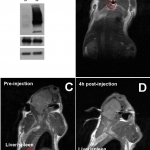
Scientists in the UK have designed a new self-assembling nanoparticle that targets tumours and could lead to quicker diagnosis of cancer. Researchers at Imperial College London report that a new self-assembling nanoparticle can adhere to cancer cells, thus making them visible in MRI scans and possibly eliminate the need for invasive tissue biopsies. Report: Mark Nicholls
Looking back, the founding fathers of laboratory medicine were doctors who carried out the historic medical practice of uroscopy in the Middle Ages, explains Professor Klaus Kohse MD, Director of the Institute for Laboratory Medicine in Oldenburg Clinical Centre at Oldenburg University Medical Faculty. Report: Walter Depner

They are not such strange bedfellows, say Walter Depner (Frankfurt) and Professor Norbert Gässler (Hildesheim), who find themselves ‘kissed by the European lab muse’ and were prompted to ask: What links literature and laboratory medicine at a European level? Commentary: Walter Depner, Prof. Norbert Gässler

Managing physicians’ test requests is a key ingredient of modern lab management. However, doctors and nurses still do not provide the clinical reasons for orders to all labs.
‘All human body cells contain the same DNA, but every type of cell – for example a muscle cell compared to that of a nerve – has a different gene expression pattern’, said Dr Sonja Stadler, speaking at the 2012 congress of DGKL (German Society for Clinical Chemistry).
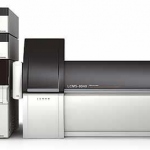
‘Mass spectrometry has developed into a successful routine procedure,’ according to Dr Christoph Seger (Univ. Doz.), technical head of the Mass Spectrometry and Chromatography division at the Central Institute of Medical and Chemical Laboratory Diagnostics, Innsbruck University Hospital, Austria.
The Poole Hospital NHS Foundation Trust has become the first site, worldwide, to evaluate the full serum work area (SWA) capabilities of the cobas 8000 high throughput clinical analyser.
Clinical chemistry has evolved far beyond its beginnings of blood and urine analysis. Advanced techniques such as enzyme measurement, electrophoresis, and immunoassays have made their impact on the field, expanding its diagnostic capabilities. Keep reading for advances in automation and clinical chemistry applications for toxicology, urinalysis and much more.
The medical laboratory is a supporting pillar of modern healthcare. Laboratory findings with analyses of blood, urine and other body fluids provide valuable insights from infection diagnostics and innovative screening procedures to therapy monitoring. Here you will find information on sample management, pre- and postanalytics, clinical chemistry, haematology and much more.

