

Radiation protection

Photo

The Perfect Partnership

The Ultimax with image intensifier and CCD camera technology is already well established as a premium multipurpose digital imaging and interventional system. The additional DynaDirect FPD technology with its exceptional high-resolution performance simply makes the Ultimax the most advanced high performance multipurpose digital imaging system available. The combination of the Ultimax and…
Photo

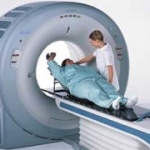
Methods and Results of Radiation Exposure Reduction Using Multislice CT

The number of CT examinations undertaken over the past few years has increased remarkably worldwide due to the new diagnostic possibilities afforded by multislice computer tomography (MSCT). As the new technology is gaining ground, many researchers and radiologists are looking for ways to reduce patient radiation exposure. In 2001, Giacomuzzi et al.1 of Innsbruck reported an up to 2.6-fold…

Photo

Advancing Pediatric Imaging with 16-Slice CT

Pediatric imaging presents many unique and difficult challenges to the radiologist. Correct and rapid diagnosis is extremely important in pediatric imaging and to that end we constantly strive for tests that offer more information, accuracy and versatility. However, it is also our duty to provide tests that are safe and minimise exposure to ionizing radiation. In recent months there has been…

Photo

Optimization and Reduction of CT Radiation Exposure

The exposure of patients to radiation by computed tomography has been widely discussed in recent years, both by professionals and by the public. The essential reason for optimizing patient exposure is the basic desire to keep radiation dose at the lowest possible level. This requires above all organ-specific and patient-specific adjustment of the radiation exposure in order to achieve uniform…

Photo

Robust CT Protocols for Pediatric Cardiovascular Examinations

Pediatric cardiovascular disorders are extremely complex in nature and present with a widely variable array of abnormal anatomy. Imaging these disorders presents a unique set of challenges for the cardiovascular team. Complex anatomical variations require detailed volumetric image interpretation with high spatial and temporal resolution. In addition, the patients are invariably young. They may…

Subscribe to Newsletter