


Capturing the pulse of Medica
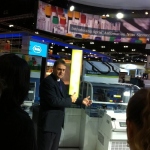
How healthy are Medica attendees? In Hall 9, Welch Allyn is capturing and documenting vital signs using its Connex vital signs system to find out.

How healthy are Medica attendees? In Hall 9, Welch Allyn is capturing and documenting vital signs using its Connex vital signs system to find out.

European doctors and scientists are working on the StrokeBack project, a medical system aimed at supporting stroke patients in their rehabilitation. Modern technology helps affected patients to practise their mobility at home.

Unstructured workflow’ sounds like a contradiction in terms. Yet, this fresh approach for gathering individual patient records in the Veneto region of Italy is being rapidly adopted across Europe to improve care.

The new European network for exchanging medical records between countries is proving to be robust and reliable. But, it would not be Europe if someone didn’t shake it all up,’ says John Brosky.

We are used to barcode scanning in supermarkets, our luggage being barcode tagged at airports and much else, yet in healthcare the use of Automatic Identification Data Capture (AI DC) technology – such as barcodes or Radio Frequency Identification (RFI D), is still rather rare, says Christian Hay of GS1* Switzerland.

For many years, MEDICA, the world’s largest medical trade fair, has devoted a special section to healthcare information technology. In an EH interview, Horst Giesen, Project Director of MEDICA, COMPAMED and REHACARE, spoke of the valuable insight into current medical IT that is offered to exhibition visitors
Petabytes of data on each patient will become the foundation of future diagnostics and therapy. Genetics, imaging and environmental information – toxins, lifestyle – will deliver a precise picture of the individual, allowing for diagnostic precision and targeted treatments.

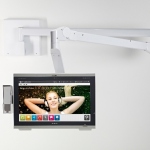
Healthcare imaging specialist Barco announces the launch of the JAO ST-185B, the first of a new generation of JAO Smart Terminals for installation at the patient’s bedside.

It seems medical records are too serious to be left to patients. Across hundreds of European e-health projects, the heavy spending in health information technology goes to building an electronic health record (EHR) that can be shared among health professionals.
European doctors and scientists are working on the StrokeBack project, a medical system aimed at supporting stroke patients in their rehabilitation.

Petabytes of data on each patient will become the foundation of future diagnostics and therapy.

We are used to barcode scanning in supermarkets, our luggage being barcode tagged at airports and much else, Yet in healthcare the use of Automatic Identify cation Data Capture (AIDC) technology – such as barcodes or Radio Frequency Identify cation (RFID), is still rather rare, says Christian Hay of GS1* Switzerland.

The Pathology Informatics Summit last October in Chicago showed that fast-moving trends are reshaping how clinical laboratories and pathology groups use information technology, in particular laboratory information systems (LIS), to deliver more value to physicians and patients.

If technological innovation, interoperability and quality of information is your purpose, Pisa was the place to be in August.

The recent Swiss eHealth Summit, a Healthcare Information and Management Systems Society (HIMSS) event supported by key organisations, drew 600 leaders from hospitals, policymaking and the industry. Among the key topics: how IT enables access to information in a mobile environment, referred to by speaker Uwe Buddrus as mHealth.

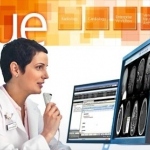
Carestream will demonstrate top of the edge technologie and launches digital breast tomosynthesis module for its Vue Mammo Workstation on booth 2636 in Chicago.

As other countries tumble by the wayside, Austria bravely battles on.

Siemens platform provides tracking, biochemistry, haematology, serology and coagulation services in a single automated laboratory solution

For many years, MEDICA, the world’s largest medical trade fair, has devoted a special section to healthcare-information technology. In an EH interview, Horst Giesen, Project Director of MEDICA, COMPAMED and REHACARE, spoke of the valuable insight into current medical IT that is offered to exhibition visitors.

Over the last few decades healthcare costs have been skyrocketing, something often discussed on this blog as it has become a considerable problem for many different countries.

The infectious disease diagnostics market is driven by unprecedented outbreaks of infections and rising awareness of people and policy makers towards the vital use of diagnostic tools to control widespread outbreaks.

Medica Media has done a good job. For years, the section in the world’s largest international medical trade fair has provided a meeting place for representatives from medical care, research and manufacturing organisations.

During the annual American Association of Clinical Chemists (AAMC) convention and meeting held in July, the giants in the field of medical chemistry, including Siemens, Roche, IL/Werfen, Beckman Coulter, and Abbott, had a huge presence at the trade show, which filled two halls and packed in a hefty crowd. Jacquie Michels reports from Los Angeles, California.

Roche’s new information system aims to tackle the complexity and variability of clinical processes within and beyond laboratories.

The storage and retrieval of an ever increasing volume of imaging data is raising hospital IT managers’ interest in sharing computing resources via the Internet, thus saving on storage space, hardware and software costs and concerns over data security. Mark Nicholls spoke with Saskia Groeneveld, Carestream’s Regional Marketing Manager (Healthcare Information Solutions), about the company’s…