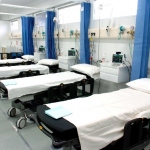
Mobile surgery firm steers towards Italy
Having secured significant contracts with hospitals in Sweden and the Netherlands, the UK-based mobile surgical services firm Vanguard Healthcare aims for further expansion in Europe. Mark Nicholls reports



Having secured significant contracts with hospitals in Sweden and the Netherlands, the UK-based mobile surgical services firm Vanguard Healthcare aims for further expansion in Europe. Mark Nicholls reports

Point of care technologies (POCT) have an important, quality enhancing, risk-reducing and cost-impacting role within the extremely time-critical medical decision structures of a central Accident and Emergency department, says Professor Wilfried von Eiff, Centre for Hospital Management, University of Muenster, Germany.
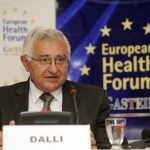
Participants at European Health Forum Gastein 2011 (EHFG) agreed: the tendency in Germany and Austria is to operate far too soon (particularly for hip, knee and disc surgery), and many surgical interventions are unnecessary, posing a particular and increasingly urgent problem especially in industrialised countries. Hans-Christian Pruszinsky reports

Despite huge increases in spending over the last three decades, progress in dealing with the most frequent and burdensome diseases is appalling. The EU Flagship Pilot IT Future of Medicine (ITFoM) could remedy that. The flagship‘s investments of 1 billion euros in the course of the next decade are expected to save up to 100 billion euros per year in health expenditures in the future.

The World Health Summit, to be held in Berlin on October 10 - 13, 2010 will bring together researchers, physicians, leading government officials and representatives from industry as well as from non-governmental organizations (NGOs) and health care systems. Its aim is to address the most pressing issues that medicine and health care systems will face over the next decade and beyond and to develop…

More than 63% of all deaths in the world are caused by so- called non-communicable diseases. In the WHO-region of Europe it’s even higher – 86%. The direct and indirect economic costs are huge – to the point of posing a real threat to growth in crisis-hit economies. Therapy alone is not enough, World Bank strategist Dr. Armin Fidler told the European Health Forum Gastein. Effective…

Breathtaking though the rate of improvement in medical imaging systems may be, many hospitals remain locked into their various evolutionary stages – depending on their needs and capabilities. With its versatile portfolio, Carestream Health, provides choices to meet their diverse circumstances.
The initial bill on The basic principles of healthcare for the citizens in the Russian Federation passed its first reading in the State Duma (the lower house of the Federal Assembly of Russia. Upper house: Federation Council of Russia). The current healthcare legislation came into effect in 1993. Since then, much has changed in Russian society, writes EH correspondent Alla Astachova.

‘New market dynamics’ in healthcare, with characteristics such as crowding out, internationalisation of medical services, increasing transparency of services due to the media, and price-oriented reimbursement systems, enforce quality promoting and cost-reducing labour divisions as well as cooperation of all players in healthcare provision. Professor Wilfried von Eiff, from the Centre for…
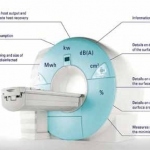
The acquisition of large diagnostic imaging equipment is clearly expensive – but further costs also result from their energy consumption and maintenance, as well as hidden costs due to complicated, labour-intensive handling, removal and disposal of old equipment, etc. often not considered during purchasing. Report: Anja Behringer
Led by the then Prime Minister Tony Blair, the United Kingdom’s Labour government proudly launched its National Programme for IT (NPfIT) in 2002, a forward-looking plan with huge budget to match. The following year the nation was awed by something akin to a gold rush, as information technology companies scrambled to compete for and gain healthcare IT contracts from the £12 billion project.…

Visiting European healthcare professionals will be able to enter a strong debate on hospital-related politics as well as medical and economic issues at MEDICA this year when the 1st European Hospital Conference (EHC) will take place at 18th November alongside the 34th Congress of German Hospitals.

Until 15 January 2012, young researchers working in Europe who are not older than 35 years are invited to apply for the Eppendorf Award for Young European Investigators. This highly prestigious prize was first established in 1995. It acknowledges outstanding contributions to biomedical research in Europe based on methods of molecular biology, including novel analytical concepts.
Top-performing hospitals are typically ones headed by a medical doctor rather than a manager. That is the finding from a new study of what makes a good hospital. The research, to be published in the elite journal Social Science and Medicine, is the first of its kind. Its conclusions run counter to a modern trend across the western world to put generally trained managers -- not those with a…
One of the world’s leading public health establishments, AP-HP (Assistance Publique-Hôpitaux de Paris) generated EUR 17 million in revenues thanks to its technology transfer arm, OTTLIV, in 2010. OTTLIV (Office of Technology Transfer, Licensing and Industrial Ventures), a small team of professionals, raised income from license fees, royalties and collaborative research projects.
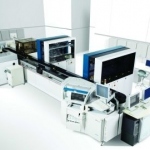
Adaptability and scalability were the buzz words at the Siemens Healthcare Diagnostics booth at this year’s IFCC-Worldlab and EuroMedLab congress. With the ongoing generation of their highperformance automation systems as an example, the company offers a multi-discipline architecture that enables a lab team to build an automation solution following their individual demands.

The Academe Hospital of Bellvitge, which is part of the Catalan Health Institute, has been designated an International Centre of Excellence for Bariatric Surgery (ICE) by the Surgical Review Corporation (SRC), a US-based non-profit-making organisation that aims to ‘advance the safety, efficacy and efficiency of bariatric and metabolic surgical care’
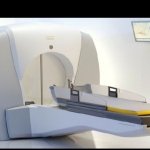
A major public hospital has become the first in Paris to be equipped with a Gamma Knife, the device that enables the surgeon to operate on the brain with no blade or blood involved.
Since the German Federal Ministry of Health did not oppose the Federal Joint Committee (G-BA) decision to eliminate reimbursement for urine and blood sugar test strips for Type 2 diabetics not dependent on insulin from the services provided by statutory medical insurers, from this October test strips will only be prescribed in exceptional cases.

For three years the SWEET project, funded by the EU and the International Society for Paediatric and Adolescent Diabetes (ISPAD), has been preparing the establishment of centres of reference (CORs) for childhood diabetes. Now, the first 12 European CORs that are certified by SWEET have joined forces to promote improved cross-border cooperation in the treatment of young Type 1 and Type 2 diabetics.
On average, European countries possess 17 MRI machines per one million people. With only 9.4 MRI machines per million people, France ranks between Portugal and Turkey, putting it among the least well-equipped in Europe, according to the Société Française de Radiologie.

Established in 1987, Unilabs now has operations in 12 countries, employs more than 3,700 people, with 220 medical doctors, and presents the most comprehensive portfolio of diagnostic services, geographically covering a most extensive area of Europe.
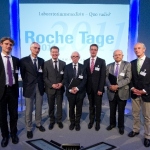
Facing the fundamental changes that laboratory medicine is undergoing, in early June Roche Diagnostics Deutschland GmbH invited 50 high-profile speakers to a six-day symposium to discuss current research, economic and diagnostic issues in lab medicine with a professional audience. Report: Karoline Laarmann
The IMS Institute for Healthcare Informatics today reported that global spending for medicines will reach nearly $1.1 trillion by 2015, reflecting a slowing compound annual growth rate of 3-6 percent over the next five years. This compares with 6.2 percent annual growth over the past five years.

The European Society of Cardiology (ESC) is calling for a single, co-ordinated European system to oversee the evaluation and approval of medical devices. The call is being made in a paper published online in the European Heart Journal reporting on a conference held by the ESC in January 2011 looking to increase the input of medical experts in developing medical device policy.