


Alzheimer's

Photo

News • Brain disease

Risks – and benefits – of the Alzheimer’s gene

Scientists drilling down to the molecular roots of Alzheimer’s disease have encountered a good news/bad news scenario. A major player is a gene called TREM2, mutations of which can substantially raise a person’s risk of the disease. The bad news is that in the early stages of the disease, high-risk TREM2 variants can hobble the immune system’s ability to protect the brain from amyloid beta,…

Photo

News • Predicting cognitive decline

Odor identification problems may be a warning bell for dementia

A long-term study of nearly 3,000 adults, aged 57 to 85, found that those who could not identify at least four out of five common odors were more than twice as likely as those with a normal sense of smell to develop dementia within five years. Although 78 percent of those tested were normal – correctly identifying at least four out of five scents – about 14 percent could name just three out…

Photo

Article • Neurological diseases

No health without brain health

A largely aged population is already a reality in some countries, and this will become a worldwide problem by 2047, when the number of the Earth’s old people is likely to surpass the number of young people.

Photo

News • Caudate nucleus

How Alzheimer's puts your brain on autopilot - in a good way

Patients with Alzheimer's disease (AD) have a larger caudate nucleus, a brain area involved in habits and used to navigate in the environment on an autopilot mode, shows for the first time a Canadian-Norwegian study published in Acta Neurologica Scandinavica. Not good news, you may think. Hold on, this could open new research avenues for AD.

Photo

News • Preventing Alzheimer's

$20 million lifestyle intervention trial to prevent cognitive decline

The Alzheimer's Association announced the launch of a $20 million U.S. two-year clinical trial to test the ability of a multi-dimensional lifestyle intervention to prevent cognitive decline and dementia in 2,500 older adults with no current cognitive symptoms but who are at increased risk for later cognitive decline. The announcement was made at the 2017 Alzheimer's Association International…

Photo

News • Neuropathology

Detecting Alzheimer's disease before symptoms emerge

Long before symptoms of Alzheimer's disease become apparent to patients and their families, biological changes are occurring within the brain. Amyloid plaques, which are clusters of protein fragments, along with tangles of protein known as tau, form in the brain and grow in number, eventually getting in the way of the brain's ability to function. These biological changes can be detected early in…

Photo

News • Brain pathology

New insights into early cognitive markers of Alzheimer's

New research led by the University of Hertfordshire, may significantly change the understanding of cognitive processes that are most impaired at very early stages of Alzheimer's disease. The findings could potentially be used to detect the condition at an earlier stage and improve diagnostic accuracy, by creating new cognitive tests that are more sensitive to brain pathology than ones currently…

Photo

News • Lab Study

A protein called PERK - Treating progressive supranuclear palsy

The brain disease “progressive supranuclear palsy” (PSP) is currently incurable and its symptoms can only be eased to a very limited degree. PSP impairs eye movements, locomotion, balance control, and speech. Scientists at the German Center for Neurodegenerative Diseases (DZNE) and the Technical University of Munich (TUM) have now discovered a molecular mechanism that may help in the search…

Photo

News • Study

Molecular Roots of Alzheimer’s

Scientists at Washington University School of Medicine in St. Louis have detailed the structure of a molecule that has been implicated in Alzheimer’s disease. Knowing the shape of the molecule — and how that shape may be disrupted by certain genetic mutations — can help in understanding how Alzheimer’s and other neurodegenerative diseases develop and how to prevent and treat them.

News • Study

Predict early stages of Alzheimer’s disease

Researchers from Columbia University Medical Center (CUMC), New York State Psychiatric Institute, and NewYork-Presbyterian reported that an odor identification test may prove useful in predicting cognitive decline and detecting early-stage Alzheimer’s disease. Their two studies, presented at the Alzheimer’s Association’s International Conference in Toronto, Canada, suggest that the…

Photo

News • Neurodegenerative diseases

The case of the sticky protein

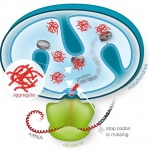
Proteins are like a body’s in-house Lego set. These large, complex molecules are made up of building blocks called amino acids. Most of the time, proteins fold correctly, but sometimes they can misfold. This misfolding causes the proteins to get sticky, and that can promote clumping, or aggregation, which is the hallmark of several neurodegenerative diseases such as ALS, Alzheimer’s and…

32 show more articles
Subscribe to Newsletter