


A new definition for plastic surgery
Gathering in Austria, plastic surgeons proclaim the need for clarification and standards. Michael Krassnitzer reports

Gathering in Austria, plastic surgeons proclaim the need for clarification and standards. Michael Krassnitzer reports

Participants at European Health Forum Gastein 2011 (EHFG) agreed: the tendency in Germany and Austria is to operate far too soon (particularly for hip, knee and disc surgery), and many surgical interventions are unnecessary, posing a particular and increasingly urgent problem especially in industrialised countries. Hans-Christian Pruszinsky reports

‘We are all aware of the importance of early diagnosis and rapid appropriate treatment of patients with severe sepsis. Yet, many patients still do not receive satisfactory early management and the application of recent guidelines for sepsis management is still inadequate,’ writes Jean-Louis Vincent MD PhD, from the Intensive Care Department, Erasme Hospital, Université Libre de Bruxelles,…

It was not the sunshine of the Cote d’Azur in September that lured radiologists to picturesque Nice. Far more enticing was the stimulating programme offered by the Annual Scientific Meeting of Management in Radiology (MIR), which, for the first time, also included a Junior Radiologists Course.
Patients and health care providers are increasingly crossing borders within the European Union to deliver or receive treatment. New EU regulations are trying to come to grips with what has long been recognised as a right of citizens to do so. Motivations vary among member states and social groups, but specialty treatment and speed of access are important factors. While cross border care is…
For reasons important to both EU citizens and migrants, greater efforts needed to be made to address the gap in quality health care that exists between the two groups, experts told the European Health Forum Gastein. Improvements would not only benefit Europe's newer arrivals but the well-being of Europeans in general.

Professionals back EU-wide action on cross-border health emergencies: A new cross-border Health Security initiative should refine EU preparations for, and response to, health crises ranging from terrorist attacks to SARS epidemics, experts reported at the European Health Forum Gastein. If Europe was to be serious about facing up to major threats a real change of mind-set was of the essence,…

Founded in 1998, the European Health Forum Gastein (5-8 October, Salzburg, Austria) is Europe’s leading health political conference, attracting 600 participants from around 60 countries. Beyond the EU, its leading role is underlined by the participation of active members from the GUS states, south-eastern European countries and Taiwan, Christian Pruszinsky reports.
The initial bill on The basic principles of healthcare for the citizens in the Russian Federation passed its first reading in the State Duma (the lower house of the Federal Assembly of Russia. Upper house: Federation Council of Russia). The current healthcare legislation came into effect in 1993. Since then, much has changed in Russian society, writes EH correspondent Alla Astachova.
Led by the then Prime Minister Tony Blair, the United Kingdom’s Labour government proudly launched its National Programme for IT (NPfIT) in 2002, a forward-looking plan with huge budget to match. The following year the nation was awed by something akin to a gold rush, as information technology companies scrambled to compete for and gain healthcare IT contracts from the £12 billion project.…

Visiting European healthcare professionals will be able to enter a strong debate on hospital-related politics as well as medical and economic issues at MEDICA this year when the 1st European Hospital Conference (EHC) will take place at 18th November alongside the 34th Congress of German Hospitals.

The 1st European Hospital Conference (EHC) will see three important organisations face up to their differences in what promises to be a great debate: During our interview with Dr João de Deus, President of the European Association of Senior Hospital Physicians (AEMH), he pointed out that AEMH, the European Hospital and Healthcare Federation (HOPE) and the European Association of Hospital…
Older patients and citizens should play a central role in the design and implementation of solutions for active and healthy ageing, in order to respect their rights and meet their needs. This was the strong message of the participants at the Conference “The Rights and Needs of Older Patients” organised by the European Patients’ Forum (EPF) and the Federation of Polish Patients (FPP).
Since the German Federal Ministry of Health did not oppose the Federal Joint Committee (G-BA) decision to eliminate reimbursement for urine and blood sugar test strips for Type 2 diabetics not dependent on insulin from the services provided by statutory medical insurers, from this October test strips will only be prescribed in exceptional cases.

In terms of health politics, no hospital-related subject is more explosive than hygiene. However, although this reaction is common across Europe, approaches towards tackling nosocomial infections varies among our EU countries. Karoline Laarmann reports from Germany and Jane MacDougall from France…

United Kingdom – A call has been made for tighter regulatory controls to ensure the safety regulation of medical devices, following joint investigations carried out by the British Medical Journal and the Channel 4 TV programme Dispatches, which were televised and published online at BMJ.com this May.

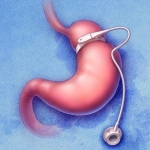
Morbid obesity is a chronic, lifelong, multifactorial, constitutional disease with negative medical, psychological, physical, social and economic side-effects. Obesity-related secondary diseases are Type 2 diabetes mellitus (T2DM), cardiovascular diseases such as hypertension or sleep apnoea. Report: Holger Zorn

Facing the fundamental changes that laboratory medicine is undergoing, in early June Roche Diagnostics Deutschland GmbH invited 50 high-profile speakers to a six-day symposium to discuss current research, economic and diagnostic issues in lab medicine with a professional audience. Report: Karoline Laarmann

One year ago interventional cardiologists raised champagne glasses to celebrate the first publication of clinical evidence showing that transcatheter valve implants (TAVI) is safe and effective. In May at EuroPCR 2011, cardiologists raised magnifying glasses to look closer at further clinical results. John Brosky reports from Paris

The European Society of Cardiology (ESC) is calling for a single, co-ordinated European system to oversee the evaluation and approval of medical devices. The call is being made in a paper published online in the European Heart Journal reporting on a conference held by the ESC in January 2011 looking to increase the input of medical experts in developing medical device policy.
Public satisfaction with the National Health Service has reached record levels, according to Professor John Appleby, a leading health economist, writing on the British Medical Journal website. He was referring to the British Social Attitudes Survey, in which 64% of people declared they are either very or quite satisfied with the NHS – the highest satisfaction level since the very first survey…
England – ‘Wheelchairs receive better care than nurses’; they need annual physical and psychological tests to ensure they can cope with job demands. The subject, discussed this April during the Annual Congress of the Royal College of Nursing, followed the publication (11/2010) of the Government’s NHS Health and Wellbeing Report (pub: 11/10).

The birth, in France, of its first baby to be conceived by artificial insemination on top of the selection of an embryo based on its blood, has sent new flames into the hot parliamentary debate over the reform of bioethics law.
In February this year, the European Parliament approved the EU Directive on Cross-Border Healthcare, establishing a framework for patients to exploit their rights to healthcare in other European countries.

Two serious new laws were passed at the end of 2010, one regarding obligatory medical insurance the other the ‘83 Federal Law’, which changes the rules of State regulation of the social sector. Some experts believe that the 83 FL will be the death warrant for accessible education and healthcare in Russia.