MCC - Meierhofer's Healthcare IT-solution
At MEDICA 2007, the German Meierhofer AG focused their presentation on the scaleable IT-solution MCC. MCC is specially designed for the use in the healthcare sector as an all-in-one software solution.



At MEDICA 2007, the German Meierhofer AG focused their presentation on the scaleable IT-solution MCC. MCC is specially designed for the use in the healthcare sector as an all-in-one software solution.
One of the biggest RIS/PACS healthcare networks in Germany - a Centricity system installed by GE - was recently launched at the Munich Municipal Hospital GmbH to link its 67 clinics and institutes, which are spread across four sites (Bogenhausen, Harlaching, Neuperlach and Schwabing).
USA - Outdated and broken IT systems are blamed for slowness of the Federal Drugs Administration (FDA) reviews of foreign drugs, said former FDA officials and the Government Accountability Office (GAO) during a House Energy and Commerce Oversight Investigations Subcommittee hearing.
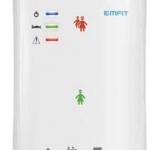
IP-based nurse call system provides non-body-contact vital signs monitoring as well as patient movements, a fall and epileptic seizure.
Medical errors occur in any part of the treatment process and typically involve the wrong medication, improper treatment, or incorrect or delayed test results. At its annual partner meeting, which took place in Berlin, September 27-28, Philips reinforced its commitment to use its leading global position in healthcare speech recognition to drive technology advancements towards reducing medical…
The Joint Commission International (JCI) has produced a revised set of international accreditation standards for hospitals. Initiated in 1997, the JCI developed out of a need seen by the international community to have standards of care to assure quality and safety for patients. "When these standards were first devised, organisations around the world were trying to apply the US domestic standards…
Medical errors occur in any part of the treatment process and typically involve the wrong medication, improper treatment, or incorrect or delayed test results. At its annual partner meeting in Berlin Philips reinforced its commitment to use its leading global position in healthcare speech recognition to drive technology advancements towards reducing medical errors and improving patient safety…
3M Health Information Systems' document creation products will soon be “powered by SpeechMagic”, to provide customers with leading-edge documentation solutions that bring simplicity to the complex process of medical reporting.
Following an agreement between Wolfgang Pföhler, Chairman of the Management Board of German company Rhön-Klinikum AG, and Professor Erich R Reinhardt, Member of the Managing Board of Siemens AG and President of Siemens Medical Solutions, the hospital group is to install Siemens' WebEPA, an intra-facility electronic patient file, to link its 46 hospitals and respective medical care centres —…
The healing environment approach is a comprehensive concept targeting the elimination of stress factors for patients as well as their visitors that would otherwise minimise patient's wellbeing, impair the healing process, or even violate their dignity/privacy.
In 1998, during Austria's first EU presidency, Professor Günther Leiner founded the European Health Forum Gastein (EHFG). From 3-6 October this year, the Forum will celebrate its 10th anniversary. Our Austria correspondent Hans-Christian Pruszinsky asked Dr Leiner about the value and role of this organisation in Europe today.
An international study to evaluate radio-frequency identification as a hospital risk management tool in medical care.
The Healthcare Inspection group has ordered 14 hospitals to stop surgery on the gullet to remove a tumour.

The exposure of patients to radiation by computed tomography has been widely discussed in recent years, both by professionals and by the public. The essential reason for optimizing patient exposure is the basic desire to keep radiation dose at the lowest possible level. This requires above all organ-specific and patient-specific adjustment of the radiation exposure in order to achieve uniform…
UK - Looking at the growing need to understand how digitisation of health information will impact upon patients, staff and managers across the health service, Professor Ann Blandford of the University College London, and Professor Peter Lunt, surveyed 200 patients as well as their representatives, clinicians and other healthcare professionals (librarians and IT staff) working in eight NHS trusts.…

Already in 1993, the world market for contrast media was thought to be worth $ 3 billion. In 2001, an astonishing 12.2 million contrast medium-supported CT studies were carried out in Europe alone. Currently, the overall sales of contrast media are estimated to rise to $ 915 million in Europe in 2008.

"The world at home in German hospitals" - that was the hope of many German hospitals which wanted to attract well-heeled foreign patients to bolster their budgets. The high expectations of the business model "guest patient", however, were disappointed as a sobering study of the Sozial- und Seniorenwirtschaftszentrums GmbH (swz/IHT) conducted in the framework Health Care Export Projects shows.

France - The country's health ministry is facing growing calls for a full public inquiry after allegations that surgeons have been demanding huge cash payments from patients keen to jump hospital waiting lists, and for charging exorbitant fees for "private" operations.

DGCH promotes studies for evidence-based medicine (EbM) in surgery to establish guidelines.
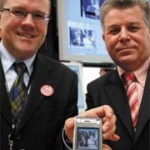
A system that aims to prevent newborns from being swapped or kidnapped in hospitals, has received the RFID Award in the German Innovations Prize 2007, granted by Initiative Mittelstand, an association for small and medium businesses.
Improving patient safety and quality of care is of key importance for European citizens, and both the European Commission and Member States (MS) expect great benefits from new, information and communication technology (ICT)-based healthcare solutions.
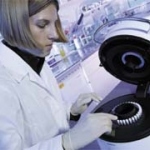
By Henning von Eicke of Roche Diagnostics GmbH
To help improve transfusion safety, in accordance with EU Directive 2002/98/EC, the Dutch National Haemovigilance Office, TRIP, receives and analyses reports of transfusion reactions and promotes haemovigilance.
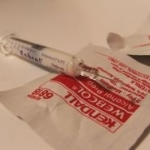
Due to a revised EU law, manufactures of medical devices are forced to label certain chemical ingredients in their products. This decision will enable hospitals to protect their patients against harm caused by toxic devices - if they are interested in. Because alternative products of course are connected with higher costs.
At the EH symposium, Dr Algayres will discuss: