




Digital dictation devices can read a patient's data, automatically assign information to the relevant report and interpret human speech into a text version. Armin Scheuer reports

IMPAX Enterprise - a single image and data management system that draws together radiology, cardiology, orthopaedics, and women's care.

Today, the Local Healthcare Company ASL Nº 11, of Empoli, Florence, is a highly advanced public utility, able to face the challenges of technological innovations and to perform long-term objectives with leadership and competence.
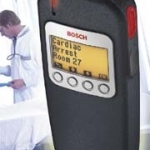
The Personal Security Pager (PS-Pager), made by Bosch Security Systems, is an innovative mobile that houses two products: a personal alarm device and speech pager. Compact, lightweight, robust, comfortable and discreet to wear, the device is also as easy to handle as the messages are to read.

At over 200 years old, it is also one of the oldest hospitals, yet is classed as one of the most up-to-date institutes in Europe.
With CardioNet by SCHILLER SEMA the number of unnecessary multiple exams can be greatly reduced as family physician, specialist and hospital can exchange data.

Thanks to the convertion from analogue to digital imaging, Kodak Health Group reported a considerable success in Europe.

Germany - The Walldorf-based firm InterComponentWare AG (ICW) launched its hospital networking solution for electronic patients' records (EPR) at MEDICA 2005, reporting that the system can connect existing but so far isolated hospital information systems (HIS) without having to change currently used software.

Downloading digitally signed clinical test results from home is possible and 40% of users residing in the Treviso region in Veneto, do so regularly.

A report about the installation of a new HIS in combinations with the setting up of a new Economic Software platform at Semmelweis University.

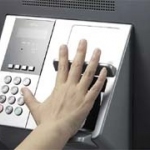
Biometry, or the technical recognition of physical characteristics, is playing an increasingly important role in clinics and hospitals. By Thomas Bengs, Product Manager for Vein, Fujitsu Europe Limited Group

The United Kingdom's Diabetes Retinal Screening Service
Red green and white biotechnology
Although parents are allowed in neonate ICU units, family members and friends are barred. To meet this need, Innsbruck Medical University recently launched the project 'Babywatch' in its neonatology ICU.

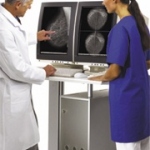
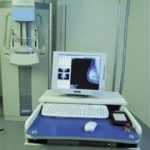
Siemens Medical Solutions reports that the first installations have been completed in France, Germany, Italy and Sweden of its new all-in-one system for digital full-field mammography, named Mammomat Novation.
Gothenburg, Sweden - Ascom Wireless Solutions reports on a new Internet Protocol-based messaging platform that can integrate traditional hospital paging with DECT systems and public communications technologies such as GSM, Email and the Internet. Using Linux as its operating system, Unite provides a standard communications protocol to connect different types of applications and hardware modules.…
TB causes three million deaths annually, ranking it higher than any other infectious disease. And TB has resurged in Europe. In August, the British Thoracic Society, British Lung Foundation and TB Alert highlighted its increase in over the last 15 years in the UK alone.

Interviewed by Daniela Zimmermann, Executive Director of EH, Jean Hooks, General Manager, Global Mammography at GE Healthcare, examined reasons behind the slow uptake of digital technology in some European countries, comparing this with its early adoption in the USA

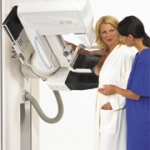
Mammography plays a critical part in diagnosing breast cancer. Although this does not prevent the disease, diagnosing breast cancer as early as possible can save lives.

The Swedish firm Sectra reports that its digital MicroDose Mammography system reduces radiation by 80%, compared with traditional film-based systems, and that its completely new detection technology allows this without compromising image quality.

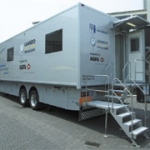
Financed by the Ministry of Health, nine regional screening organisations arrange and implement the Dutch national breast cancer screening programme, in which, every two years, all women from 50-75 years of age are invited for a free mammogram at one of the 62 screening points, of which 56 are mobile vans.
Due to economic pressure, laboratories increasingly consolidate and automate procedures. Further cost reductions could come about through miniaturisation and multi-parameter tests.