


Sponsored • Out goes pixellation
Refining the depth of field for greater surgical precision
John Herman, European Marketing Manager of Sony Healthcare Solutions, explains the potential of 3-D and 4K technologies in medicine.

John Herman, European Marketing Manager of Sony Healthcare Solutions, explains the potential of 3-D and 4K technologies in medicine.

Bladder cancer is the 2nd most frequent urological cancer in men in Europe and the 7th most common cause of cancer-specific mortality.* Despite the fact that it is one of the most expensive cancers to treat from diagnosis to death**, it is still underrepresented in public awareness and cancer research. IPSEN aims to make a difference in providing Innovators in BC® – a website for international…

Cooperation on Artificial Intelligence complements its initiatives on Enterprise Imaging, Big Data and Clinical Analytics, to provide an e-Health platform for Integrated Care and Population Health Management.

Traditionally, medical tourists travel from high-income countries to middle and low-income countries seeking health care at a lower price. With a growing wealthy class in developing countries and increased access to the Internet, more citizens from around the world are traveling to the United States to receive quality health care and advanced treatments.

‘Humber River Hospital, Toronto, Canada, could come straight out of a science fiction series that provides Star Trek-like healthcare services with hall-cruising robots delivering food, medications and supplies to staff, electrochromic windows, video conference capabilities at patients’ bedsides and real-time location systems, to name but a few futuristic features. Yet, this is now and for…

Today most healthcare systems rely on text-based matching: A patient’s ID card or driver’s license is considered sufficient proof of identity. This “identification system” however puts patients at risk of death, improper treatment, insurance abuse and lawsuits the provider and hospital cannot defend. Dr Raymond D. Aller, Director of Informatics at the Director of Informatics for the…

North West EHealth announced that its unique Linked Database System technology was used to deliver the world’s first digitally enhanced Randomised Controlled Trial (RCT) in the ground-breaking Salford Lung Study* (SLS). The study relied on bespoke software, developed by NorthWest EHealth and securely hosted within the NHS network, that integrated the electronic medical records of consented…

Over the last 18 years, almost exclusively by word of mouth, DOTmed has become one of the busiest websites in healthcare. The services that DOTmed offers enables Buyers and Sellers of equipment and parts – as well as providers looking for service partners – to find exactly what they’re looking for.

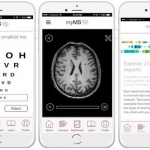
Today, radiologists are overwhelmed by the sheer volume of data. Thus, solutions are needed that identify and call up only those that concern the diagnosis at hand. This is where Xplore, the RIS by French manufacturer EDL comes in: it not only provides quick access to all data that are generated and processed in a radiology department or a radiology office but it also presents only those data…

COCIR welcomes the adoption of the European Data Protection Regulation (DPR). However, in order for the Regulation to deliver on its objectives, it is crucial that EU Member States move rapidly towards a harmonised interpretation and enforcement of its provisions. This will pave the way for growth, innovation and a data-driven healthcare sector.

Telemedicine - connecting health care providers and patients via computer or smart phone for diagnosis and treatment - has been making it easier, and more cost-effective, to "see" the doctor. Using a camera-enabled computer or smart phone, patients with common health concerns can get some diagnoses without leaving their homes. Emergency room doctors and nurses are able to communicate…

For epilepsy patients and attending physicians, it has been a challenge to correctly assess the frequency and severity of epileptic seizures without inpatient recording equipment. A consortium coordinated by the epileptologists of the University Hospital Bonn is now developing a mobile sensor that can detect seizures. A warning signal is designed to summon relatives or attending physicians to…

Statisticians, computer scientists and medics from the University of East Anglia are launching a new project to predict how long you will live.

Researchers at Umeå University in Sweden have developed a method that simplifies the diagnosis of ear infections (otitis media), something which annually affects half a billion children worldwide. The software-based method automatically analyses images from a digital otoscope and enables highly accurate diagnoses. The method is described in the journal EBioMedicine.

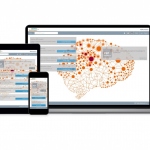
Scientists have a new tool for unraveling the mysteries of how diseases such as HIV move through a population, thanks to insights into phylogenetics, the creation of an organism’s genetic tree and evolutionary relationships.

Electronic radiology clinical decision support (CDS) systems, designed to help doctors order the most appropriate imaging examinations for patients, offer a way to practice better medicine, to reduce the costs of radiology and help increase patient safety by preventing radiation exposure from inappropriate or unnecessary exams.

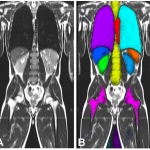
Personalised medicine relies strongly on biobanking in which medical data are collected on a large scale. Large scale refers both to the amount of data collected per patient as well as to the large number of patients included in the data collection. Although most attention in biobanking has been given to genetic data, proteomics, metabolomics and other –omics technologies, imaging is also being…

Vendor Neutral Archives (VNA) will become an integral part of every hospital in the near future. So what’s a VNA?

Big data has the potential to offer a better understanding of how to aggregate clinically relevant data on a large scale and deliver better computer aided diagnosis algorithms and tools.

Knowledge modules, speech interfaces, robotics, analytics, and the Internet of Things demonstrate advances in intelligent computing in industries such as transportation, retail, and financial services. What role have they taken on the healthcare stage?

Cloud computing offers various benefits but also entails some risks. Nevertheless hospitals need to adopt new ways to simplify work processes and enhance care.

Cases of cybercrime are growing every year, demonstrating a threat scenario not just in the private area, for banks or companies, but also for insurance companies, because criminals steal data and whole databanks with private information. At this years’ HIMSS, Stephen Cobb, Senior Security Researcher at ESET North America, speaks about the growing risk and the need to manage such health IT…

Digital transformation is in full swing. Yet digitization remains theoretical in healthcare and not just in Germany. Given the influx of new information technology contributions, the subject of health definitely needs to be reevaluated. As a driver and creator of digital transformation, HIMSS has made this task its mission. The HIMSS Communities play an essential role in this. Report: Melanie…

Two years ago European Hospital spoke with Hans Vandewyngaerde, President for Europe, the Middle East and Africa (EMEA) for Agfa HealthCare, about a sweeping vision the company called ‘Images without Boundaries’. The idea was to build a capability to share images from anywhere to anyone involved in a patient’s care.

One thing is certain in big data discussions: Intelligent machines will change our world considerably. What is less certain is exactly how these changes will look. Although networked data processing offers many opportunities, its development is still in the early stages.