

Image source: Uppsala University: photo: Anjali Sivakumar
News • Unexpected similarities
Different tumours, same origin: Surprising discovery in paediatric brain cancers
Tumor-associated signature unifies distinct central nervous system malignancies, study finds
Researchers have discovered that severe brain tumours in children that appear to be completely different actually arise from the same type of cell. This cell type can give rise to tumours in the pineal gland, the retina and the cerebellum. The discovery that these tumours are related may make it possible to treat them in similar ways.
The researchers have published their findings in the scientific journal Cancer Cell.
Malignant brain tumours in children are typically treated through a combination of surgery, radiation therapy and chemotherapy, which today results in cure in roughly three out of four cases. In recent years, researchers have identified nearly a hundred different types of cancer in the brain, but the relationships between them have remained insufficiently mapped. For example, it has been unclear which tumour types are most closely related and might therefore be treated in similar ways.
The cells that gave rise to the tumours were biologically very similar to one another, despite originating in such different areas of the brain
Fredrik Swartling
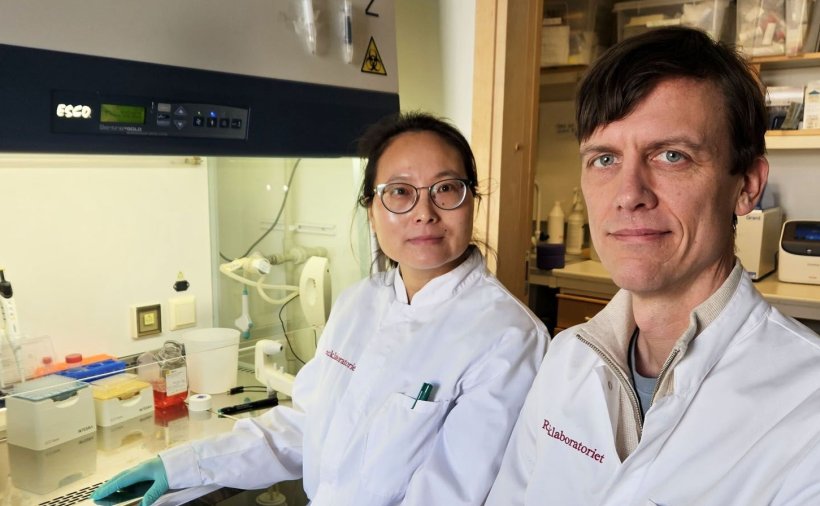
In the new study, Fredrik Swartling and his research group at Uppsala University, together with international colleagues, investigated the development of pineoblastoma, a serious tumour originating from the pineal gland, a small pinecone-shaped structure located deep in the middle of the brain. When the researchers analysed tumours from patients using advanced molecular methods, including single-cell analysis, and compared them with other tumour types, the results were unexpected: the tumours did not resemble other tumours from the same brain region. Instead, they showed striking similarities to tumours arising in entirely different parts of the brain, especially the eye tumour retinoblastoma, which arises in the retina at the back of the eye, and medulloblastoma, which forms from cells in the cerebellum, situated at the rear of the head.
“We observed, for example, that a tumour discovered in the pineal gland of a patient was so similar to a tumour typically found in the cerebellum that we initially suspected it might have spread from there. But this turned out not to be the case. The cells that gave rise to the tumours were biologically very similar to one another, despite originating in such different areas of the brain,” says Fredrik Swartling, one of the study’s senior authors.
Recommended article
News • New sequencing technique
Classifying pediatric brain tumors with liquid biopsy and AI
Clues in the CSF: Researchers have developed the first high-precision method that can theoretically diagnose common brain tumors in children and adolescents without surgery.
In the pineoblastoma cases examined, the researchers found that the tumours originated from a particular type of immature precursor cell that also produced a protein commonly found in light-sensitive cells, namely, the cells of the retina. “Cells that detect light for vision exist only in the eye in humans, but over the course of evolution and in other animal species, cells that respond to light or that retain so‑called photoreceptors are also found in other parts of the brain,” says researcher Miao Zhao, who performed the experimental cell and animal model studies in the laboratory.
It is precisely these cell types, cells that still carry features associated with photoreceptors, that appear capable of giving rise not only to retinoblastoma in the eye, but also to pineoblastoma and medulloblastoma in the developing brain in children. The researchers confirmed this connection in mouse models, where activation of these photoreceptor-driven cells triggered the development of pineoblastoma. Furthermore, if the photoreceptor activity was blocked using the genetic scissors CRISPR/Cas9, these tumours stopped growing.
“The fact that cells with photoreceptor activity are particularly prone to developing tumours suggests that we may be able to target them with future precision therapies. Our findings also indicate that tumours arising in the pineal gland and the cerebellum could in fact be treated in similar ways,” says Fredrik Swartling.
The study is a collaboration between Uppsala University, St. Jude Children’s Research Hospital in Memphis, USA, Boston Children’s Hospital, USA, and researchers from Canada, Germany and Austria. The study received financial support from the Swedish Childhood Cancer Fund, the Swedish Cancer Society, the Swedish Research Council, the Swedish Brain Foundation and the NIH.
Source: Uppsala University
11.03.2026