
Respected not rejected
The Hartmann European Care Award 2004 has been presented to Dagmar Erdkönig, Petra Makara and Claudia Reicher of Austria.



The Hartmann European Care Award 2004 has been presented to Dagmar Erdkönig, Petra Makara and Claudia Reicher of Austria.
Scientists at biopharm firm Pathogen Removal and Diagnostic Technologies Inc* (PRDT) recently confirmed their identification of lead ligands capable of specifically targeting certain 'challenging' viruses.
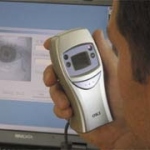
Iris recognition is thought to be the highest-accuracy, single-factor biometric identification in the world, and could have many uses.
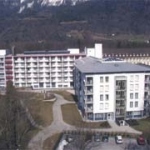
Another new system introduced at Bad Reichenhall's city hospital, allows nurses to talk with patients and ascertain whether their calls are due to an emergency or for a non-urgent request.
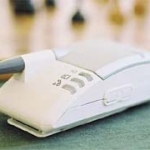
The Biotronik Home Monitoring Service, which gained CE approval in May, has now monitored over 1,500 patients worldwide. Studies indicate that 88% of patients claim an increased sense of security due to the service.
Disturbingly high rates of medical errors, lack of care co-ordination, poor communication between doctors/patients, and barriers when accessing care, are experienced by patients in the United States (US), Australia, Canada, NZ (NZ) and the United Kingdom (UK).
As in the United States, European hospitals now face an inevitable result from escalating compensation payments made to medical injury patients - in the near future, premiums are expected to rise 25-100% in some EU countries.
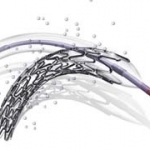
France - Four studies of three TAXUS paclitaxel-eluting stents have demonstrated their safety and efficacy, according to the maker, Boston Scientific Corporation of Natick, Maryland, USA.
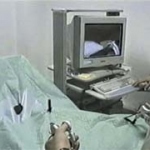
Minimally invasive surgery (MIS), carried out through very small incisions, minimises patient trauma and shortens rehabilitation time.
2,871 aortic surgery procedures were carried out in Germany last year. 317 of these were on the aortic arch - and particularly dangerous.
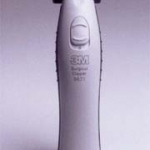
Preoperative removal of hair from an operative site is important measures for avoiding postoperative wound infections.
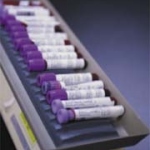
Todays test formats (gel technology, micro test plates), plus laboratory electronic data processing and automation, have changed the classic format of blood group serological examinations significantly - and reduced the danger of life-threatening errors.
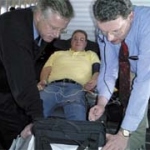
Lufthansa - the first airline company to offer high-speed broadband internet connection for data transmission - has used the trial phase of its new in-flight internet service, Lufthansa FlyNet, to test telemedicine potential on board.