

Article • From ablation to neuromodulation
The new era of functional radiosurgery
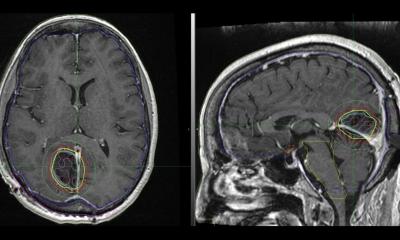
Functional brain radiosurgery is an application of stereotactic radiosurgery (SRS), representing its newest clinical field. It is a precise, non-invasive medical technique using focused ionising radiation to precisely target specific brain structures to modulate brain function for neurological disorders, psychiatric conditions, or intractable pain. The technology offers “precision without incision”, the title of a Presidential Symposium on the topic at ASTRO 2025, the annual meeting of the American Society for Radiation Oncology held recently in San Francisco.
Special report: Cynthia E. Keen
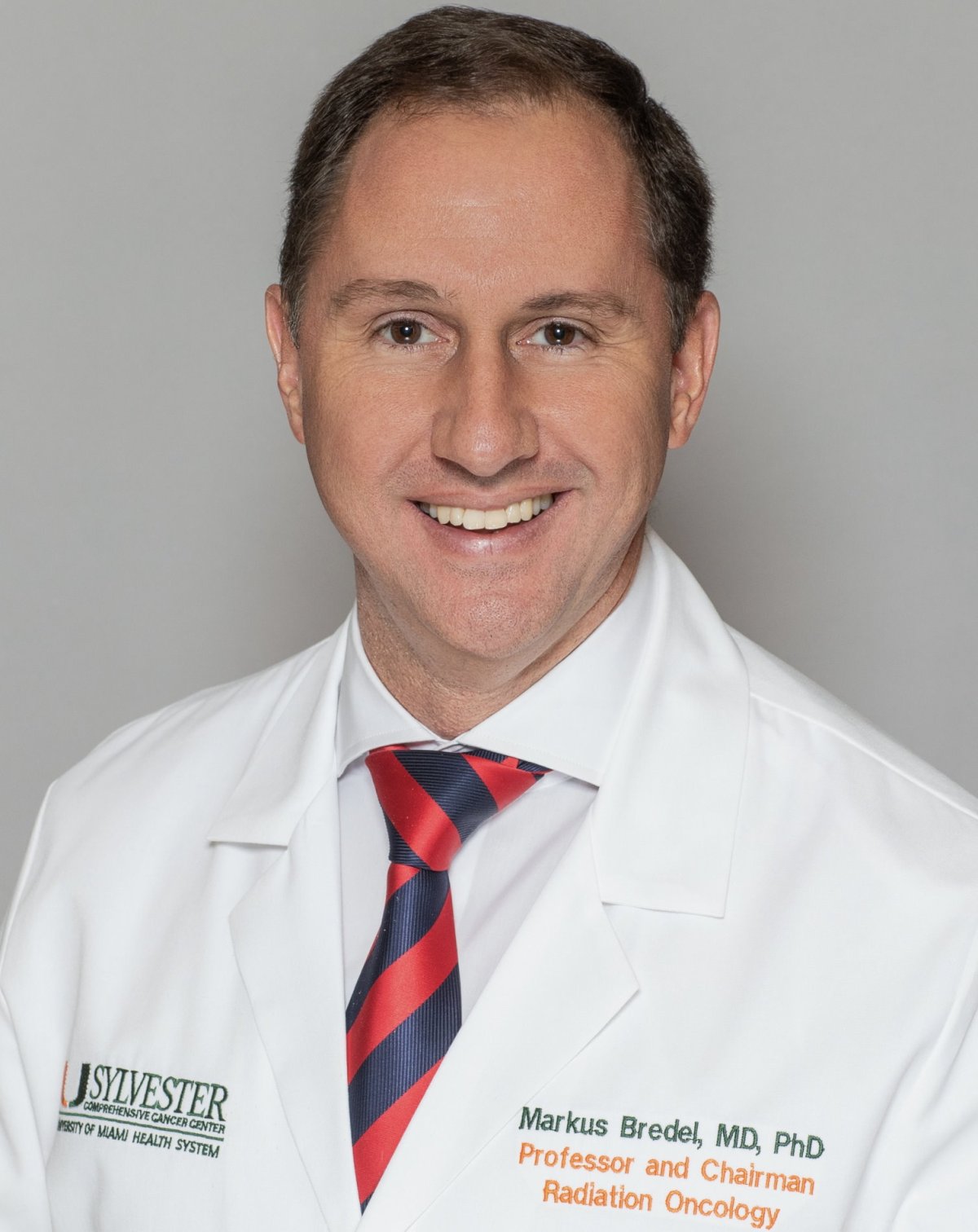
Photo courtesy of Prof Bredel
Functional neurosurgery, a surgical approach that involves precise targeting of anatomical structures to modify central nervous system circuits to effect changes within or outside the nervous system, provided the foundation for the evolution of functional brain radiosurgery. Swedish neurosurgeon Lars Leksell performed the first functional brain radiosurgery in 1967 using the Gamma Knife he designed.
Fast forward to 2025....Functional brain radiosurgery is used today for trigeminal neuralgia, sphenopalatine neuralgia, chronic cluster headaches, essential tremor, Parkinson tremor, dystonia, cancer pain, thalamic pain, obsessive compulsive disorder, and several types of epilepsy.1 Session presenter Markus Bredel, MD, PhD, Chairman and Sylvester Professor of Radiation Oncology of the Department of Radiation Oncology at the University of Miami’s Miller School of Medicine in Florida discussed its use to treat movement disorders.
Classical movement disorders and connectomics
There are more than 20 types of involuntary tremor, with essential tremor being the most prevalent, at an estimated 25 million cases, followed by tremor-dominated Parkinson disease. Tremor affects 1.3% of the worldwide population, mostly in the upper extremities. It is associated with aging: it starts to afflict 5% to 6% of individuals within the age range of 50 to 65 years. Once tremor occurs, it progresses over time.2
‘Tremor can be severely disabling and socially stigmatising. It is not a benign disease. When patients spill food and drink, they are often perceived as drunk. They may not be able to work or to perform daily life tasks,’ commented Prof. Dr. Bredel. ‘Patients are candidates for refractory tremor treatment when conventional treatments don’t work. Approximately 75% in my practice do not want invasive surgery.’
The success rate of functional radiosurgery has been about 75% to 80%, due to individual variation. Stereotactic coordinates are based on average measurements in the human brain, and do not account for patient-specific white matter connectivity and functional location.
‘The new field of advanced connectomic targeting has the potential to increase response rate and minimize side effects,’ said Prof. Dr. Bredel. Connectomics explores how neurons in the brain are connected and interact with each other to produce behaviour and cognition. It provides an understanding as to how individual neurons are connected to one another to form functional networks.
‘Functional MRI maps these chemical and electrical signal connections. This, plus the use of Big Data, is enabling us to understand brain wiring differences in disease. With this knowledge, we can aim for highly personalised treatments, better diagnosis, and prediction of therapeutic response by identifying the exact fiber tracts to stimulate or modulate,’ observed Prof. Dr. Bredel.
‘We do frameless functional radiosurgery on a linear accelerator equipped with a multileaf collimator, an open thermoplastic mask for immobilization, and surface-imaging for intra-fraction motion monitoring. The procedure takes 25 to 28 minutes. The majority of patients have a positive response in four to six months,’ he said.
Frontiers of functional SRS: psychiatric disease, chronic pain syndromes, and emerging treatments
Evan Thomas, MD, is founder and Chief Medical Officer of the nonprofit Renaissance Institute of Precision Oncology & Radiosurgery in Winter Park, Florida, began his presentation about cutting-edge functional brain radiosurgery treatments with an announcement: ‘There is a paradigm shift in the field of functional SRS. We are moving from the history of simple anatomical target ablation to a future of sophisticated circuit-based neuromodulation. Dose evolution is being driven by major advances in connectomics and functional neuroimaging.’
Our goal is not just to destroy tissue or lesions but to intelligently and precisely modulate specific dysfunctional networks
Evan Thomas
‘These procedures are the most complex and ethically demanding, reserved for patients suffering from life-altering conditions that have been unresponsive to other types of treatments. Every case is rigorously vetted by a multidisciplinary panel of psychiatrists, interventional psychiatrists, neurosurgeons, neurologists, and a radiation medicine team,’ he said.
‘Our goal is not just to destroy tissue or lesions but to intelligently and precisely modulate specific dysfunctional networks,’ Dr. Thomas added. ‘The fundamental difference between the past and present is what lies in the science.’
There is a long history of functional brain radiosurgery treatment for extreme obsessive-compulsive disorder (OCD). The response rate is 50% to 65%, and up to 20% of patients have a complete remission. However, because benefits are not felt until six to 12 months following treatment, it is imperative to manage patients’ expectations.
The treatment of cancer pain can have remarkable and rapid results with terminally ill patients who have little time left, many of whom have widespread hormone-sensitive metastatic disease. Dr. Thomas advised that 60% to 75% of patients report significant pain relief within a week or less. ‘If a single treatment strategy is ineffective, we perform triple-target neuromodulation, a comprehensive multi-modal attack on intractable pain at three distinct neuroanatomical level. It is a very interesting approach with profound results,’ he said.
Treatment for major depressive disorder is investigational, with reported response rate at 40% to 55%. Depression is very heterogeneous. Dr. Thomas stated that the critical next step is to conduct larger clinical trials and identify biomarkers. The challenge, he explained, is that optimal target and predictive biomarkers remain undefined.
Advanced imaging with a 7 Tesla MRI scanner can show the abnormal internal structure of focal cortical dysplasia not visible on images from lower strength scanners, a boon for patients with refractory epilepsy. The primary advantage of functional brain radiosurgery is preservation of neurocognition and treatment of lesions that are in difficult to surgically access locations. Benefits are not experienced for six to twelve months, and toxicity is a risk. Ethical challenges and careful patient selection must be addressed.
Still – ‘As we continue to merge the power of this minimally invasive approach with revolutionary insights from modern neuroscience, we're on the cusp of designing many entirely new therapies for conditions once considered untreatable,’ he concluded.
Profiles:
Markus Bredel, MD, PhD, is Chairman and Sylvester Professor of Radiation Oncology of the Department of Radiation Oncology at the University of Miami’s Miller School of Medicine. He served as the Billy Grey Chair of Research of the National Brain Tumor Society (NBTS), chaired the Central Nervous System Tumors Program Subcommittee of the American Society of Clinical Oncology (ASCO), and was a member of the editorial board of The Lancet Oncology. Prof. Dr. Bredel focuses clinically and scientifically on CNS tumours and has a particular interest in advanced radiosurgery for brain metastases and movement disorders. He performed the world’s first frameless radiosurgical pallidotomy for dystonia. As a member of the NRG Oncology Brain Working Group, he has led groundbreaking research identifying prognostic and predictive biomarkers in glioma patients.
Evan Thomas, MD, is founder and Chief Medical Officer of the Renaissance Institute of Precision Oncology & Radiosurgery in Winter Park, Florida, US. He serves on ASTRO’s Government Affairs Committee and chairs the Central Nervous System subcommittee for Benign Radiotherapy. Dr. Thomas has been a pioneer in the implementation of frameless, coneless linear accelerator-based radiosurgical treatment. He specializes in treating brain tumours, movement disorders, and cardiac arrhythmias using cutting-edge radiosurgical techniques.
References:
- Goulet M, Masucci GL, Taussky D, et al. History and Development of Clinical Use of Functional Stereotaxy for Radiation Oncologists: From Its Origins to Its Current State. Curr. Oncol. 2025; 32(12): 656.
- Song P, Zhang Y, Zha M, et al. The global prevalence of essential tremor, with emphasis on age and sex: a meta-analysis. J Glob Health. 2021;11:04028.
03.03.2026