

Image source: UPV
News • Quicker diagnosis approach
New biosensor for detecting active tuberculosis
New research shows promise of fluorescent detection for infection diagnosis, screening
A research team at the Molecular Recognition and Technological Development Inter-University Research Institute (IDM) at the Universitat Politècnica de València (UPV) and the Universitat de València is leading the development of a sensor that paves the way for the rapid, selective and cost-effective detection of active tuberculosis. The device detects the presence of a protein secreted by Mycobacterium tuberculosis, the bacterium that causes the disease. It provides results in just 60 minutes – significantly less time than conventional methods, such as microbiological culture, which can take several weeks.
The researchers published their findings in the journal Talanta.
One of the main innovations of the biosensor is that it detects active disease, which is particularly significant because other molecular techniques, such as PCR, can identify fragments of bacterial DNA without distinguishing whether the infection is active, past or latent
Ramón Martínez Máñez
Tuberculosis remains one of the world's major public health problems today. According to the World Health Organisation's 2024 global report, it has once again become the leading cause of death from a single infectious agent. "Therefore, having tools that enable early and reliable diagnosis is key to curbing its transmission," emphasises Dr Isabel Caballos, a member of the IDM-UPV team.
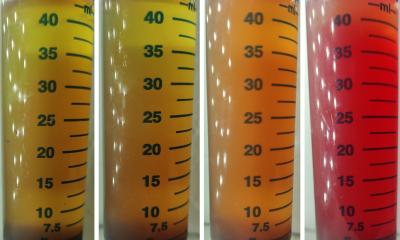
The new system is based on a nanoporous material containing a fluorescent molecule and coated with an antibody specific to the MPT64 protein, a characteristic marker of active tuberculosis. When this protein is present, the antibody that blocks the pores of the material shifts, releasing the fluorescent compound. This light signal allows the infection to be detected easily.
"One of the main innovations of the biosensor is that it detects active disease, which is particularly significant because other molecular techniques, such as PCR, can identify fragments of bacterial DNA without distinguishing whether the infection is active, past or latent. In contrast, this system recognises a protein secreted by the bacterium during active infection, providing more accurate information from a clinical perspective," notes Professor Ramón Martínez Máñez, head of the NANOSENS group at IDM-UPV and the Joint Unit for Nanomedicine and Sensors at IIS La Fe.
The trials carried out show that the biosensor achieves a very low detection limit and high selectivity against proteins from other respiratory pathogens, such as influenza viruses, SARS-CoV-2, respiratory syncytial virus, and other non-tuberculous mycobacteria. In addition, the device was validated using cultured clinical samples from patients.
"In the final validation we conducted with 20 cultures of respiratory samples from tuberculosis patients, the system achieved a sensitivity of 80% and a specificity of 90%, with good predictive values, confirming its potential as a diagnostic tool," notes Dr Ana Gil, from the Microbiology Department at the Hospital Universitari i Politècnic La Fe in Valencia.
According to researchers at IDM-UPV, this new biosensor offers a promising avenue for improving tuberculosis diagnosis, particularly in resource-poor countries, where access to advanced techniques remains a challenge. "Its simplicity, portability and selective detection capability make it a tool with great potential to contribute to the control of a disease that remains one of the deadliest in the world," concludes Professor Elena Aznar, a professor at the UPV and a researcher at CIBER-BBN and the IIS La Fe.
The study was led by the Inter-University Institute for Molecular Recognition and Technological Development (IDM) at the Universitat Politècnica de València and the Universitat de València. It also involved the UPV-IIS La Fe Joint Research Unit on Nanomedicine and Sensors, the CIBER Centre for Bioengineering, Biomaterials and Nanomedicine (CIBER-BBN), the UPV-CIPF Joint Research Unit for Disease Mechanisms and Nanomedicine, and the Microbiology Department and the Severe Infection Group at Hospital Universitari i Politècnic La Fe.
Source: Universitat Politècnica de València
23.04.2026