

News • Focus on tertiary lymphoid structures
Reprogramming cancer cells to improve immunotherapy
Findings could pave the way for more effective immunotherapy and, ultimately, help more patients benefit from the treatment

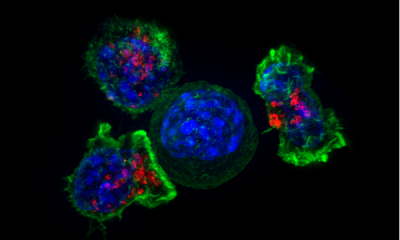
Image source: Lund University; photo: Kennet Ruona
Experiments in mice revealed how immune cells are recruited and organised within tumours to mount an immune response. The findings, published in the journal Immunity, could pave the way for more effective immunotherapy and, ultimately, help more patients benefit from the treatment.
Immunotherapy is a treatment that helps the body’s own immune system fight cancer. The treatment has fundamentally changed cancer care, but it still does not work for everyone – particularly with cancers that are difficult to treat.
An important factor is how well the immune system can organize its attack inside the tumor. There is a process inside certain tumours that forms small clusters of immune cells – known as tertiary lymphoid structures (TLSs) – which help coordinate the immune response. Patients whose tumours contain these clusters respond better to immunotherapy and often have higher survival rates. But the formation of these clusters requires the right combination of inflammatory signals, immune cells and a tumour environment that allows the immune system to organise itself.
“Until now, it has been complicated to induce the formation of TLSs, because there have been no good methods for studying and engineering these structures in different types of tumours in the laboratory. We have now developed a new strategy to address this challenge,” says Filipe Pereira, professor of molecular medicine at Lund University, who led the study.
Recommended article
Article • Awareness
Focus on cancer
From solid tumors to metastatic carcinomas and leukemia: cancer is among the most common causes of death. Keep reading for latest developments in early detection, staging, therapy and research.
In previous studies, the research group has shown that cancer cells inside tumours can be reprogrammed into dendritic cells – an important type of immune cell that helps the body mount an antitumour immune response. “In the new study, we show that these reprogrammed cells can also promote the formation of TLSs.”
Using the method of reprogramming tumour cells into dendritic cells, the researchers have now been able to investigate what happens in the tumour tissue when TLSs form. They have also demonstrated how reprogrammed cells contribute to organising the immune system’s attack on the tumour. In experiments in mice, the researchers showed that the method can activate the immune system across several different types of cancer, including melanoma, colorectal, bladder, breast and pancreatic cancer.
The results suggest that cell reprogramming could become a way of making tumours more responsive to immunotherapy and, in the long term, help more patients benefit from this treatment. “Our study shows that this is possible in several cancer types, including tumours that are usually resistant to immunotherapy. It could pave the way for new immunotherapies that make it easier to treat tumours the immune system has previously found difficult to attack," concludes Filipe Pereira.
The next step is to better understand which signals cause TLS to form and persist over time, and how the method can be combined with current immunotherapies. The researchers also want to investigate how different immune cells work together to create a long-lasting response against the tumour.
Source: Lund University
09.11.2026