

Source: National Institutes of Health
News • Onkologie
Tumours use antioxidants to evade immune attack
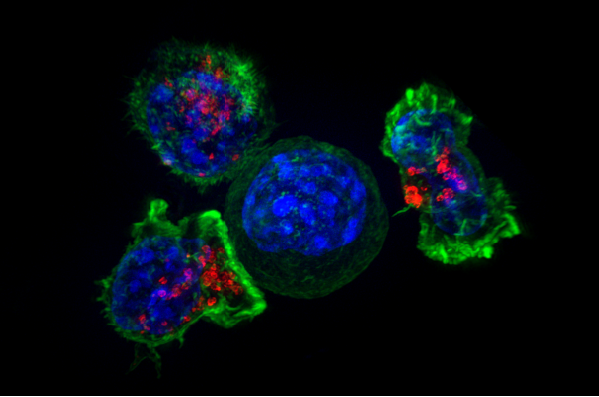
Researchers have found that tumours release a natural antioxidant protein that strips away the molecules T cells need to activate and kill cancer cells.
Cancer cells release antioxidants to prevent immune cells from destroying them – this is the finding of a new study published in Science by researchers at the University of Cambridge and Oregon Health & Science University. The discovery could help improve the effectiveness of cancer immunotherapies.
The immune system deploys specialised T cells to hunt down and destroy tumour cells. However, T cells need small amounts of reactive oxygen species – molecules that include so-called free radicals – to activate and switch on their killing ability. The team found that tumours exploit this dependency: cancers chemically smother T cells by releasing large amounts of a natural antioxidant protein, Peroxiredoxin 1 (PRDX1), which mops up reactive oxygen species and deprives T cells of the activating signals they need to perform cancer killing.
Antioxidant protein identified as key immune suppressor
The team analysed the fluid surrounding cells within tumours grown in mice and used CRISPR gene-editing technology to create mouse cancer cells that could no longer produce the antioxidant protein. Removing this capacity promoted immune-cell activity and limited tumour growth. The researchers then confirmed the same mechanism in humans by analysing published data on proteins released by human cancer cell lines, examining gene activity across thousands of human tumours, and isolating the fluid surrounding tumours removed from patients.
Dr Xan Wesolowski from the Department of Pathology at the University of Cambridge said: "We tend to think of reactive oxygen species purely as damaging byproducts of metabolism. But we are increasingly understanding they have important functions within cells, and T cells need them to activate. Our study develops this picture, revealing that tumours can exploit this very dependency to evade elimination."
Implications for immunotherapy and antioxidant supplements
Prof. Rahul Roychoudhuri, also from Cambridge's Department of Pathology, added: "We've found a new way by which cancers shut down the immune system. When we block this process, tumours that don't respond to some immunotherapies start responding to treatment. That tells us this is a pathway worth targeting therapeutically."
The findings also carry broader implications. Several large randomised clinical trials have found that antioxidant supplements fail to reduce cancer risk, and in some cases worsen outcomes. The discovery that T cells depend on reactive oxygen species to fight tumours may help explain why antioxidants could inadvertently blunt the immune system's ability to attack cancer. The team stresses, however, that as its findings are based on preclinical laboratory models, people living with cancer should not change their treatment or diet without medical advice.
Source: University of Cambridge
24.09.2026