

Image source: Chu SE, Cheng CY, Chang CJ et al., JAMA Internal Medicine 2026; © American Medical Association
News • Transesophageal echocardiography
Real-time imaging turns CPR into precision procedure
A first-of-its-kind randomized trial shows that transesophageal echocardiography during cardiac arrest improves CPR quality markers.
Can transesophageal echocardiography-guided CPR improve outcomes of patients with out-of-hospital cardiac arrest?
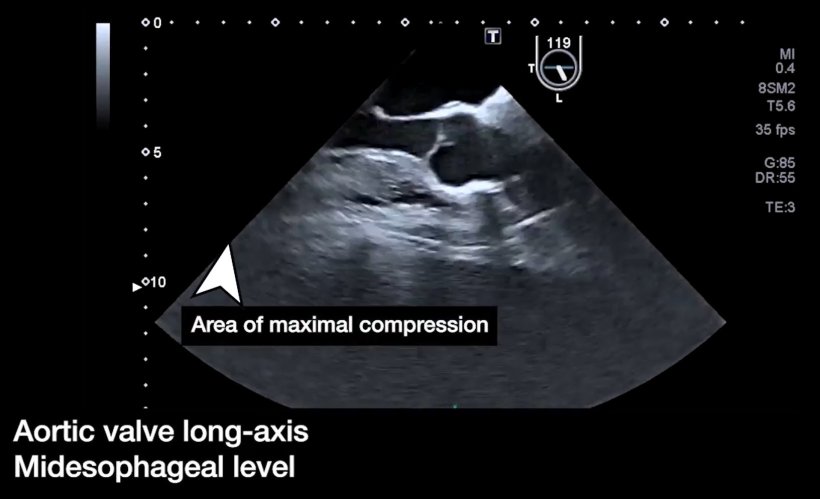
Every year, 3.8 million people suffer out-of-hospital cardiac arrests (OHCA). While CPR is the ultimate lifeline, survival rates remain suboptimal. Current "one-size-fits-all" chest compression guidelines lack strong clinical evidence, prompting researchers to challenge the status quo. Scientists conducted the world's first randomized clinical trial comparing conventional CPR with transesophageal echocardiography (TEE)-guided CPR. By using real-time imaging to precisely target the left ventricle and avoid the aortic valve, the team aimed to optimize every compression.
This novel, well-conducted, hypothesis-driven study by our team guides the way toward individually customized CPR to optimize outcomes
Wen-Chu Chiang
Key insights from 132 patients:
- Patient survival: No statistically significant difference in overall survival was found compared to conventional CPR in this pilot sample.
- Superior quality: The TEE-guided group showed significantly higher end-tidal CO2 levels, indicating improved forward blood flow and perfusion.
- Proven safety: The precision approach was implemented without an increase in adverse events.
The research was published in JAMA Internal Medicine.
While larger trials are necessary to determine the true clinical impact on survival, this research marks a pivotal shift — moving beyond "blind" compressions toward a future of data-driven, personalized life support.
"This novel, well-conducted, hypothesis-driven study by our team guides the way toward individually customized CPR to optimize outcomes," says co-corresponding author Wen-Chu Chiang, clinical professor of emergency medicine at National Taiwan University and vice superintendent at National Taiwan University Hospital Yunlin Branch.
Source: National Taiwan University Hospital
10.04.2026