

Image source: City of Hope
News • Preclinical study
Lung cancer: new approach to reduce radiation-related damage
Findings from a preclinical investigation point to a possible strategy for reducing a serious side effect of cancer care
Researchers at the City of Hope cancer research and treatment organization have uncovered an immune pathway that may contribute to radiation-related lung damage and have identified a potential strategy to block it. Published in Nature Communications, the insights from the preclinical study could lead to new treatments that prevent radiation from harming healthy lung tissue and improve patients’ quality of life.
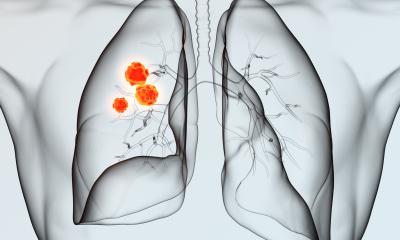
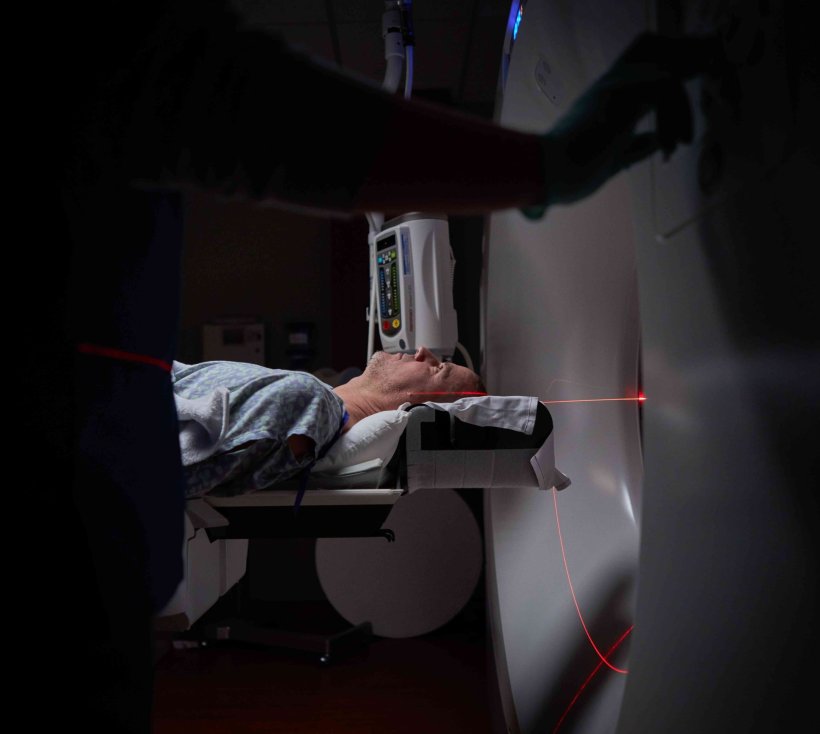
More than two million people worldwide are diagnosed with lung cancer each year, and up to 70% of people diagnosed with the disease will undergo radiation at some point in their treatment. While radiation is often lifesaving, the therapy can permanently damage healthy lung tissue and limit future cancer treatment options.

Image source: City of Hope
When healthy lung tissue is damaged, the effects can be severe and long-lasting. Up to 20% of patients struggle with debilitating breathing difficulties and reduced quality of life, leaving some patients tethered to heavy oxygen tanks.
“Many researchers in our field study how radiation activates well-known immune cells such as T cells to fight cancer,” said corresponding author Heather McGee, M.D., Ph.D., an assistant professor in the departments of radiation oncology and immuno-oncology at City of Hope. “We are the first group to show that radiation also reprograms rare immune cells called innate lymphoid cells, and that these cells play a key role in driving damage to healthy lung tissue.” Dr. McGee leads a team of scientists investigating the role innate lymphoid cells play in the response to radiation. To better understand how radiation damages healthy lung tissue, her laboratory developed a mouse model of radiation-induced lung injury.
Using advanced techniques to track radiation's impact on the immune system, her team observed three key findings.
- First, radiation provoked a dramatic transformation in innate lymphoid cells (ILCs), causing them to adopt different identities and alter their functions. One type of ILC, called ILC2s, helps protect the lungs from damage. Radiation transformed these cells into another type, called ILC1s, which promotes inflammation that damages healthy lung tissue.
- Second, the researchers discovered what drives this transformation. Radiation increased levels of a signaling protein called interferon-beta (IFN-beta), which acted as the switch that pushed protective ILC2 cells to become inflammatory ILC1 cells. Tests on human ILCs showed similar biological changes. “Much like a player switching teams, radiation-induced IFN-beta can shift these immune cells from a protective role to one that promotes inflammation,” Dr. McGee said. “Our findings shed light on a previously unknown mechanism that leads to radiation-induced lung damage.”
- Third, the researchers tested whether blocking the IFN-beta signaling pathway during radiation could stop the harmful immune cell transformation. In mice, disrupting this pathway reduced inflammation, limited lung injury and decreased the fibrosis that can permanently scar healthy lung tissue.
“Our findings suggest that high levels of IFN-beta contribute to the development of lung damage during radiation and that blocking this signaling pathway could offer a potential treatment to reduce this debilitating side effect,” said Jaeho Kim, M.D., Ph.D., first author of the study and a radiation oncology postdoctoral fellow at City of Hope.
If the team’s approach proves effective in people, it could protect patients from long-term lung damage, expand radiation options for individuals with chronic lung conditions like chronic obstructive pulmonary disease (COPD) and enable more aggressive radiation treatment when needed.
Source: City of Hope
20.10.2026