

Image source: Hospital del Mar Research Institute
News • Prediction of treatment response
Colon and rectal cancer: new biomarker shows which patients benefit from immunotherapy
Determining the presence of a protein in non-tumour cells within the cancer microenvironment could be one of the keys to establishing prognosis in patients with colon and rectal cancer.
It may also help identify which patients could benefit from immunotherapy or from treatments aimed at inhibiting a specific protein linked to tumour proliferation. This is highlighted by a new study published in the journal Gut, led by a multidisciplinary team of pathologists, oncologists and biologists from the Hospital del Mar Research Institute (HMRIB), the Institute for Research in Biomedicine (IRB Barcelona), and the CIBER Oncology area (CIBERONC).
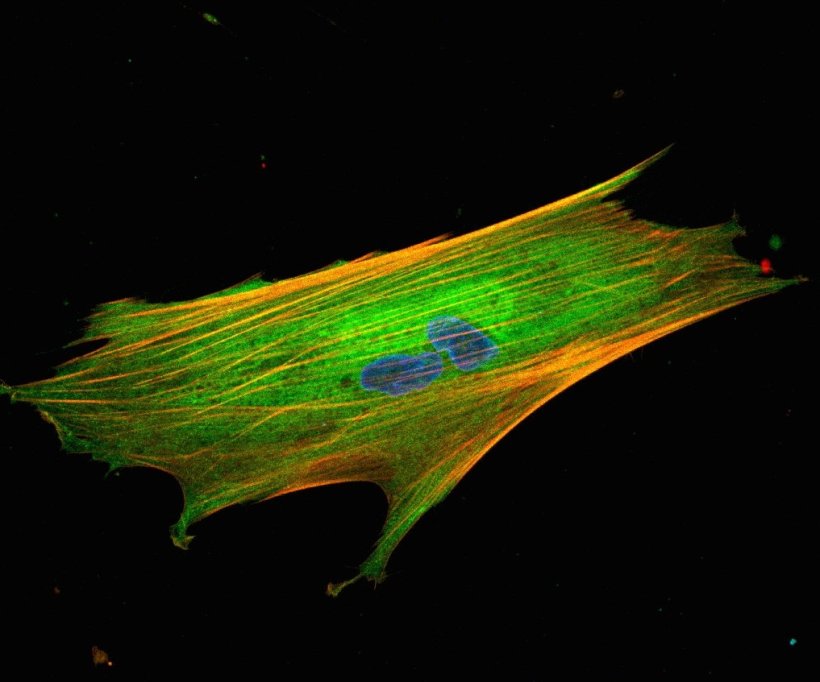
These specific cells, which express a particular protein (CTHRC1) and are known as CTHRC1(+) CAFs, belong to a population of cancer-associated fibroblasts-connective tissue cells that, in tumours, form part of their microenvironment and help them proliferate. To determine their potential role as a biomarker, using immunohistochemistry tests routinely applied in Pathology services for colon and rectal tumours, a complex multidisciplinary validation process was required.
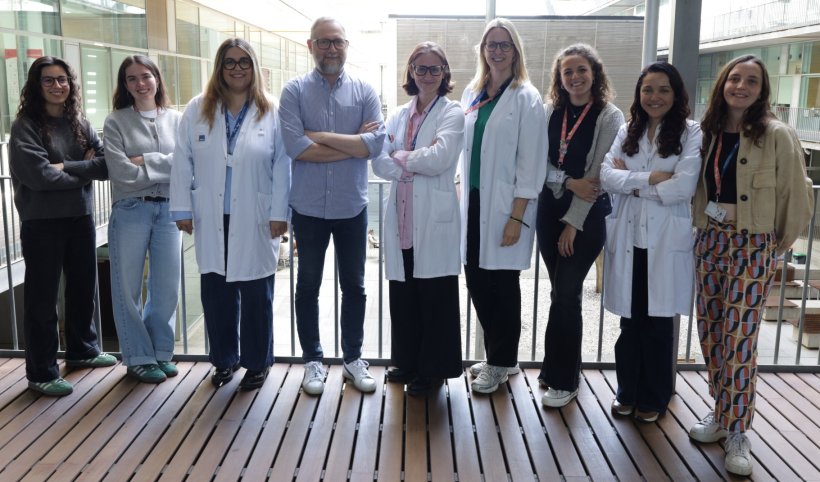
Image source: Hospital del Mar Research Institute
First, the potential of CTHRC1(+) CAFs as predictive markers of treatment response was studied across 17 cohorts comprising samples from nearly 3,000 patients. Next, tumour cell RNA was analysed at the single-cell level to identify the most promising cell populations. Finally, the proteins they expressed were determined. At the end of the process, only those cells expressing a specific protein-CTHRC1(+) CAFs-retained predictive capacity.
The results were validated using patient samples from individuals who had received different treatments across several national and international hospitals, including the Hospital Clínico Universitario de Valencia, the Hospital Universitario Germans Trias i Pujol, and Hospital del Mar. In this regard, Dr Alexandre Calon, one of the study's principal investigators and coordinator of the Translational Research Group in Tumour Microenvironment at the Hospital del Mar Research Institute, highlights that "the validated marker maintains strong predictive and prognostic performance across patient cohorts."

Image source: Hospital del Mar Research Institute
Another key finding is that it may also help determine patient prognosis. The new marker enables measurement of the activity of a cytokine in the tumour microenvironment, TGF-beta, which is associated with poorer disease outcomes. High levels of CTHRC1 protein are linked to treatment resistance. This also suggests a potential therapeutic target in the form of inhibitors of this protein, which should be further investigated. "The tumour microenvironment plays a decisive role in the progression of colorectal cancer and in its response to treatments. Over the years, our research has shown that TGF-beta is a key regulator of this ecosystem, modulating the behaviour of stromal cells surrounding the tumour. The identification of CTHRC1 as a TGF-beta-induced factor exemplifies how basic research can lead to clinically applicable biomarkers," states Dr Eduard Batlle, ICREA researcher at IRB Barcelona and member of CIBERONC.
In this same context, the findings may also help advance the use of immunotherapy in patients with colon and rectal cancer. Currently, this approach is applicable to only a very small proportion of patients-around 5%-and it is not effective in all cases. The study indicates that the presence of CTHRC1(+) CAFs makes it possible to determine the state of immune cells within the tumour and their ability to act against neoplastic cells. Moreover, its usefulness is not limited to patients previously considered eligible for this treatment.
"This biomarker improves the selection of patients who could potentially benefit from immunotherapy," explains Dr Clara Montagut, also involved in the study and Head of Section of the Medical Oncology Department at Hospital del Mar and researcher at its institute. This, she notes, "could help guide therapeutic strategies for patients with colon and rectal cancer." Furthermore, the results could be applicable to other tumour types, such as breast and lung cancer.
One of the major innovations of the study is that the presence of the validated marker can be determined using immunohistochemistry tests, which are routinely available in any hospital Pathology service. Dr Mar Iglesias, first author of the study, researcher at HMRIB and CIBERONC, and Head of the Pathology Department at Hospital del Mar (part of the dibi network), explains that "the results position CTHRC1(+) CAFs as a useful marker with the potential to be integrated into routine clinical practice in our services and hospitals, thereby helping to guide the selection of the most appropriate treatment for each patient."
This study has been made possible thanks to the support of various organizations, including the Spanish Association Against Cancer (AECC).
Source: Hospital del Mar Research Institute
14.04.2026