

© ihorvsn – stock.adobe.com
Article • From technology to responsibility
AI in surgery – tool, or surgeon of tomorrow?
Will surgeons be replaced by machines in the future? With the rising impact of AI and robotics, this concern is on the minds of many medical professionals and patients alike. At the 2026 German Surgery Congress, Prof. Dr Jörg-Peter Ritz, President of the German Society for General and Visceral Surgery (DGAV) and Chief Physician and Medical Director at Helios Kliniken Schwerin, painted a more nuanced picture of how AI is already being used in surgery today, what it will be capable of in the near future, and where the limits lie.
Article: Wolfgang Behrends
With over 200 sessions on the subject, the conference itself was proof of just how central this development has become to the field.
Before AI can realise its full potential in surgery, one fundamental prerequisite must be met: the digitalisation of the healthcare system. Ritz made it clear that Germany still has a considerable amount of catching up to do in this regard. ‘If we don’t have the digital infrastructure in place, then AI won’t arrive, or its arrival will be delayed,’ he said. In many hospitals, digital patient records are still not the norm – paper files and printouts are still part of everyday routine. Only on a solid digital foundation can AI play to its strengths, he said.
AI in everyday clinical practice – from admission to the discharge summary
Where digitalisation already has a foothold, AI is demonstrating its practical benefits. Automatic speech recognition systems capture patient data during consultations and transfer it directly to the hospital information system – without the need for manual input. In some countries, this goes even further: citing a use case from Spain, Ritz explained how, prior to a consultation, patients communicate with an AI system that requests relevant data, pre-structures findings and coordinates appointments. According to Ritz, this model may still be a long way off for Germany, but it is a realistic prospect that could significantly ease the workload for clinicians.
Recommended article

Article • Focus topic
Digitalisation in healthcare
From telemedicine to smart hospitals, the digitalisation of healthcare is advancing - bringing exciting opportunities, but also new challenges. Keep reading for latest developments and background reports.
These benefits are particularly evident in documentation. Initial pilot projects demonstrate how AI can assist in the drafting of discharge summaries and surgical reports – whilst highlighting gaps that are easily overlooked in day-to-day practice, such as a missing follow-up appointment or an undocumented medication dose. However, widespread clinical use has yet to take place. This is also true regarding risk stratification: systems that automatically flag critical drug interactions or necessary pre-operative measures by analysing current and past findings are currently under development – and promise to highlight information that would otherwise easily be overlooked in the hectic day-to-day clinical environment.
AI in the OR – VR, robotics and intraoperative assistance
In the operating theatre, AI opens up possibilities that go far beyond mere documentation. Virtual reality headsets can be used to project images of tumours and anatomical findings directly onto the surgical site. What was previously a demanding mental exercise – namely, translating a two-dimensional X-ray image into the three-dimensional reality of the abdominal cavity – can now be supported visually: Tumour boundaries become visible, and critical blood vessel pathways are marked. Ritz assessed the current state of development: although such systems are already in use, they are predominantly still confined to research projects and early clinical applications – widespread clinical use has yet to be achieved.
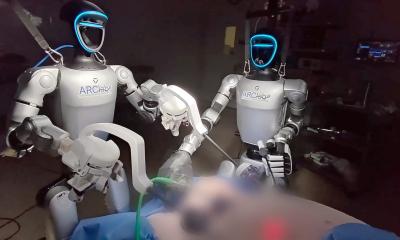
Modern surgical robots are already equipped with computing power far beyond than that of earlier generations – not by chance, but specifically to handle the vast amounts of data required for data and video analysis. This, in turn, offers the potential for sophisticated assistance systems, Ritz explained: Much like a collision warning system or lane-change assistant in modern cars, AI systems in the operating theatre could alert surgeons to risky manoeuvres – for example, that a particular surgical approach would be avoided by the majority of experienced colleagues. Such systems are already in their infancy and are set to develop further in the coming years.
Telesurgery – technically achievable, but not yet clinically mature
Telesurgery is another intriguing and promising field. While there have already been some remarkable procedures, such as a robotic cholecystectomy performed across hundreds of kilometres, this technology does not yet play a role in everyday clinical practice, Ritz noted: ‘So far, it has been more about demonstrating what is technically feasible.’ The high demands on data quality and security – particularly with regard to latency, which must be limited to just a few milliseconds – currently pose far too great a risk for everyday clinical practice.
Current systems recognise difficulties at certain stages of a procedure, such as during suturing, and then offer personalised training
Jörg-Peter Ritz
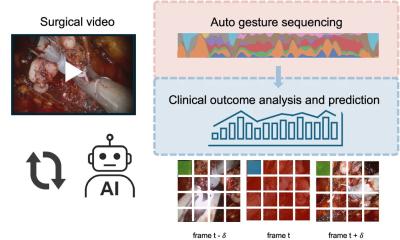
On the other hand, telesurgery already offers actual practical benefits in surgical training, for example in skills training for specific technical procedures. ‘This means we can observe, and even interact remotely during a minimally invasive procedure,’ explained the expert. ‘This is something we can already do; and it works.’ Furthermore, recordings of these tele-training sessions can even be evaluated using AI, which then automatically provides suggestions for improvement. ‘For example, current systems recognise difficulties at certain stages of a procedure, such as during suturing, and then offer personalised training.’ The aim is to improve surgical technique in a targeted manner and thus enhance patient safety.
Deskilling and the future of training
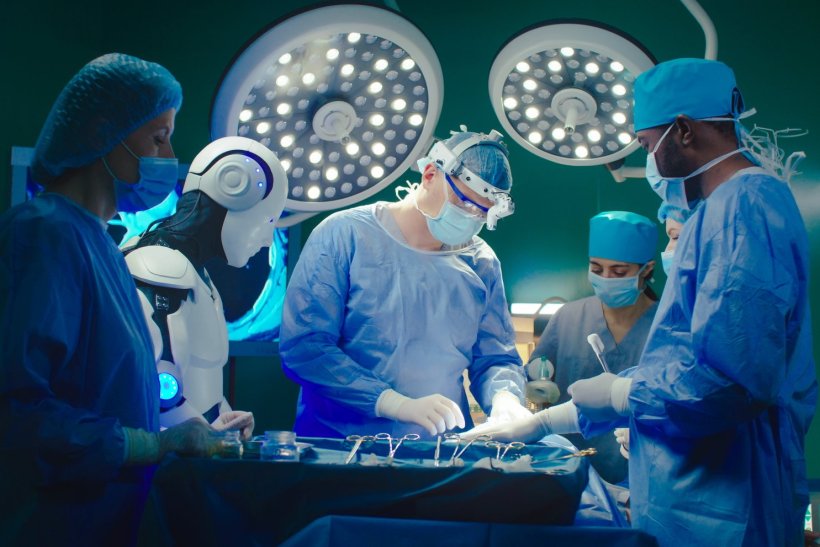
The convenience that AI assistants provide, however, also has a downside, Ritz cautioned: so-called “deskilling” – the gradual loss of basic surgical skills that are no longer practised on a regular basis. The expert illustrated this trend using open cholecystectomy as an example: where previously four people would be at the operating table, today there are only two. In the future, robotic systems could encourage an even further reduction in staff numbers – with the result that young surgeons and assistants would hardly be able to gather any practical experience, and an entire generation of surgical expertise could be lost. ‘That is why we need structured curricula, so that AI and modern technology do not push us out.’
Recommended article

Article • Diagnostic assistant systems
AI in endoscopy: helper, trainer – influencer?
Artificial intelligence (AI) is increasing its foothold in endoscopy. Although the algorithms often detect pathologies faster than humans, their use also generates new problems. PD Dr Alexander Hann from the University Hospital Würzburg points out that the use of AI helpers can affect not only the reporting of findings – but also the person making the findings.
Regarding the titular question of whether AI will replace surgeons, Ritz offered a clear-cut ‘no’. Neither the technical requirements nor the ethical and legal framework – particularly the unresolved issue of accountability – would allow this to happen in the foreseeable future. Additionally, he pointed out an aspect often overlooked in the public debate: Many patients still misunderstand the concept of robot-assisted surgery, believing that the robot performs the operation independently. In reality, it is always the surgeon who performs the operation – the robot is a precise instrument under human control, not an autonomous agent. Addressing this misunderstanding is not merely a matter of providing information, but also of building trust in modern surgical procedures.
What AI can and should do is something else entirely: take over routine tasks, simplify documentation, prevent errors and support the surgeon in a way that allows them to focus entirely on their most important task – performing surgery. This, says Ritz, would be his most pressing wish for the near future. With this in mind, he sees AI not as a competitor but as a tool: one that can make surgery safer, more efficient and more adaptable – if used wisely.
29.06.2026