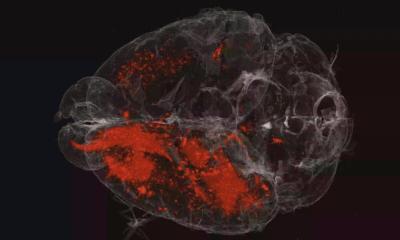


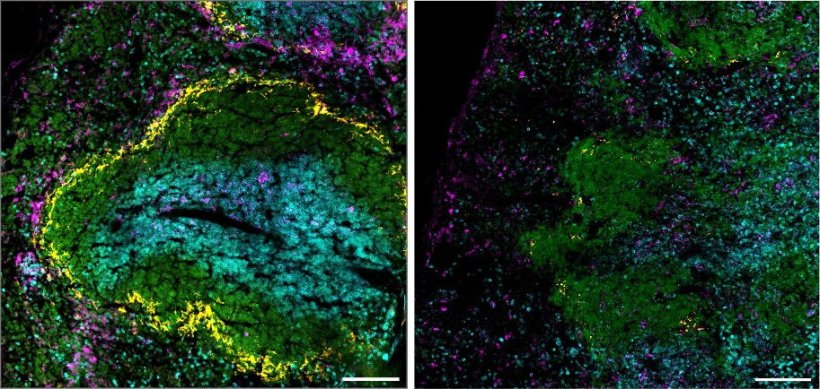
Image credit: UPF; adapted from: Cebollada Rica P, López-Serrano S, Alexandre YO et al., Cell Death & Disease 2026 (CC BY 4.0)
News • Study shows long-term benefits
Vaccination: protection beyond infection
A study in mice led by researchers at Pompeu Fabra University shows that vaccination can prevent long-term immune-related consequences derived from an acute viral infection.
Vaccination not only prevents disease caused by acute infection but also protects against long-term immune-related sequelae that can follow an acute viral infection. This is the main conclusion of a study led by the Infection Biology Laboratory at Pompeu Fabra University. The study, carried out in mice, shows how after recovering from an acute viral infection, animals experienced a long period of impaired immune responsiveness which compromised their immune system's ability to effectively respond to future challenges. Prior vaccination prevented these detrimental consequences, preserving immune function, thus broadening our understanding of the benefits of vaccination.
We often think of acute viral infections - such as the common cold or a gastrointestinal virus - as simple sequential events: the virus expands and causes symptoms of illness, then the virus is controlled and, eventually, the subject recovers. This overall process also generates virus-specific immunity that helps protect against future encounters with the same pathogen. But what if recovering from an acute infection involves much more than this?
There is a general perception that an acute viral infection is a relatively minor and transient event [...]. But this view may underestimate consequences that are not immediately visible and can persist long after the infection itself has resolved
Andreas Meyerhans
A study led by researchers from the Infection Biology Laboratory at Pompeu Fabra University, published in Cell Death & Disease, shows that recovering from an acute viral infection can come with long-term costs to the immune system. Using a mouse model of acute infection, the researchers found that although the animals controlled the virus and recovered from the acute phase of the infection, their immune system remained altered for much longer.
According to Andreas Meyerhans, an ICREA research professor at UPF, who led the research, “there is a general perception that an acute viral infection is a relatively minor and transient event: once the virus is controlled and the symptoms have resolved, the body has fully recovered and is back to normal. But this view may underestimate consequences that are not immediately visible and can persist long after the infection itself has resolved”.
As a collateral effect of the immune response generated to control and clear the virus, the researchers observed substantial disruption of the architecture of the spleen in recovered mice. The tissue developed fibrosis, while the organization and localization of immune cells were markedly altered. These changes impaired the cellular interactions required for the proper activation of T cells, key players in adaptive immunity that recognize and eliminate infected cells. Consequently, after recovering from the acute infection the specimens showed a prolonged impairment in their ability to mount new immune responses when exposed to subsequent challenges.
“The infection can be controlled, but that does not necessarily mean that the host has fully recovered”, says Dr. Paula Cebollada Rica, first author of the study. “Our findings show that the immune-related consequences of an acute viral infection can persist beyond the period in which the virus is detectable, leaving the animals in an immunocompromised state”.
The next question was whether there was a way to prevent these long-term consequences. Vaccination was a natural candidate. In this mouse model, previously vaccinated animals showed none of the alterations observed after recovery from the acute infection: their splenic architecture remained intact, and their T-cell functionality was comparable to that of naive mice.
“Vaccinated animals did not experience T-cell dysfunction or splenic alterations after recovering from an acute viral infection. This means that vaccination not only prevented the disease resulting from the acute infection but also preserved the immune system's ability to cope with new challenges”, Cebollada Rica explains.
These findings come at a time when decisions concerning vaccination and infectious disease prevention are increasingly shaped by public policy. Scientific evidence on the consequences of infections and the benefits of vaccination are particularly important at a time when political decisions can compromise collaborative disease prevention efforts. The results suggest that vaccination may have benefits that extend beyond preventing the immediate disease caused by an infection.
“The benefits of vaccination highlighted by this research are important not only for healthcare, but also for how we communicate the value of vaccination to the population at large”, Meyerhans states. “It is important that people are aware of the broader protection that vaccination can provide and continue to trust in vaccines as one of the most effective tools to prevent diseases. Put simply, vaccines provide strong health benefits at a relatively low cost to society”.
Source: Universitat Pompeu Fabra Barcelona
10.10.2026