

Image redit: Rice Lab
News • Neuroprotective antiviral state in the CNS
Remarkable early warning system helps the brain prepare for a viral attack
A newly discovered signaling network transmits advanced intelligence from distal regions of the body to the blood-brain barrier, giving the brain time to ready itself
The brain begins preparing for a potential viral attack within a couple of hours of infection, new research from the lab of Rockefeller’s Charles M. Rice has revealed. As they recently published in the journal Immunity, the scientists used mouse models to discover a signaling network that transmits advanced intelligence about viral infection from distal regions of the body to the blood-brain barrier (BBB), which prepares the brain for a potential attack.
“We discovered that the blood-brain barrier acts as a sort of central immune signaling hub between the body and the brain,” says first author Tyler Lewy, a former graduate student in Rice’s Laboratory of Virology and Infectious Disease, and now a postdoctoral fellow with the NIH. “The presence of virus-associated molecules in the foot is enough to trigger the network.”
Through the BBB’s early detection of infection signals in the periphery, the brain is able to mount a robust prophylactic response, ultimately preventing encephalitis in most cases
Tyler Lewy
Once set in motion by viral RNA, this interferon-powered network protects against not only West Nile Virus (WNV) but a range of viruses that cause neuroinflammation – many with infection numbers on the rise. “This early warning system appears to be a common mechanism of protection that gives the brain time to gird itself against severe encephalitis caused by viruses,” says Rice. “The findings deepen our understanding of the immune system’s intricate surveillance apparatus and how the involved signaling pathways involved influence whether someone develops encephalitis or not.”
The central nervous system (CNS) regulates all vital functions of the body, including using a range of sensors and signals to scan for immune threats and kickstart the response to them. It’s quarantined behind the blood-brain barrier, which is composed of tightly packed cells that line the inner surfaces of blood vessels. The blood-brain barrier blocks toxins and pathogens in the bloodstream from entering the brain while allowing through essential nutrients and other important molecules. “In almost all cases, the blood-brain barrier is extremely effective at preventing unwanted things from coming in while still allowing things that are desirable – and letting out things that aren’t, like waste,” Lewy explains. “But there’s so much that’s not known about how this extremely selective permeability operates. That’s why pharmacologists have been banging their heads against the wall for years trying to figure out how to get drugs delivered into the brain.”
Some immune threats, such as viruses, may head for the brain – and occasionally they slip past the BBB, leading to sometimes-fatal encephalitis or meningitis. The question is, in these sorts of circumstances is the brain a sitting duck, only fortifying its defenses when the virus is already at or through the gate? Or is it primed and ready to fight before a virus might reach the brain? “People have looked in the brain once the virus gets inside, but there’s very little understanding of what it’s doing beforehand,” Lewy says. “There’s been an assumption that it’s probably doing little immunologically. However, some recent studies from other labs suggest the brain isn’t as idle as we once thought.”
To try to fill in that knowledge gap, the researchers investigated whether the brain responds to a viral invasion that occurs far from it – and if it does so, when.
Recommended article
Article • Cerebral insights
The brain: mysterious grey matter
More than 80 billion neurons, trillions of synapses and almost 6 kilometres of neural pathways: The brain is an anatomical masterpiece – and still puzzles science. Keep reading to find out about latest research and therapies of brain diseases.
First they examined WNV, which causes tens of thousands of cases of encephalitis every year. It moves from the skin to the lymph nodes and spleen, causing fever and other symptoms. Most human immune systems conquer the virus at that stage, but for another 5% of people, some with inborn errors of immunity that render them vulnerable, WNV slips past the blood-brain barrier into the CNS, where it replicates in neurons, leading to severe inflammation and sometimes death.
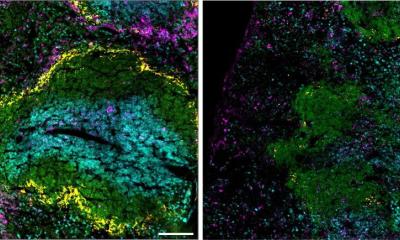
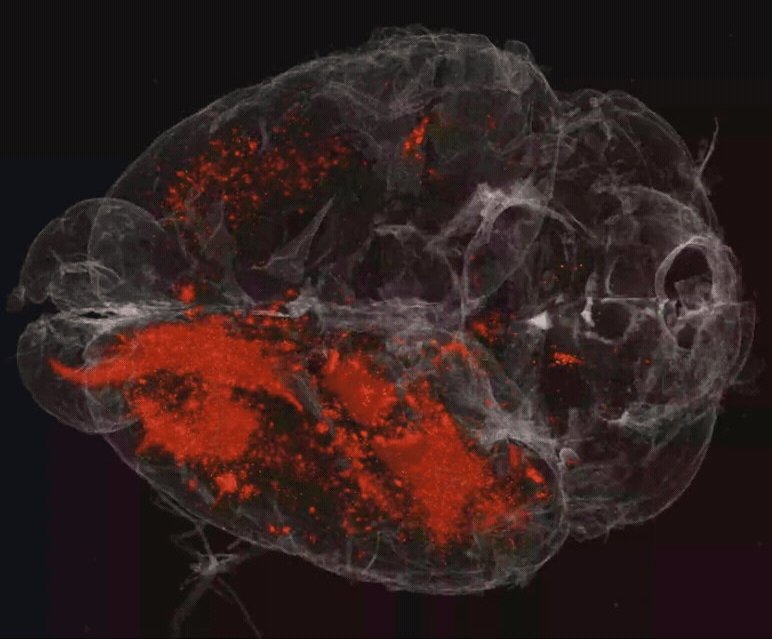
To see whether the brain responds to any of the intermediary stages of infection, the researchers injected the footpads of mice with WNV and then examined their brains at different time intervals. Within hours, they found interferon-stimulated antiviral genes (ISGs) in the brain had been activated even though there was no virus nearby. “The virus was not detectable in the brain at this stage, and yet the CNS mounted a robust and distinct antiviral immune response,” says co-senior author Alexander Lercher. “That led us to hypothesize that the CNS was recognizing signals sent from the periphery.”
To characterize this signaling network, the team tested a battery of footpad-administered pathogen-associated molecular patterns (PAMPs) –conserved molecules found across pathogens that the immune system has evolved to readily recognize – and found the brain was highly specific in its response. “It’s finely tuned, depending on the PAMP,” Lercher adds. “We tried agonists that looked like bacteria or viruses, and, depending on the PAMP, the brain activated distinct transcriptomic programs.”
Intrigued, they challenged mice again with footpad PAMPs, then infected them with WNV directly in the brain, and let the virus run its course for several days. Only mice that had received poly(I:C), a potent viral simulant, had a robust rate of survival. They then repeated the experiments with other encephalitic viruses in the same viral family as WNV, including Powassan virus (which causes tick-borne encephalitis) as well as unrelated viruses such as herpes simplex. All benefitted from poly(I:C)-induced triggering of the early warning system. “It wasn’t very surprising that they got a boost in surviving Powassan virus, which is basically West Nile’s cousin, but the fact that it was effective against herpes virus is pretty notable, because genetically these viruses are as different as a sequoia and a house mouse,” Lewy says. “We didn’t exhaustively try every single encephalitic virus, but I think from this evidence we can conclude that it’s a pretty broad mechanism.”
Further experiments revealed that the viral PAMP poly(I:C) triggered a particularly robust systemic response of type I interferons, which activated ISGs in brain microvascular endothelial cells (BMECs) located in the blood-brain barrier. Bioinformatic analyses suggests that these cells then pass the information along to the CNS, which prompted the brain’s immune cells – especially innate immune cells called microglia – to prepare for a potential viral invasion. “In interpreting these immune signals, the blood-brain barrier is a bit like an infection sensor for the brain,” Lewy says. “Through the BBB’s early detection of infection signals in the periphery, the brain is able to mount a robust prophylactic response, ultimately preventing encephalitis in most cases.”
Rice says the basic science research, which was partly supported by the Stavros Niarchos Foundation (SNF) Institute for Global Infectious Disease Research at Rockefeller, could inform new approaches to preventing vector-borne neuroinflammation. “The right therapeutic could goose the immune system early, shifting the brain into this preventative state,” he says. “That might look like either some kind of adjuvant or even an interferon-based therapy like the ones that were used to treat chronic hepatitis C before the advent of more potent, curative regimens.”
Source: Rockefeller University
16.07.2026