


Ever expanding rapid diagnostic products

Inverness Medical Innovations develops and manufactures rapid diagnostic products for use in preventive as well as interventional therapies.
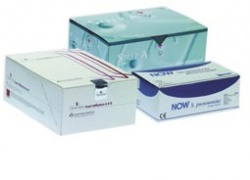
Photo: Ever expanding rapid diagnostic products

Information from patients’ body fluids, or tissue, assists physicians to diagnose disease, as well as to measure a patient’s response to a specific therapy. Its range of clinical diagnostic products already includes, the well-known brands Clearview, Inverness Medical TestPack, Binax, Determine, BioStar, and many others. ‘Our high quality immunoassays in pregnancy testing and fertility, respiratory, enteric and infectious diseases, autoimmune disorders, osteoporosis, cancer and cardiology, have demonstrated proven efficiency in clinics, hospitals and laboratories internationally,’ the firm points out.

Currently, Inverness Medical Innovations reports that it is exploring opportunities to optimise the use of its technologies, as well as continually evaluating other technological advances, for development or acquisition, in a variety of medical/health areas.

14.11.2006
More on the subject:

Related articles

Photo

Article • Pros and cons of academic-industry partnerships

Computational pathology: Building bridges between labs and business

Academic-industry partnerships are playing a crucial role in advancing computational pathology. At the Digital Pathology and AI Congress: Europe in London in December, Liron Pantanowitz outlined the…

Photo

Sponsored • Laboratory Diagnostics

Early Detection of Invasive Fungal Infections: The β-D-Glucan Test on the LIMUSAVE MT-7500

Invasive fungal infections are silent, fast-moving, and notoriously hard to catch in time. The FUJIFILM Wako β-D-Glucan Test on the LIMUSAVE MT-7500 gives clinical laboratories a quantitative,…

Photo

News • Post-injury axon regrowth

Lab-grown model shows ‘irreversible’ spinal cord damage may be reversed

When the spinal cord is damaged, the resulting paralysis is usually considered permanent. Now, a new research approach using lab-grown organoid models suggests that it actually might be reversed.

Subscribe to Newsletter