

Community acquired pneumonia
Community-acquired pneumonia (CAP) is a major health problem globally. A new test now quickly identify pathogens.
BinaxNOW tests quickly identify pathogens
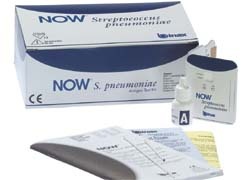
. For most CAP patients, the main problem is that the causative organism is unknown. Although early, correct identification could result in immediate, appropriate, targeted therapy - reducing mortality, healthcare costs, and lowering the use of broad-spectrum antibiotics that could lead to resistance if overused - this usually involves lengthy laboratory investigation and therefore considerable time.
Unipath, which produces the BinaxNOW range of tests, reports that these are simple, highly sensitive tests to rapidly detect CAP and other respiratory infections. ‘Streptococcus pneumoniae and Legionella tests are easy to perform, require no additional equipment, give results within 15 minutes and require urine samples. Other BinaxNOW tests for respiratory infections include Influenza A & B, respiratory syncytial virus (RSV) and Streptococcus pyogenes (Group A Strep). The sample type varies accordingly with the assay. Typical sample types include nasopharyngeal and throat swabs.’
Further details: www.unipath.com
30.08.2006