

© Cleveland Clinic
Sponsored • New Whitepaper
AI-Enabled Care Pathway: Shifting the Paradigm in Prostate Cancer Diagnosis
Prostate cancer is the second most common cancer in men worldwide. As clinical guidelines increasingly recommend MRI before biopsy, prostate MRI has become a critical decision point in the diagnostic pathway. However, many imaging departments continue to face challenges such as long acquisition times, motion-sensitive exams, and labor-intensive post-processing.
From Faster Acquisition to AI-Assisted Interpretation
The latest advancements in artificial intelligence are helping address these challenges across the entire prostate MRI workflow. Siemens Healthineers integrates AI during both image acquisition and image interpretation, enabling radiologists to work more efficiently while supporting high-quality patient care.
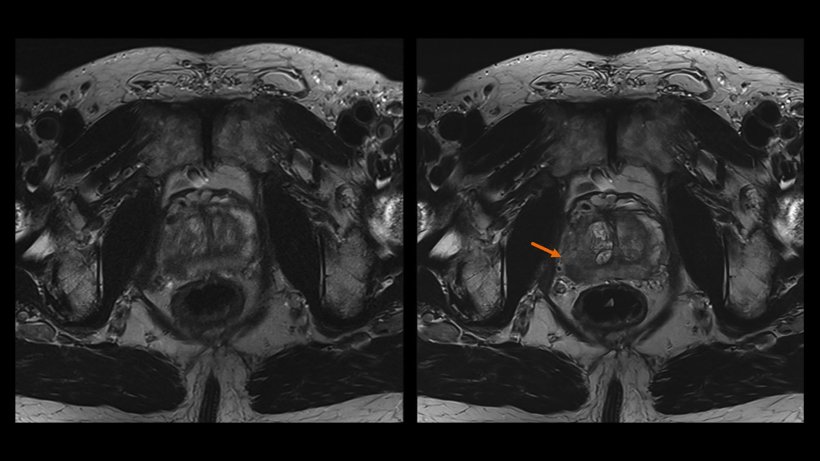
Using Deep Resolve, AI-powered image reconstruction accelerates prostate MRI acquisition while maintaining diagnostic image quality. A peer-reviewed study demonstrated approximately 39% shorter diffusion-weighted imaging acquisition times compared with conventional workflows.
Courtesy of Radiomedicum Bad Nauheim, Germany
Reducing Workload While Supporting Diagnostic Confidence
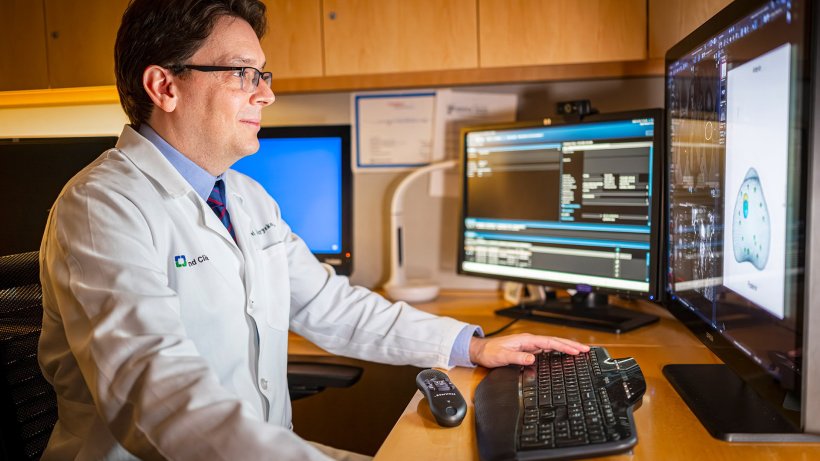
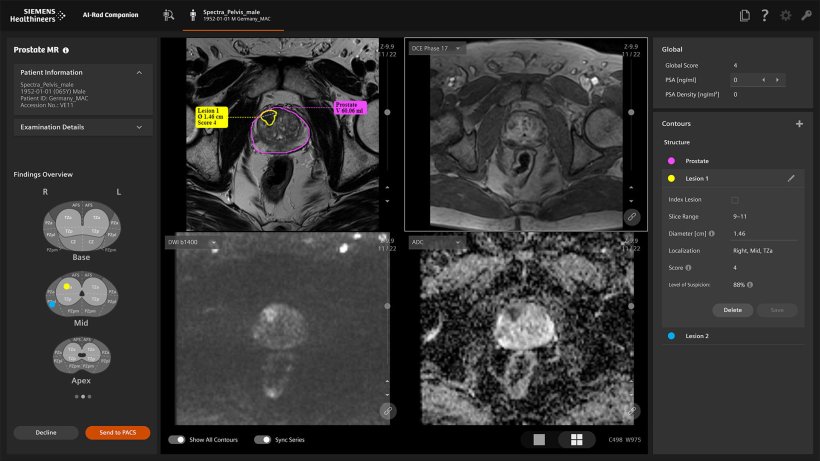
Beyond acquisition, AI-Rad Companion Prostate MR automates key post-processing tasks, including prostate segmentation, volume estimation, lesion detection, and fusion biopsy preparation. Clinical experience from Cleveland Clinic suggests a reduction in post-processing user interaction time of approximately 40% for positive cases and more than 80% for negative examinations. In addition, retrospective analysis showed concordance with subspecialty-trained abdominal radiologists in more than 85% of cases, with sensitivity and negative predictive value for clinically significant prostate cancer both exceeding 90%.
Courtesy of University Hospital Tübingen and Siemens Healthineers. Reprinted from Gassenmaier et al., European Journal of Radiology 2021
Improving Collaboration Across the Care Pathway
AI-generated prostate and lesion contours can be exported directly into fusion biopsy systems through standardized DICOM RT-STRUCT files, helping reduce information loss between radiology and urology while supporting precise image-targeted biopsy planning.
Discover the Full Care Pathway
Learn how AI can support prostate MRI from acquisition through biopsy planning, explore the clinical evidence, and read the Cleveland Clinic use case featured in the white paper.
Download the white paper: AI-enabled care pathway for prostate MRI: supporting early detection and diagnosis |
Source: Siemens Healthineers
21.09.2026