

Image credit: Griffith University
News • Altered brain connection
fMRI reveals why thinking feels so hard for ME/CFS and Long Covid patients
Research finds distinct functional connectivity patterns during cognitive fatigue
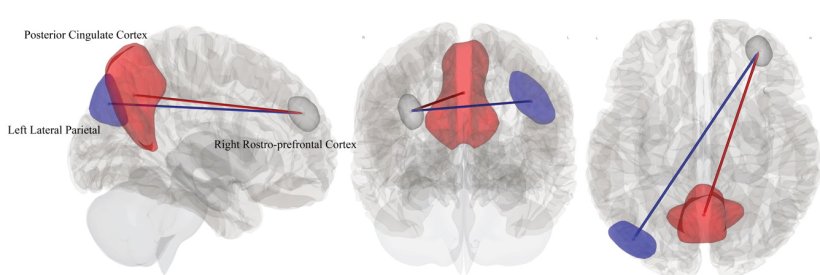
People with Myalgic Encephalomyelitis/Chronic Fatigue Syndrome (ME/CFS) and Long Covid experience a disruption to their brain connectivity during a mentally demanding task. The new Griffith University research, published in the Journal of Translational Medicine, used ultra-high field MRI technology to investigate the significant reduction in brain connectivity in specific parts of the brain.

Image source: Griffith University
Professor Sonya Marshall-Gradisnik from Griffith’s National Centre for Neuroimmunology and Emerging Diseases said there were common symptoms experienced by people with ME/CFS or Long Covid with this study focusing on neurological features. “The symptoms include cognitive difficulties, such as memory problems, difficulties with attention and concentration, and slowed thinking,” she said.
Lead author and PhD candidate Maira Inderyas said the study saw participants undertake a cognitive test while inside the MRI machine to gauge their brain activity. “The task, called a Stroop task, was displayed to the participants on a screen during the scan, and required participants to ignore conflicting information and focus on the correct response, which places high demands on the brain’s executive function and inhibitory control,” Ms Inderyas said. “The set up allowed us to precisely measure which areas of the brain were activated while the patient was performing a mentally demanding task. The scans show changes in the brain regions which may contribute to cognitive difficulties such as memory problems, difficulty concentrating, and slower thinking.”
The research supported what many people with ME/CFS and Long Covid experience which was that cognitive effort was not just tiring but could have real neurological impacts, and adequate rest was not optional but essential.
The ultra-high field MRI used in the study was one of only two available in Australia.
The research was funded by ME Research UK and the Stafford Fox Medical Research Foundation.
Source: Griffith University
29.01.2026