



Image source: Chalmers University of Technology; photographer: Nicola Pietro Montaldo
News • Chronic neurological disorder
Researchers identify early signs of Parkinson's in the blood
A team led by researchers at Chalmers University of Technology, Sweden, has succeeded in identifying biomarkers for Parkinson’s disease in its earliest stages, before extensive brain damage has occurred.
Parkinson’s is an endemic disease with over 10 million people affected globally. As the world’s population grows older, this number is expected to more than double by 2050. At present, there is neither an effective cure nor an established screening method for detecting this chronic neurological disorder at an early stage before it has caused significant damage to the brain.

Image source: Chalmers University of Technology
In a new study published in npj Parkinson’s Disease, a research team from Chalmers University of Technology and Oslo University Hospital, Norway, reports on decisive steps towards an early diagnosis of Parkinson’s.
“By the time the motor symptoms of Parkinson’s disease appear, 50% – 80% of the relevant brain cells are often already damaged or gone. The study is an important step towards facilitating early identification of the disease and counteracting its progression before it has gone this far,” says Danish Anwer, a doctoral student at the Department of Life Sciences at Chalmers and the study’s first author.
In the study, the researchers focused on two processes thought to be involved in the very early phase of the disease, which can last up to 20 years in Parkinson’s patients before motor symptoms are fully developed. One of the processes is the body’s DNA damage repair, which is the cells’ built-in system for detecting and correcting damage. The second is the cells’ stress response, a survival reaction activated by threats, in which cells prioritise repair and protection by pausing normal functions.
This means that we have found an important window of opportunity in which the disease can be detected before motor symptoms caused by nerve damage in the brain appear
Annikka Polster
The researchers used machine learning and other techniques to discover a pattern of distinct gene activities linked to DNA damage repair and stress response in patients in the early phase of Parkinson’s disease. This pattern was not found in either healthy individuals or diagnosed patients who already had symptoms.
“This means that we have found an important window of opportunity in which the disease can be detected before motor symptoms caused by nerve damage in the brain appear. The fact that these patterns only show at an early stage and are no longer activated when the disease has progressed further also makes it interesting to focus on the mechanisms to find future treatments,” says Annikka Polster, Assistant Professor at the Department of Life Sciences at Chalmers, who led the study.
In the intense global research into Parkinson’s disease, several other biological indicators of the early stage of the disease have been examined, including those linked to brain imaging or brain fluid analyses. However, validated tests suitable for widespread screening to detect the disease before symptoms appear are not yet available.
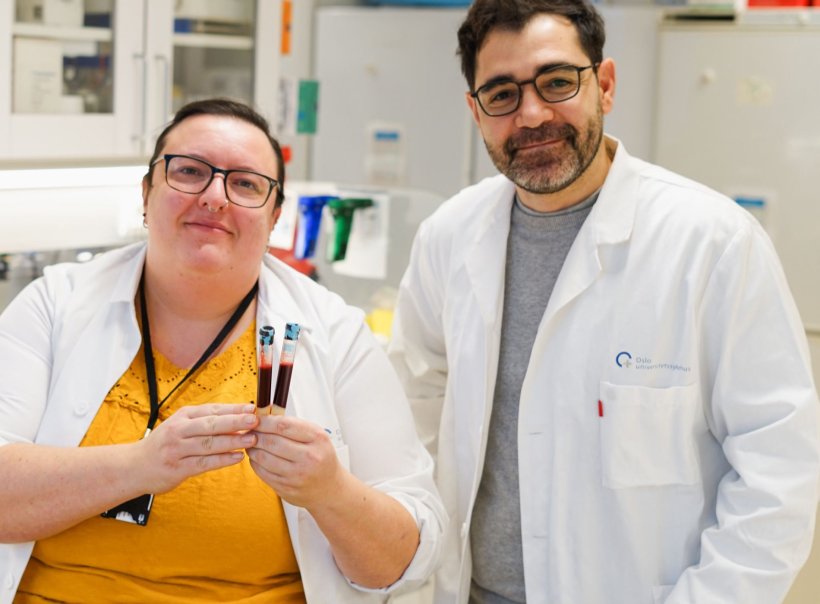
Image source: Chalmers University of Technology; photographer: Guro Flor Lien
“In our study, we highlighted biomarkers that likely reflect some of the early biology of the disease and showed they can be measured in blood. This paves the way for broad screening tests via blood samples: a cost-effective, easily accessible method,” says Polster.
In the next stage, the researchers will try to understand exactly how the mechanisms activated in the early stage of the disease work, and develop tools to make it even easier to detect them.
Within five years, the research team believes that blood tests for early diagnosis of Parkinson’s disease could begin to be tested in healthcare. In the longer term, it is hoped that the research will also contribute to the development of drugs to prevent or treat the disease.
“If we can study the mechanisms as they happen, it could provide important keys to understanding how they can be stopped and which drugs might be effective. This may involve new drugs, but also drug repurposing, where we can use drugs developed for diseases other than Parkinson’s because the same gene activities or mechanisms are active,” says Polster.
Source: Chalmers University of Technology
04.02.2026