

News • Premature ovarian insufficiency
Immunotherapy may temporarily restore fertility in premature menopause patients
Six out of ten women developed follicles that made it possible to retrieve eggs in response to ovarian stimulation

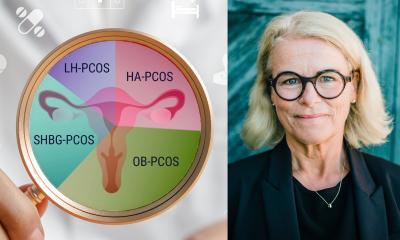
Image source: Karolinska Institutet; photo: Sofia Nahringbauer
A pilot study from Karolinska Institutet shows that immunotherapy may enable stimulation of egg maturation in women with autoimmune POI (premature ovarian insufficiency) – a condition that usually leads to infertility. Three out of ten women gave birth to healthy babies following the treatment.
The researchers published their findings in the journal NEJM Evidence.
Just over 3% of women worldwide are affected by premature ovarian insufficiency, POI – a condition in which the ovaries cease to function before the age of 40. POI can have various underlying causes, with both autoimmune mechanisms and other factors such as genetics playing a role. The condition leads to significantly reduced fertility. The researchers therefore sought to investigate in the current study whether immunotherapy could make the ovaries temporarily responsive to hormonal stimulation in women with POI caused by autoimmunity.
The study included twelve women aged 18–35 with autoimmune POI. Two of them withdrew from the study before treatment began. All other participants underwent ovarian hormone stimulation both before and four to six months after treatment with the drug rituximab, which is an approved and well-established drug for various autoimmune conditions and cancers.
The results show that in some women there remains an egg reserve that can be activated when the autoimmune process is suppressed
Angelica Lindén Hirschberg
Before treatment with rituximab, none of the women responded to the stimulation. After treatment, however, six out of ten women developed follicles that made it possible to retrieve eggs in response to ovarian stimulation.
”The results show that in some women there remains an egg reserve that can be activated when the autoimmune process is suppressed”, says the study’s first author Angelica Lindén Hirschberg, professor at the Department of Women’s and Children’s Health at Karolinska Institutet.
In five of the women, mature eggs could be frozen or fertiliszed. Three of them later had embryos transferred, and all three gave birth to healthy babies. For safety reasons, embryo transfer took place no earlier than one year after treatment. One case of a serious side effect was reported and was linked to the hormone stimulation, not to the immunotherapy.
It is common for women with autoimmune POI to also have other autoimmune diseases. All women who responded to the treatment had autoimmune Addison’s disease, a condition in which the immune system destroys the adrenal glands.
The study is a so-called proof-of-concept study without a control group and involved a small number of participants, which means that the results must be interpreted with caution.
“This is a first step. To determine whether the method is effective and safe, larger, randomised studies are required,” says Angelica Lindén Hirschberg. The research team has just launched such a study.
The study was conducted in collaboration with researchers at Karolinska Institutet, Karolinska University Hospital and the University of Bergen. The research was funded by, among others, the Swedish Research Council, the Knut and Alice Wallenberg Foundation, the Novo Nordisk Foundation and Region Stockholm. The researchers report no conflicts of interest.
Source: Karolinska Institutet
29.06.2026