

© UNIGE – Marc Chanson
News • New approach to limit infections
Cystic fibrosis: restoring the respiratory protective barrier
A team at the University of Geneva (UNIGE) has succeeded in restoring the defective respiratory protective barrier in people with the rare genetic disease.
Cystic fibrosis, one of the most common genetic diseases in Switzerland, promotes chronic bacterial infections by impairing the protective barrier of the airways. Scientists at UNIGE have discovered that this dysfunction is caused by the abnormal activation of a protein, connexin 43, which disrupts cellular organisation and compromises the integrity of the airways. The team has not only shed light on this molecular mechanism using 3D models of cells derived from human lungs, but has also succeeded in correcting the defect using molecules already undergoing clinical trials in dermatology and oncology. Preventing pathogenic bacteria from attaching to the airways of people with cystic fibrosis could therefore help limit serious complications. These findings are published in the journal Communications Biology.

© UNIGE – Marc Chanson
Despite significant therapeutic advances, chronic pulmonary infections persist in many patients with cystic fibrosis. Eradicating respiratory pathogens therefore remains a major challenge. In previous work, Marc Chanson’s team, full professor in the Department of Cell Physiology and Metabolism, the Department of Paediatrics, Gynaecology and Obstetrics, and the Geneva Centre for Inflammation Research at the UNIGE Faculty of Medicine, discovered that this vulnerability to infection stemmed from abnormal adhesion sites on the surface of respiratory cells — true “anchor points” to which bacteria attach firmly. “But to develop treatments, we first needed to understand the underlying mechanisms,” explains Marc Chanson.
Connexin 43 is a protein known for its role in communication between cells, a process essential to the functioning of tissues and organs. In the airways, it is normally active only when cells need to regenerate. In people with cystic fibrosis, however, it remains abnormally active, triggering a cascade of dysfunctions.

© UNIGE – Mehdi Badaoui
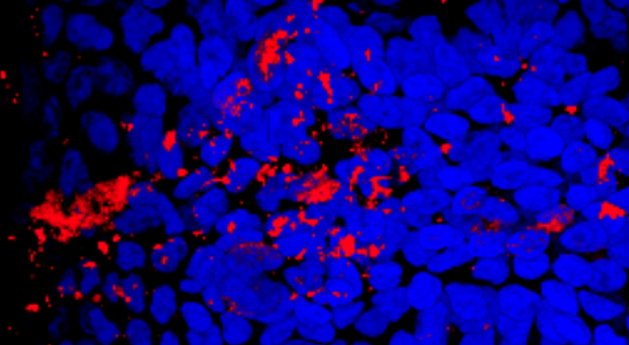
"Using 3D models of cells derived from human lungs, we discovered that prolonged connexin 43 activity alters cell communication, disrupts cell orientation, and progressively disorganises tissue integrity," says Mehdi Badaoui, senior lecturer in the Department of Cell Physiology and Metabolism at the UNIGE Faculty of Medicine and first author of the study. "It then promotes the formation of the anchor points to which the bacteria responsible for respiratory infections attach."
By blocking connexin 43 activity in their 3D models, the research team was able to restore cell orientation, re-establish the spatial organisation of cells, and prevent the formation of anchor points. "Mimetic peptides — short synthetic molecules already used to promote wound healing — drastically reduced the ability of bacteria to colonise respiratory cells," explains Mehdi Badaoui.
"These findings demonstrate that the regulation of cell communication by connexin 43 is a fundamental element in maintaining pulmonary defence," concludes Marc Chanson. "By targeting the deep mechanisms underlying airway dysfunction, our results could offer an additional treatment approach."
Source: University of Geneva
23.09.2026