

Image source: NYCU
News • Wearable brainwave device
Monitoring method to avoid pain under anesthesia
When patients undergo general anesthesia, they lose consciousness—but does that also mean the brain stops responding to pain? A five-year collaborative study by National Yang Ming Chiao Tung University (NYCU) and MacKay Memorial Hospital suggests the answer is more complex.
Rather than simply inducing unconsciousness, effective anesthesia requires carefully balancing two distinct processes: suppressing consciousness while maintaining appropriate pain control. The interdisciplinary research team has identified a novel electroencephalography (EEG) biomarker—known as delta–alpha phase-amplitude coupling (PAC)—that more accurately reflects the brain’s response to painful stimuli during surgery than conventional monitoring methods. The findings were published in the journal Anesthesiology.
Through close integration across disciplines, we are gaining deeper insight into how the brain functions and creating technologies that can improve patient care
Chi-Hung Lin
During surgery, anesthesiologists continuously adjust anesthetic and analgesic medications to keep patients unconscious while preventing excessive physiological stress caused by surgical stimulation. Traditionally, these adjustments rely largely on indirect physiological indicators such as heart rate, blood pressure, pharmacological models, and clinical experience. However, because patients respond differently to surgery and anesthetic drugs, these measures cannot always accurately reflect how the brain is processing pain.
The new study demonstrates that PAC provides a more direct and objective indicator of the balance between nociception—the brain’s processing of harmful stimuli—and analgesia, enabling clinicians to optimize anesthetic dosing with greater precision.
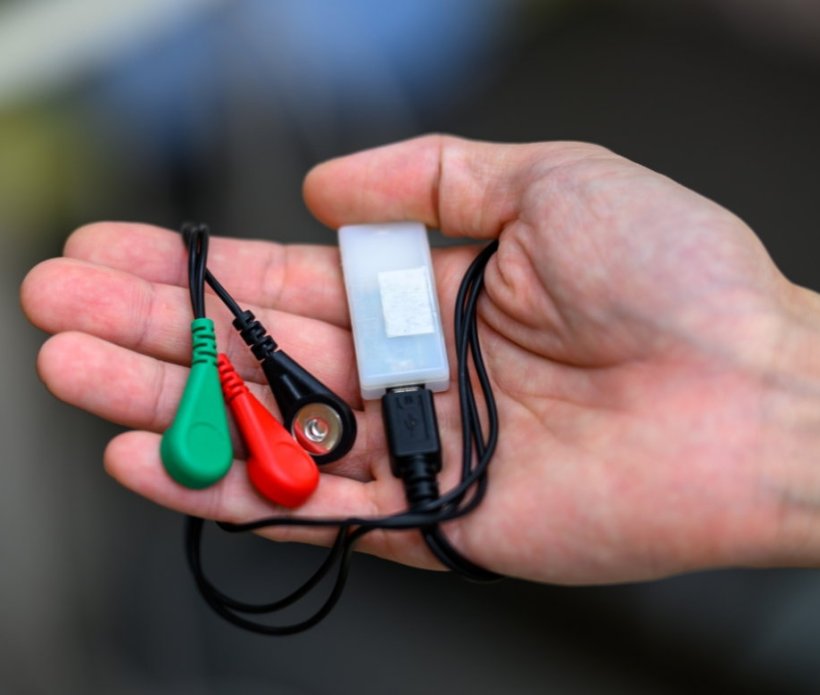
The study was made possible through a lightweight wearable EEG system developed by Professor Terry B.-J. Kuo and his team at NYCU’s Institute of Brain Science.
Designed specifically for the demanding environment of operating rooms, the device combines miniaturized hardware with advanced signal-processing algorithms capable of filtering surgical noise while continuously capturing high-quality brainwave signals.
According to Kuo, the system allows individualized, real-time assessment of brain activity, providing anesthesiologists with an objective reference when determining whether additional anesthetic or analgesic medication is needed. Such precision may help reduce the risk of intraoperative awareness, postoperative delirium, and potential long-term cognitive decline—particularly among elderly patients and other high-risk surgical populations.

Image source: NYCU
Dr. Tzu-Chun Wang, senior attending anesthesiologist at MacKay Memorial Hospital and a doctoral researcher at NYCU’s Institute of Brain Science, said precision anesthesia begins well before surgery.
Before an operation, anesthesiologists evaluate factors including a patient’s age, medical history, medications, allergies, and surgical procedure to determine an individualized anesthesia plan. During surgery, medications are continuously adjusted based on physiological monitoring, while postoperative recovery is supported through Enhanced Recovery After Surgery (ERAS) protocols involving multidisciplinary teams including surgeons, nurses, and nutrition specialists.
The newly identified PAC biomarker adds another layer of objective information, helping clinicians better distinguish between adequate unconsciousness and adequate pain control—two physiological states that are often assumed to occur together but are governed by different neural mechanisms.
Speaking on behalf of the collaborative project, NYCU President Chi-Hung Lin said advances in medical technology continue to expand the possibilities for understanding one of science’s greatest frontiers—the human brain. “This collaboration exemplifies the spirit of Engineering Medicine by bringing together engineering, neuroscience, and clinical medicine,” Lin said. “Through close integration across disciplines, we are gaining deeper insight into how the brain functions and creating technologies that can improve patient care.”
Mackay Memorial Hospital Superintendent Wen-Han Chang emphasized that anesthesiologists play a critical role throughout surgery, noting that even small adjustments in medication dosage require careful judgment and extensive clinical expertise to ensure both patient safety and surgical success.
Building on their long-standing collaboration, NYCU and Mackay Memorial Hospital are continuing to translate neuroscience research into clinical practice. The team is now extending the wearable brainwave monitoring technology to intensive care settings, where objective brain activity measurements may further improve the management and neurological outcomes of critically ill patients.
As precision medicine continues to reshape modern healthcare, the researchers believe brain-guided anesthesia represents an important step toward safer, more personalized surgical care.
Source: National Yang Ming Chiao Tung University; edited by Chance Lai
25.07.2026