

Article • Digital pathology and AI
Finding new biomarkers to match the biological complexity of cancer
Advances in artificial intelligence and multimodal data integration are poised to revolutionise cancer diagnostics – but significant challenges remain before these technologies can be routinely deployed in clinical practice. Professor Manuel Salto-Tellez outlined the steps needed to bridge the gap between complex tumour biology and the relatively simple biomarkers currently available, speaking at the 12th Digital Pathology and AI Europe conference in London.
By Mark Nicholls
Some cancer patients are missing out on the best treatments for their condition because current tests are not capturing every patient who would benefit from a given therapy. Professor Salto-Tellez explained that three clear steps are needed to address this:
- extracting more information from images via artificial intelligence tools;
- generating more complexity by applying multiplexed immunofluorescence (mIF) and similar methods to visualise numerous protein markers; and
- integrating tissue analysis with other high-throughput technologies through multimodal analysis.
Half a century of diagnostic transformation
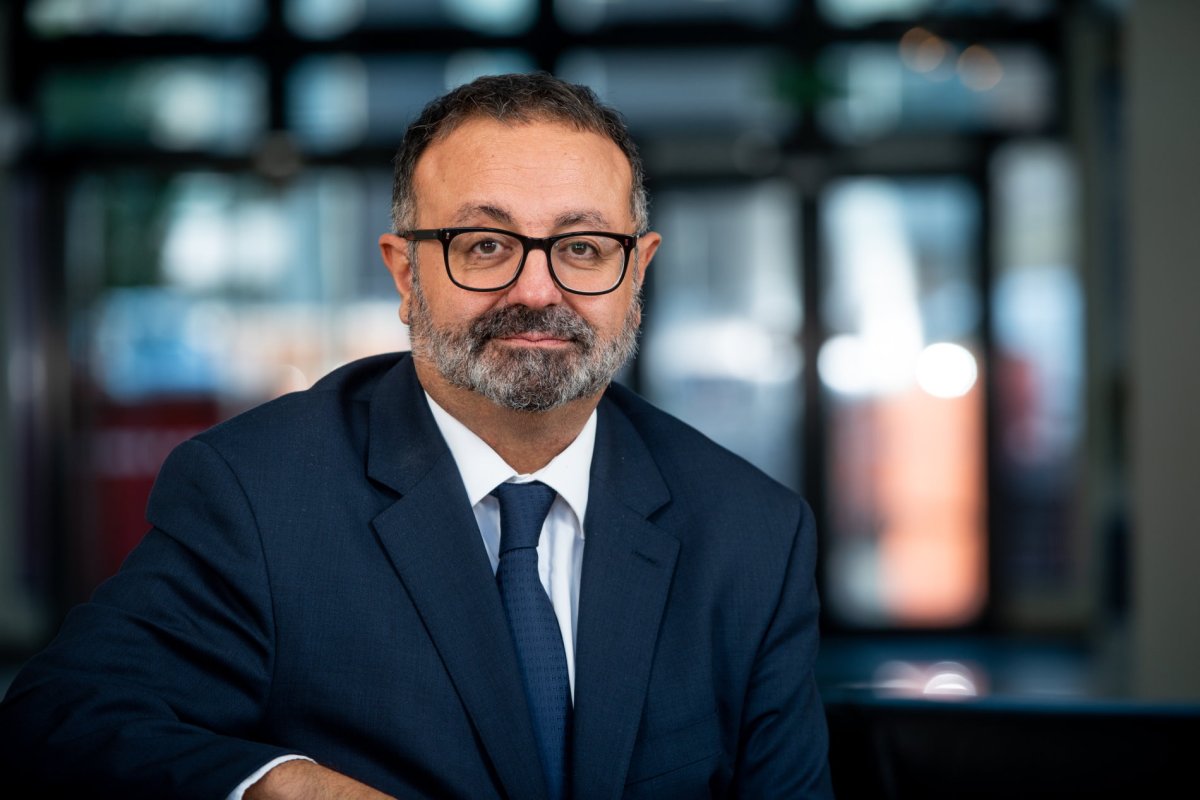
Image source: Queen’s University Belfast
Salto-Tellez, who is Professor of Integrated Pathology and Director of the Integrated Pathology Unit at the Institute of Cancer Research and the Royal Marsden Hospital in London, reflected on how diagnostic development over the past half century has transformed pathology and oncology practice – from the immunohistochemistry and genomic revolutions to the more recent digitalisation of pathology services and the use of AI.
'Good as it is,' he said, 'it is far from perfect. More patients are still not benefitting from the genomic analysis, and we know that it is still very early to understand the real impact of digital pathology.'
In his presentation, he said it is fair to ask what the next transformational technology will be. 'One way to look at this is dictated by the way we have been dealing with biomarkers,' he added.
Complex biology demands complex biomarkers
Pointing to the examples of immuno-oncology and homologous recombination deficiency – a feature in certain cancers – Salto-Tellez said: 'For a long time we have been dealing with drugs trying to affect very complex biology with relatively simple biomarkers, and in small numbers.'
He emphasised the need to bring greater complexity to biomarkers in pathology, such as by applying new AI tools. That, he continued, involves generating algorithms in digital pathology and applying AI architectures, then looking for 'a very clear specific practical use.' 'What is most important is beginning to use the superhuman capacity that machine learning has to bring us into diagnostics that the human eye cannot capture.'
ADCs require robust tissue-based biomarkers
Salto-Tellez pointed to work by ESMO (European Society for Medical Oncology) on creating the basic requirements for AI in oncology, and ongoing development of antibody drug conjugates (ADCs) to advance drugs for lung cancer. 'ADCs are helping transform patient care but there is a need for robust tissue-based biomarker technologies to predict response,' he said.
He discussed work by an international group to validate a TROP-2 assay in lung cancer, and in another example, how mIF has been indicated to decide which patients will respond to an inhibitor or to detect high-risk malignant melanoma.
Breaking down data silos with AI
While AI is important for discovery and for direct clinical application, the question of integration of information is extremely relevant. 'Multiple analytical modalities with the right information technology can result in a synergistic effect to help patients significantly,' Salto-Tellez said.
A barrier remains in real-time use of integrated multimodal data because of the way hospitals keep information in silos – unless large language models (LLMs) can be used effectively to bring patients into the system with AI crafting treatment plans. 'This is not science fiction,' said Salto-Tellez, 'this is essentially autonomous artificial intelligence agents for clinical decision making.' He believes that alongside the technology, the biggest change will occur through the 'way we begin to manage to integrate information.'
Are we ready for agentic AI?
Salto-Tellez reviewed the challenges for the routine use of agentic AI: operational, regulatory, and related to governance and legal issues. He said there will now be some tests where the decision 'is not going to come from a human pathologist but by agentic AI, helped by the human pathologist.'
'The question is,' he concluded, 'are we ready for that, and, of course, are our patients ready to accept that?'
Profile:
Professor Manuel Salto-Tellez is Professor of Integrative Pathology at the Institute for Cancer Research (ICR) in London, and Director of the Integrated Pathology Unit at the ICR and the Royal Marsden Hospital. He also holds the Chair of Molecular Pathology at Queen’s University Belfast (QUB), and leads QUB’s Precision Medicine Centre of Excellence. Prof SaltoTellez has authored or co-authored more than 340 internationally peer-reviewed articles in translational science, molecular pathology and diagnostics.
14.02.2026