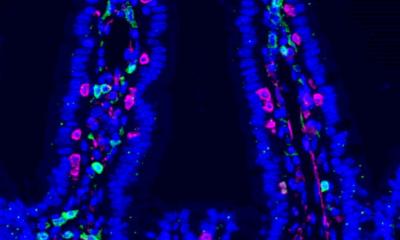


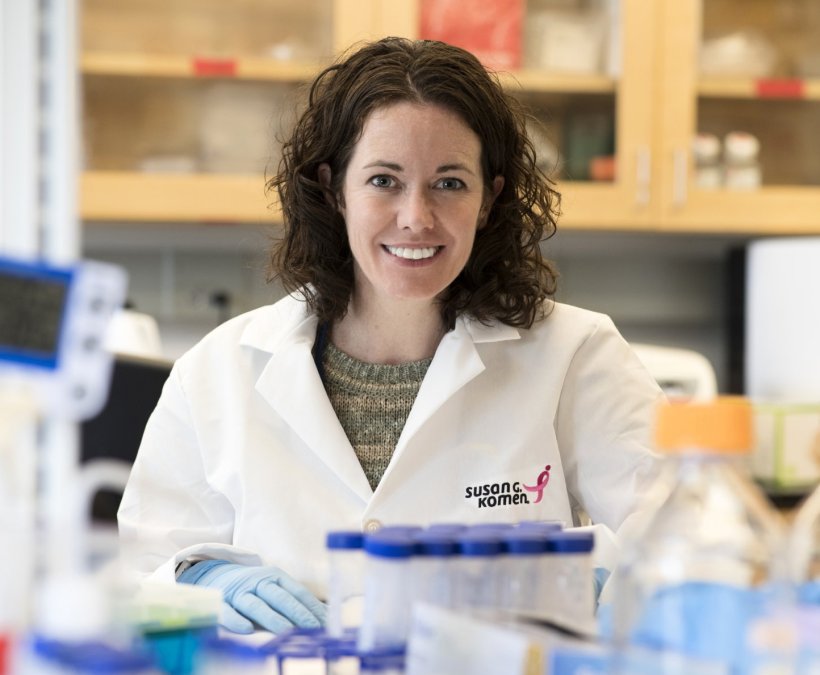
Image credit: UVA Health
News • Commensal dysbiosis
Study links bile acid buildup to breast cancer metastasis
Results suggest that targeting bile acids, or the underlying dysbiosis, could improve outcomes for patients with metastatic HR+ cancer
A buildup of bile acids caused by an unhealthy gut can drive breast cancer to other parts of the body, new University of Virginia Comprehensive Cancer Center research reveals. The findings, published in the journal Cancer Research, could open the door to new ways to prevent breast cancer metastasis (spread), improve patient outcomes and save lives.
The research from UVA’s Melanie Rutkowski, PhD, and colleagues helps explain how the gut microbiome – the collection of microorganisms that live in and on our intestines – plays a role in the spread of hormone receptor-positive (HR+) breast cancer. The work adds to a growing understanding of the far-reaching influence of the microbiome in both disease and in maintaining good health.
Because bile acids can be measured and modified, this finding opens exciting possibilities for developing new approaches to identify high-risk patients and reduce the likelihood of metastatic disease
Audrey Putelo
“We found that an unhealthy gut microbiome loses the ability to regulate the composition of bile acids, potent signaling molecules that when not properly regulated can cause havoc on your health, metabolism and the immune system. This creates an environment throughout the body that favors breast tumor metastasis,” Rutkowski said. “Our findings suggest that we could reduce breast cancer metastasis either by replenishing the bacteria that can modify the composition of bile acids, or by treating breast cancer patients with bile acid sequestrants, drugs that are already FDA-approved for treating metabolic diseases.”
HR+ breast cancer is by far the most common form of metastatic breast cancer, with 225,000 diagnoses each year in American women. HR+ breast cancer tends to spread early, with tumors often forming in the lymph nodes and lungs. Once the cancer has spread, it is much more difficult to treat, and the patient’s risk of death goes up.
Recommended article
Article • Research, diagnostics, treatments
Focus on breast cancer
Breast cancer (breast carcinoma; often abbreviated as BRCA) is the most common cancer in women in many countries and the cancer with the highest mortality rate. The diagnostic and therapeutic options for breast cancer are correspondingly diverse. Keep reading for latest developments in early detection, staging, treatment and research.
Prior studies had linked gut microbiome imbalance – known as gut “dysbiosis” – with poor patient outcomes, but Rutkowski’s research identifies a specific mechanism responsible for this. The study found that gut dysbiosis led to a buildup of bile acids, which play important roles in digestion and metabolism. They further found that bile acid buildup triggers harmful breast inflammation that ultimately fuels the spread of breast cancer cells to other parts of the body, especially the lungs.
“We found that certain bile acids produced when the gut microbiome is disrupted can create conditions that make it easier for breast cancer cells to spread,” said Audrey Putelo, PhD, co-author of the study. “Because bile acids can be measured and modified, this finding opens exciting possibilities for developing new approaches to identify high-risk patients and reduce the likelihood of metastatic disease.”
This could support the use of a well-tolerated class of drugs for the prevention of metastatic breast cancer
Melanie Rutkowski
While the scientists’ work was in lab mice, they went on to look at human patients with HR+ breast cancer. They found that elevated bile acids and insulin resistance were associated with reduced survival. Further, patients with metastatic disease who received bile acid-suppressing medications tended to live longer. (These medications, known as bile-acid sequestrants, have already been approved by the federal Food and Drug Administration, but the researchers caution that more studies are needed to determine if the drugs are directly causing the benefits seen in patients.)
Rutkowski’s results suggest that targeting bile acids, or the underlying dysbiosis, could eventually improve outcomes for patients with metastatic HR+ cancer. “Because many of the patients who were on bile-acid sequestrants have health issues that tend to favor a worse prognosis for breast cancer, the survival of patients who were prescribed bile-acid sequestrants and who had metastatic breast cancer are extremely encouraging,” Rutkowski said. “Now we want to know if these existing, FDA-approved drugs can prevent the cancer from spreading in the first place. If that proves true, this could support the use of a well-tolerated class of drugs for the prevention of metastatic breast cancer.”
Source: University of Virginia Health System
20.07.2026