Image source: Chalmers University of Technology; photographer: Mia Halleröd Palmgren
News • Lung function analysis
Wearable RFID tags can monitor breathing
Plaster-like wearable tags record respiratory function
The same wireless technology that can track pets or locate an item in a warehouse can also monitor a person's breathing. Researchers at Chalmers University of Technology, Sahlgrenska University Hospital and the University of Gothenburg, Sweden, now present a completely new method for measuring breathing movements in patients with impaired lung function. Using small, plaster-like tags, breathing can be analysed in detail entirely contactlessly – in hospital or at home.
The researchers published their findings in the journal IEEE Access.
For patients who have lung (pulmonary) disease or have undergone surgery, it is essential to be able to measure respiratory function accurately and reliably. Imaging techniques such as standard X-rays and CT scans are generally used at present, and the examinations are carried out using advanced equipment in a hospital setting. In addition to limited availability and expensive technology, patients are also exposed to radiation.

Image source: Chalmers University of Technology; photographer: Malin Arnesson
To enable advanced, accurate measurements to be taken in a simpler and more cost-effective way, a Chalmers-led research team has tested a completely new method of analysing breathing function. In a recently published scientific article, the researchers demonstrate that radio frequency technology can be used for advanced measurement of breahing function and breathing movements. The technology is already widely used across society in everything from mobile communications to tracking goods using radio frequency identification (RFID).
“To test the idea, we used existing commercial equipment in a proof-of-concept test. We are delighted with these promising results, which show that the technology has potential for advanced monitoring in healthcare,” says Xuezhi Zeng, Associate Professor and Teaching Fellow at the Department of Electrical Engineering at Chalmers University of Technology.
She has been conducting research into radio frequency technology for many years and, with fellow researchers at Sahlgrenska University Hospital and the University of Gothenburg, she carried out the study which demonstrates that the technology is suitable for advanced monitoring of breathing.
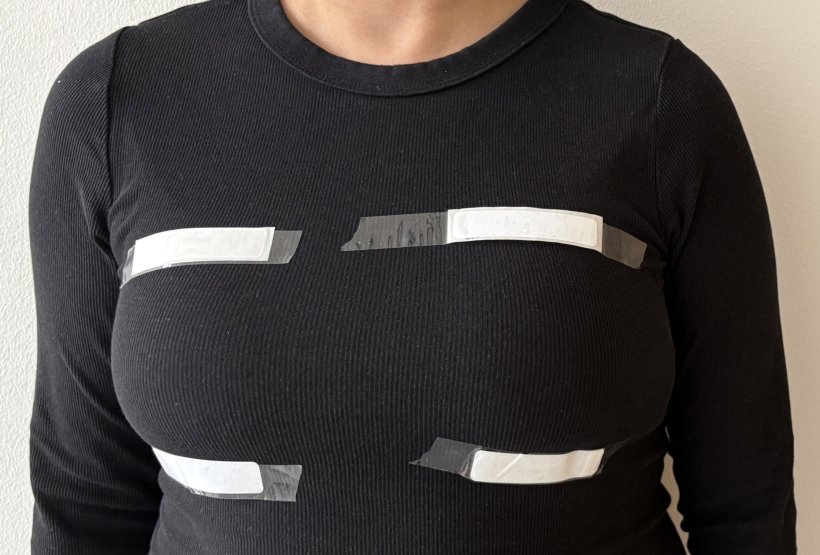
The tests were carried out at Sahlgrenska University Hospital’s simulation centre, where a computer-controlled mannequin was fitted with four plaster-like tags – RFID tags – which were placed on different positions on the chest wall. Using radio waves from a portable device, a reader, the movements of the tags could be recorded and displayed as graphs on a monitor.

Image source: Chalmers University of Technology; photographer: Johanna Ewald St Michaels
In most tests, it was possible to detect even slight differences in breathing movements at the various measurement points. The results thus provided a detailed picture of breathing function.
“There is a great need in the healthcare sector for flexible, reliable, cost-effective measurement methods. This is an important step towards providing personalised rehabilitation for patients who are recovering from surgery or living with chronic pulmonary diseases, for example,” says Gunilla Kjellby Wendt, Head of Occupational Therapy and Physiotherapy at Sahlgrenska University Hospital and Adjunct Professor at Chalmers. She believes that RFID technology would make it easier to carry out the examinations, as the equipment is portable and can be used both in healthcare settings and at home.
The small chip-equipped tags, each of which has a unique ID, draw the power they need from the reader. This means they operate entirely contactlessly and without the need for batteries or cables.
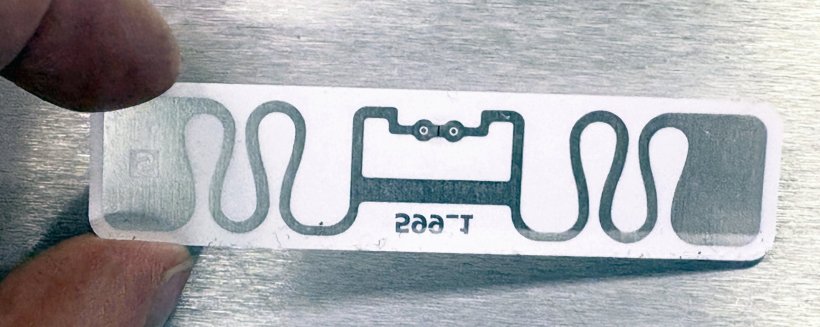
Image source: Chalmers University of Technology; photographer: Mia Halleröd Palmgren
The next step for the researchers is to develop their own prototype in which signal processing, system design and analysis functions are tailored to ensure that the equipment and method are sufficiently robust for clinical trials. “It will take a few years, but I hope our prototype can be tested on patients within five years,” says Xuezhi Zeng.

Image source: Chalmers University of Technology; photo: private
In the longer term, the researchers hope that the method will make it possible to test more patients across a wider range of care settings. The hope is also to be able to monitor patients with impaired pulmonary function over an extended period of time in their own homes, so that any deterioration can be detected and treated more quickly.
“This could have a significant impact on how we monitor and treat patients with impaired pulmonary function, particularly as more and more care is set to be provided in patients’ own homes,” says Monika Fagevik Olsén, co-author of the study and Professor of Physiotherapy at the University of Gothenburg.
Source: Chalmers University of Technology
16.04.2026