


© INRAE - Ladislav Simo
News • Preventive strategies
Blocking tick saliva could stop deadly infections
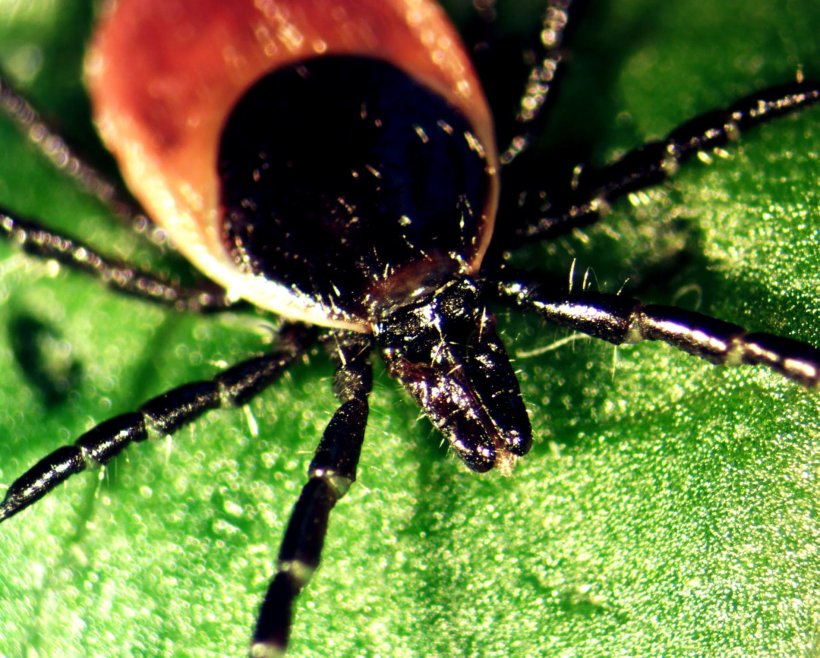
Ticks use their saliva to attach to their host and feed on its blood, a process that also facilitates the transmission of pathogens. A new study has uncovered two distinct neural signalling pathways involved in this salivation process, which can be stimulated or disrupted by various substances.
The study's findings have been published in Nature Communications.
Ticks are major vectors of infectious diseases, affecting both animals and humans. Their ability to remain attached to a host and feed on their blood over the course of several days derives from their saliva, which prevents blood clotting and reduces the host's immune defences.
Previous work on tick saliva have primarily focused on identifying its involved in suppressing the host defence system and facilitating pathogen transmission. One question remained: how does the tick control its salivation process? To address this question, an international research team led by INRAE, in collaboration with ANSES, ENVA, and the University of Orléans, investigated how Ixodes ricinus—the primary tick species in Europe, responsible for transmitting Lyme disease and tick-borne encephalitis—regulates the activity of its salivary glands.
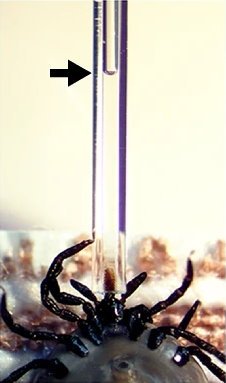
Image source: Nìng C, Valdés JJ, Mateos-Hernández L et al., Nature Communications 2026 (CC BY 4.0)
Using computer models and microscopy techniques, the research team found that the tick’s nervous system can precisely regulate the activity of its salivary glands during blood feeding. This control is achieved through two distinct yet complementary signalling pathways involving receptors sensitive to the neurotransmitter acetylcholine. To explore the roles of these pathways, the researchers tested 37 substances - including pilocarpine and atropineine - identifying compounds that either activated or blocked one or both receptors. The findings revealed that one pathway governs the continuous secretion of salivary fluid, while both pathways must work in tandem to produce the full salivary cocktail, including key proteins needed for blood feeding. This dual control enables the tick to finely tune the quantity and composition of its saliva while attached to a host.
A key contribution of this study is providing evidence that acetylcholine, a compound naturally present in ticks, is a powerful natural stimulator of salivation in female ticks. Moreover, the team discovered that one of the identified receptors is specific to invertebrates and absent in mammals including humas, suggesting the potential for developing targeted strategies to disrupt tick feeding without harming the host.
Inhibiting salivation is a crucial step in preventing both blood feeding and pathogen transmission. Targeting the tick's nervous system and its connection to the salivary glands presents a particularly promising strategy for future control efforts. This foundational research rests on a simple principle: understanding the enemy enables more effective and targeted control measures. A deeper understanding of these mechanisms—which are likely shared across different tick species worldwide—could lead to more universal and sustainable control strategies.
Source: INRAE - National Research Institute for Agriculture, Food and Environment
04.04.2026