

© Wendy Wei – pexels.com
News • Bone health
Pregnancy- and lactation-associated osteoporosis: New statement provides practical guidance
A new international position statement provides practical recommendations for the assessment, diagnosis and management of pregnancy- and lactation-associated osteoporosis (PLO), a rare condition that can cause multiple, predominantly spinal, fragility fractures during late pregnancy or shortly after childbirth.
The statement is published in the International Journal of Gynecology & Obstetrics.
Developed by an international multidisciplinary panel of experts, the statement offers a pragmatic clinical pathway to help healthcare professionals identify women with PLO and recommends individualized management, which may include pharmacological treatment where appropriate.
The statement was developed by experts representing the International Academy of Perinatal Medicine (IAPM), International Osteoporosis Foundation (IOF), European Calcified Tissue Society (ECTS), European Society for Clinical and Economic Aspects of Osteoporosis, Osteoarthritis and Musculoskeletal Diseases (ESCEO), International Menopause Society (IMS), and European Menopause and Andropause Society (EMAS).
Too often, severe back pain and fractures are not recognised promptly because the condition is unfamiliar to many healthcare professionals. Earlier recognition and timely specialist assessment are essential to improve outcomes
Peyman Hadji
Although PLO is a relatively rare condition, its impact on affected women can be profound. Women typically present with multiple vertebral fractures during the final months of pregnancy or in the early postpartum period, resulting in debilitating back pain, height loss and long-term impairment in quality of life. Because symptoms are often mistaken for normal pregnancy-related musculoskeletal discomfort, diagnosis is frequently delayed.
Lead author Professor Peyman Hadji, Head of Department at the Frankfurt Centre for Bone Health and Endocrinology and Philipps University Marburg, Germany, said: "Too often, severe back pain and fractures are not recognised promptly because the condition is unfamiliar to many healthcare professionals. Earlier recognition and timely specialist assessment are essential to improve outcomes, and we hope this position statement will help clinicians identify and manage PLO more effectively."
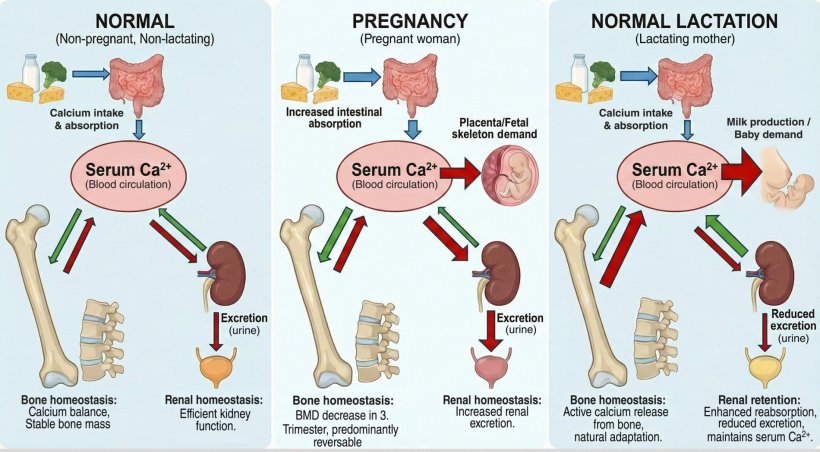
Hadji P, Athanasiadis A, Brandi ML et al., Gynecology & Obstetrics 2026 (CC BY 4.0)
The position statement recommends a pragmatic approach to the assessment and management of women with suspected PLO, including:
- Comprehensive clinical assessment, including medical history, medication review and laboratory investigations to exclude secondary causes of osteoporosis.
- Appropriate imaging strategies tailored to whether the patient is pregnant or postpartum.
- Conservative management with adequate calcium and vitamin D intake, pain management and, where clinically appropriate, discontinuation of breastfeeding.
- Treatment with bone-specific agents to reduce subsequent fracture risk should be evaluated on an individual basis, noting that their use in PLO patients is off label. If pharmacological treatments are used, they must be given alongside effective contraceptive measures.
- Preferred treatment options are teriparatide/abaloparatide or romosozumab. Second-choice treatments are denosumab followed by bisphosphonates or bisphosphonates alone.
Although understanding of the pathophysiology and treatment of PLO has advanced over the past decade, important questions remain. The true incidence of the condition is still uncertain, and there is limited evidence on the long-term outcomes of affected women, including the risk of fractures during subsequent pregnancies and the risk of osteoporosis-related fractures after menopause.
Because controlled studies are scarce, the guidance is based on the best available clinical evidence combined with expert consensus rather than formal evidence-graded guidelines. The authors also highlight the need for improved epidemiological data, prospective studies and clinical trials to strengthen the evidence base, establish optimal treatment strategies and improve long-term outcomes for women with PLO.
Professor Eugene McCloskey, Chair of the IOF Committee of Scientific Advisors, said: "This international multidisciplinary position statement brings together the current evidence on pregnancy- and lactation-associated osteoporosis and translates it into pragmatic guidance for clinicians. We hope this will help healthcare professionals recognise PLO earlier, make informed treatment decisions, and deliver more consistent care for women affected by this rare but serious condition."
Source: International Osteoporosis Foundation
04.08.2026