Image source: Göteborgs universitet
News • Remote sampling
Home blood test for Alzheimer's shows promise
Study opens up new possibilities for studying the neurodegenerative disease
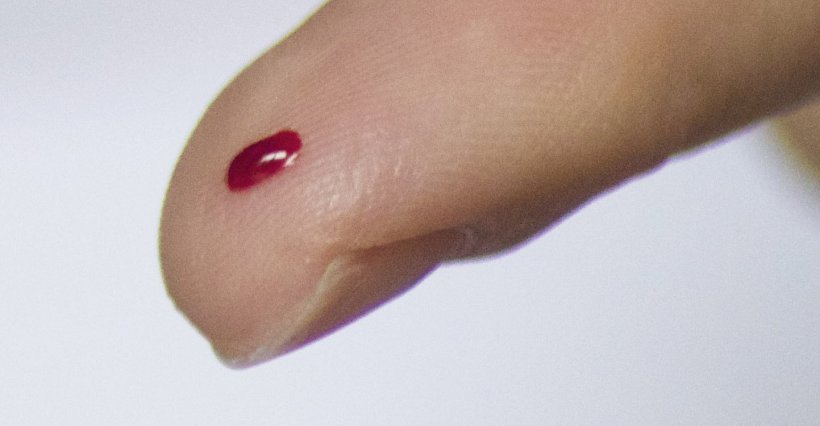
Biomarkers for Alzheimer's disease can be detected in blood samples taken with a finger prick at home and mailed to a lab, without refrigeration or other processing. This is shown in a new study, published in Nature Medicine, which was led by Nicholas Ashton, researcher at the University of Gothenburg and senior director at the Banner Sun Health Research Institute in Arizona, together with Kaj Blennow and Henrik Zetterberg at the University of Gothenburg.
Together with colleagues in Sweden and the US, and several locations in around Europe, including Spain, Italy and Denmark, they have carried out the first large-scale validation of an easily accessible test method that is independent of geographical proximity to specialized healthcare infrastructure.
We're opening doors to research that was previously impossible – studying diverse populations, conducting large-scale screening studies, and including communities that have been historically underrepresented in Alzheimer's research
Nicholas Ashton
Alzheimer's disease is usually confirmed by brain scans or spinal fluid samples, which are invasive and expensive. At the same time, blood tests that measure biomarkers for the disease, such as p-tau217, have become increasingly accurate and available, and more recently received regulatory approval. However, the blood sampling that is done clinically today requires trained personnel and specific handling and temperature-controlled storage of the samples, which creates limitations. The method of self-sampling at home, where the dry sample can be sent by post, is therefore described as a breakthrough.
"While we're still years away from clinical use, we're opening doors to research that was previously impossible – studying diverse populations, conducting large-scale screening studies, and including communities that have been historically underrepresented in Alzheimer's research", says Nicholas Ashton.
© Tesa Robbins – pixabay.com
The research project involves seven medical centers in Europe and 337 participants who took their blood by the finger prick method. The levels of p-tau217 in these samples were found to be in good agreement with the level in regular blood samples, and the degree of agreement compared to spinal cord samples was 86%. Two other biomarkers for Alzheimer's, GFAP and NfL, also showed strong agreement.
The researchers believe that the method could eventually be used to find people at risk of dementia due to Alzheimer's disease – and offer more in-depth sampling and analysis. The method is also considered to have potential for other diseases than Alzheimer's disease, such as Parkinson's disease, MS and ALS.
Source: University of Gothenburg
09.01.2026