

News • Mutational process analysis
Scientists explore DNA damage in prostate cancer for better predictions
Cancer begins with errors in the DNA inside our cells, and those errors are often more complicated than a handful of mutated genes. Prostate cancer is a case in point. Its faulty genes are well known – and yet they still do not explain why many men live with the disease for decades while for others it turns lethal.
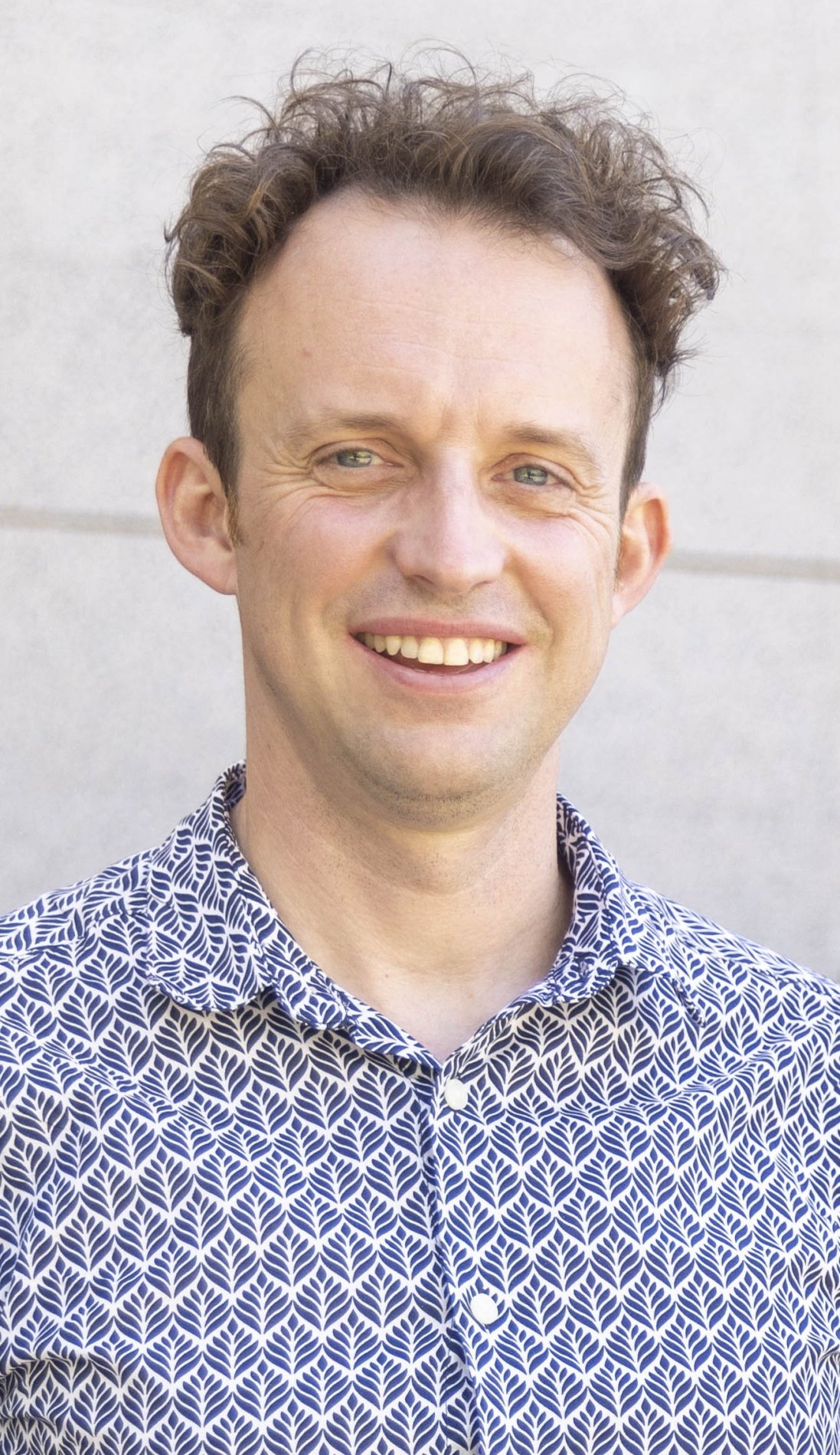
Image source: CNIO
An international collaboration co-led by the Spanish National Cancer Research Centre (CNIO) now offers an explanation. The work identifies which processes cause the DNA damage in the majority of prostate cancers, the second most common tumour in men worldwide. The results are published in Nature.
The research required reading the complete DNA of 959 tumours donated by men in seven countries. It is the largest set of prostate cancer genomes examined in this way.
“Detecting prostate cancer is not the hard part,” says Geoff Macintyre, head of the Computational Oncology Group at the CNIO. “The difficulty is telling apart the men who will live with the disease for decades – fortunately the majority – from those who will die of it.”
The study shows that much of the damage comes from cellular machinery that has stopped working properly: the machinery that copies DNA, the machinery that repairs it, and the prostate’s own hormone signalling. The teams can say this because broken machinery leaves traces behind it in the genome, and that damage follows a pattern. These patterns are known as “mutational signatures”. Studies of them have almost always looked at one type of damage at a time. This work integrates four at once: single-letter changes; short stretches of DNA gained or lost; large structural rearrangements; and large losses or gains of genetic material. “Reading one kind of DNA damage at a time is like transcribing a symphony from the cello part alone – you get the tempo, but not the whole piece,” says Macintyre. “Only when we read all four kinds together did the eight processes appear.”
Recommended article

Article • Research, diagnostics, therapy
Focus on prostate cancer
Prostate cancer (PCa) is not only one of the most common, but also one of the deadliest types of cancer in men. Diagnostics are correspondingly sophisticated, from imaging via ultrasound or MRI to various biopsy techniques – often even in combination. Keep reading for current developments in early detection, staging, therapy and research.
Eight faulty processes emerged, and most tumours turn out to be driven by several of them at once. These are not sealed compartments for sorting patients into. Tumours typically carry several of the eight processes together, and what differs between patients is which processes are at work and how strongly. “The balance of the processes at work inside a tumour is what determines how likely the cancer is to spread,” says Macintyre.
Together, the eight processes account for the DNA damage in 85% of prostate cancer cases. They relate mainly to hormone signalling; to failures in DNA copying and in the system that repairs errors; and to ageing.
Interestingly, the mutational signatures carried no trace of the environmental toxins that show up clearly in other tumours – tobacco, sunlight – which in prostate cancer are practically absent.

Image source: CNIO
“What surprised us most was the sheer scale of the damage coming from inside the cell,” says Barbara Hernando, a researcher at the CNIO and one of the study’s four joint first authors. “We looked for the marks that tobacco, sunlight and other external agents leave on DNA, the way you can read them in lung or skin cancer. Across almost a thousand genomes, we found practically none.” That does not mean environmental exposures or lifestyle are irrelevant to prostate cancer. “Diet, weight and inflammation can all influence whether prostate cancer develops without leaving any trace in the DNA,” Hernando adds.
The work brings the prospect of reliable prognostic markers closer. The analysis showed, for instance, that when one particular faulty process was the most active, the cancer was more likely to spread. That pattern held after taking into account age, tumour stage and the grade a pathologist assigns to a tumour under the microscope.
The team was also able to link one active process to a small group of patients who responded better to a specific type of therapy. That finding came from 25 men, and was examined after the fact rather than in a trial designed to test it.
These results offer clues that could help stratify patients and personalise treatment – but not yet. “Before this reaches a hospital, the findings have to be confirmed in other groups of patients,” says Macintyre. “The measurement then has to become a test that gives the same answer every time. That test has to be trialled in men who are making real decisions about their treatment. And it has to be shown to help them.”
“We have created a map of the biological processes that drive prostate cancer,” says Joachim Weischenfeldt, professor at the Biotech Research and Innovation Centre of the University of Copenhagen and Rigshospitalet, who co-led the study. “It is not going to change how any man is treated tomorrow. But it runs on the kind of DNA sequencing that several health systems already carry out for cancer patients. What we are proposing is to read existing data differently, not to build a new test from scratch.”
Source: Centro Nacional de Investigaciones Oncológicas (CNIO)
10.09.2026