

Image source: University of Turku; adapted from: Tuomaala J, Saraste M, Smith E et al., Journal of Neurology 2026 (CC BY 4.0)
News • TSPO PET study
Brain inflammation unlikely to explain long Covid symptoms
Study results suggest brain inflammation may be present early after infection, paves the way toward a clearer understanding of long Covid and targeted treatments
A new brain imaging study has found no evidence of widespread brain inflammation in patients suffering from prolonged symptoms after Covid-19 infection. Instead, the most severe long Covid symptoms were associated with increased brain activity in regions involved in mood and emotion.
The study has been published in the Journal of Neurology.
Long Covid has been suspected to involve persistent brain inflammation following SARS-CoV-2 infection, potentially explaining symptoms such as fatigue, cognitive impairment, anxiety, and depression. While previous studies have suggested this possibility, direct evidence has been limited.
Researchers at the University of Turku, Finland, used advanced brain imaging techniques to investigate whether long Covid patients with persistent symptoms show signs of brain inflammation. “We did not observe evidence of widespread brain inflammation in patients with long Covid when compared to healthy controls,” says Professor of Neuroimmunology and InFLAMES Research Flagship group leader Laura Airas, who led the study.
Recommended article
Article • Covid-19
Coronavirus update
Years after the first outbreak and spread of coronavirus SARS-CoV-2, its impact can still be felt in everyday life. Keep up-to-date with the latest research news, political developments, and background information on Covid-19.
The study included 14 individuals with long Covid, 11 healthy controls, and 13 patients with multiple sclerosis (MS), a neurological disease known to involve brain inflammation.
All participants underwent PET imaging sensitive to neuroinflammation, along with magnetic resonance imaging (MRI) to assess brain structure and white matter changes. Blood samples were analysed for biomarkers reflecting neuronal and glial damage.
Understanding these processes is essential for developing targeted treatments
Laura Airas
Compared to MS patients, individuals with long Covid showed significantly lower inflammatory activity in the brain’s white matter. No differences in markers of brain inflammation or neurodegeneration were observed between long Covid patients and healthy controls.
Clear signs of brain inflammation have previously been observed in neuropathological studies of severe acute Covid-19. In the current study, individuals scanned within 16 months of infection showed higher white matter inflammatory activity compared to those with longer disease duration. According to Airas, this suggests that inflammation may be more prominent during the early phase of the disease and decrease over time.
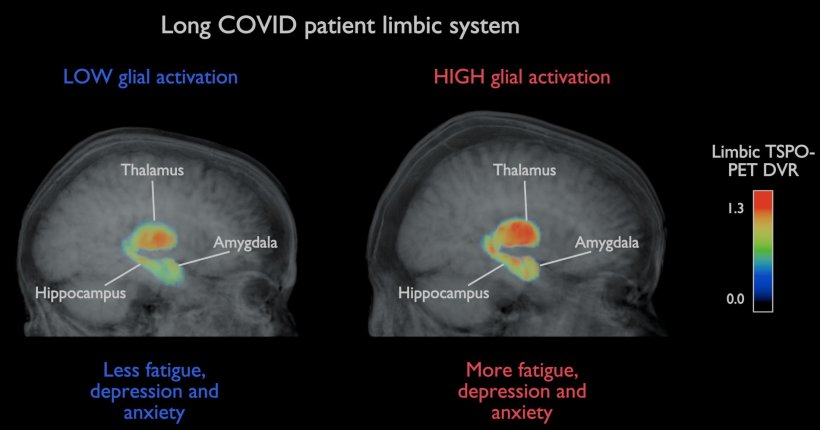
An important finding of the study was that higher levels of depression and anxiety, as well as lower quality of life, were associated with increased cellular activity in the hippocampus and amygdala. They are brain regions involved in memory, emotional regulation, and stress responses. These findings suggest that altered cellular activation in emotion-regulating brain regions may be linked to symptom severity in some patients with long Covid.
The researchers note that the findings refine our understanding of long Covid and challenge the idea that persistent brain inflammation is the primary driver of prolonged symptoms in all patients. Instead, the results point to a more complex disease profile, where inflammatory changes may be strongest right after infection and diminish over time.
Long Covid is a recognised condition affecting millions of people worldwide, with symptoms that can persist for months or even years after the initial infection.
The researchers suggest that patients with prolonged symptoms may benefit more from treatments targeting stress and emotional regulation rather than therapies aimed solely at reducing inflammation. “This study highlights the need to continue investigating the complex biological mechanisms underlying long Covid. Understanding these processes is essential for developing targeted treatments,” notes Airas.
Source: University of Turku
27.05.2026