

Image source: Hatano Y, Nakahara A, Tada M, Kakita A, Onodera O, Ishihara T, Acta Neuropathologica 2026 (CC BY 4.0)
News • Amyotrophic lateral sclerosis
ALS subtypes: why pathology spreads differently among patients
Researchers discover that the Alzheimer's disease-related gene APOE ε4 may influence how ALS pathology spreads.
The findings were published online in Acta Neuropathologica.
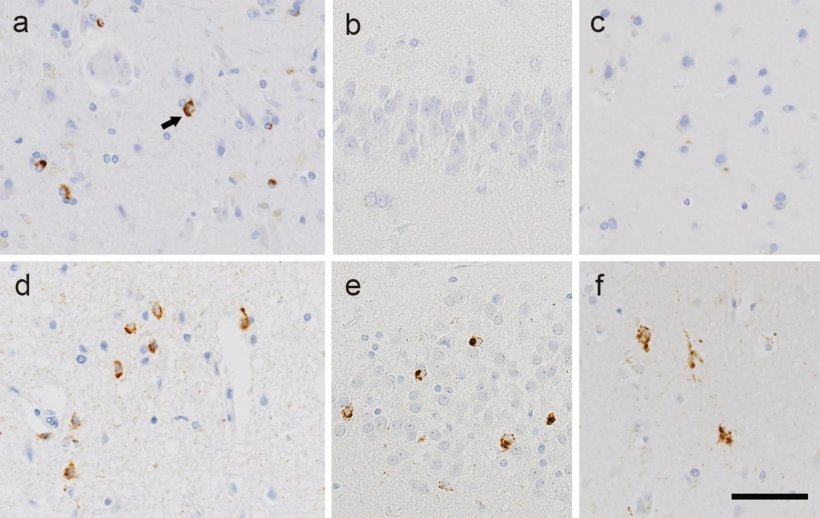
ALS is a progressive neurodegenerative disease that affects motor neurons, the nerve cells that control movement, speech, swallowing, and breathing. In most patients with ALS, an abnormal form of a protein called phosphorylated TDP-43, or pTDP-43, accumulates inside neural cells in the brain and spinal cord. This protein pathology is considered one of the most important clues to understanding how ALS develops and progresses.
Our findings suggest that APOE ε4 may influence ALS pathology through mechanisms distinct from those involved in Alzheimer's disease
Tomohiko Ishihara
However, the spread of pTDP-43 pathology varies greatly from patient to patient. In some individuals, it remains largely restricted to motor-related regions. In others, it extends widely into areas such as the frontal and temporal lobes and the hippocampus, which are involved in cognition and behavior. Patients with more widespread pathology are more likely to develop cognitive impairment or dementia. Until now, the factors that determine these differences in pathological spread have remained unclear.
The Niigata University team focused on APOE ε4, a genetic variant widely known as a risk factor for Alzheimer's disease. Recent research has suggested that APOE ε4 may affect not only Alzheimer's-related proteins such as amyloid-β and tau, but also the accumulation and spread of abnormal proteins in other neurodegenerative diseases. The researchers therefore asked whether APOE ε4 might also be associated with the distribution of TDP-43 pathology in ALS.
To investigate this, the team analyzed genetic and neuropathological data from 145 autopsy-confirmed sporadic ALS cases. They classified ALS cases into two pathological subtypes:
- type 1, in which TDP-43 pathology is mainly limited to motor-related regions; and
- type 2, in which pathology extends more broadly to the frontotemporal lobes, hippocampus, and other brain regions.
They then examined the relationship between these pathological patterns and APOE ε4.
The results showed that patients carrying APOE ε4 were more likely to have widespread type 2 TDP-43 pathology. Specifically, 65.5% of APOE ε4 carriers had type 2 pathology, compared with 39.7% of non-carriers.
Importantly, further statistical analyses suggested that the effect of APOE ε4 on TDP-43 pathology was independent of Alzheimer's disease-related pathology, including amyloid-β and tau accumulation. Using structural equation modeling and machine learning approaches, the researchers also considered other factors such as age, disease duration, rare variants in ALS-related genes, and neuropathological findings.
"Our findings suggest that APOE ε4 may influence ALS pathology through mechanisms distinct from those involved in Alzheimer's disease," said Dr. Tomohiko Ishihara, corresponding author of the study. "This provides a new perspective on why ALS pathology spreads differently among patients."
The study highlights the importance of viewing ALS not as a single uniform disease, but as a condition with biologically distinct subtypes shaped by both pathology and genetic background. In the future, information about APOE genotype may help clinicians better anticipate cognitive changes, plan the timing of cognitive assessments, discuss treatment choices such as ventilatory support, and prepare communication support tailored to each patient.
Although further studies are needed to confirm these findings and clarify the underlying mechanisms, this discovery offers a new clue toward personalized medicine in ALS and the development of treatments based on disease subtype.
Source: Niigata University
22.05.2026