

Article • Advancing risk stratification
AI in breast cancer screening: From mammograms to personalised risk prediction
Artificial intelligence is reshaping how clinicians identify women at higher risk of breast cancer – and may soon guide decisions on supplemental screening and treatment. At the European Society of Breast Imaging (EUSOBI) annual scientific meeting, held in cooperation with the British Society of Breast Radiology in Aberdeen, Scotland, two experts presented their latest findings on AI-driven risk stratification and response prediction.
By Mark Nicholls

Image source: Karolinska Institutet
Epidemiologist Mikael Eriksson, PhD, from Karolinska Institutet in Stockholm explained that traditional risk models have been around for a number of years and are good for calibration in that they identify the correct risk classes. However, he noted significant disadvantages, namely their low uptake in the screening population, strong focus on family history rather than general and lifetime risk, and limited suitability for those developing interval cancers. 'As a result,' he said, 'they are not suitable for those developing interval cancers, have differential performances in ethnic subgroups, are difficult in practical terms to collect in the clinical settings and can record bias, meaning many risk assessments are performed with incomplete information.'
Expanding risk assessment beyond primary prevention
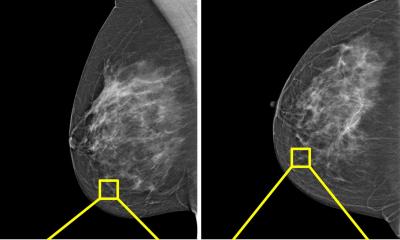
Eriksson outlined work at his institution to expand risk assessment beyond primary prevention initiatives. 'We want to assess risk in a narrow clinical timeframe to identify women who could benefit from supplemental screening, or shorter screening intervals, and at the same time reduce false positive predictions,' he said. Using the mammogram infrastructure traditionally employed for breast cancer detection, the goal is to develop a basis for risk prediction and classification – with an outcome of supplemental screening or interval rates to highlight women that may have a worse prognosis and 'ultimately address reduction in breast cancer mortality.'
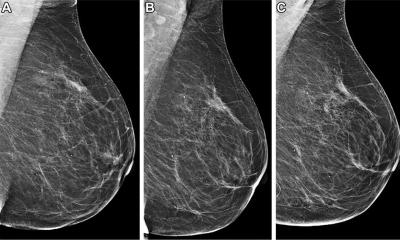
He gave an example of following women from 2014 who have a moderate risk and using AI tools which flagged a higher risk in 2016 – showing those women who could benefit from supplemental screening and may be clinically actionable, eventually with a diagnosis in 2021.
AI outperforms traditional models regardless of breast density
With 15–45% of breast cancers diagnosed as interval cancers, Eriksson said the narrow time-window could increase the chance of a cancer-finding, though with a few false-positive recalls. He explained that the AI model can identify high risk, regardless of mammographic density, and determine what the follow-up intervals should be – and consistently perform better than traditional risk models.1
While there are confounding factors, with 'detective work' needed to find those confounders to improve AI-risk model performance, an increasing number of AI models are being validated in several screening settings with 'very promising results.' 2, 3
Clinical trials needed to establish guidelines
With a clinical trial using AI risk models to identify women for supplemental screening, Eriksson said the key will be identifying how many will be at high risk and what is the reduction of interval and advanced cancers – but also factoring in the psychological effect that can come from risk assessments and how it affects women and screening attendance.
In summary, Eriksson said: 'It is really excellent to use cancer screening infrastructure for risk assessment and we are trying to target actionable tumours that could have benefit for earlier detection and care. AI models are better than traditional models for using density alone for precision screening but we are still lacking clinical guidelines so this can go out to broader clinical use; that is a key next step to see the future potential that breast cancer screening.'
AI for response prediction remains work in progress
Dr Ritse Mann from Radboud University Medical Center in the Netherlands examined the role of AI for response prediction and diagnosis. He said that AI using images may improve pCR (pathologic complete response) prediction over prediction based on clinical features alone – 'but the effect is modest.'
He further suggested that AI may aid in selection of less toxic therapeutic regimens for patients, though while acknowledging that presents a 'golden opportunity', he noted that very few studies have looked into it. 'In the post-treatment setting, AI might help us to identify patients that do not need surgery and potentially those that do not need radiotherapy. It may also select high-risk populations with poorer prognosis for further intervention.'
However, he concluded: 'Everything here is very much work in progress.'
Profiles:
Mikael Eriksson, PhD, is an epidemiologist and Assistant Professor in the Department of Medical Epidemiology and Biostatistics at Karolinska Institutet, Sweden. Driven by improving mammography screening to reduce breast cancer mortality, he specialises in developing individualised risk assessment techniques for identifying women who have suboptimal benefit from screening.
Dr Ritse Mann is a breast and interventional radiologist at Radboud University Medical Center in Nijmegen and the Netherlands Cancer Institute in Amsterdam, where he leads clinical breast imaging research. His research focuses on the evaluation and implementation of novel breast imaging techniques, including AI applications. He is an executive board member of the European Society of Breast Imaging (EUSOBI) and chairs its scientific committee.
References:
- Eriksson M, Destounis S, Czene K et al.: A risk model for digital breast tomosynthesis to predict breast cancer and guide clinical care, Science Translational Medicine 2022
- Eriksson M, Czene K, Vachon C et al.: Long-Term Performance of an Image-Based Short-Term Risk Model for Breast Cancer; Journal of Clinical Oncology 2023
- Yala A, Mikhael PG, Strand F et al.: Multi-Institutional Validation of a Mammography-Based Breast Cancer Risk Model; Journal of Clinical Oncology 2022
16.12.2025