

© Empa
News • Oncology
Nanozymes take on brain tumours from the inside
A team from Empa and HOCH Health Ostschweiz is developing nanomaterials that can be applied directly during surgery to attack cancer cells in the brain.
Near-infrared light activates nano-medication
Brain tumours cannot always be successfully treated with conventional therapies. A team from Empa and the hospital network HOCH Health Ostschweiz is therefore developing nanozymes that can attack cancer cells directly in the brain during tumour surgery. The project can now be started thanks to the generous support of several foundations.
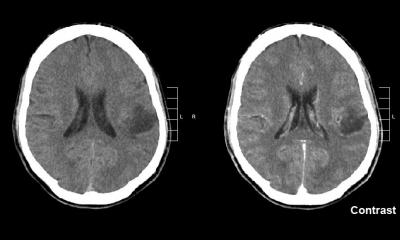
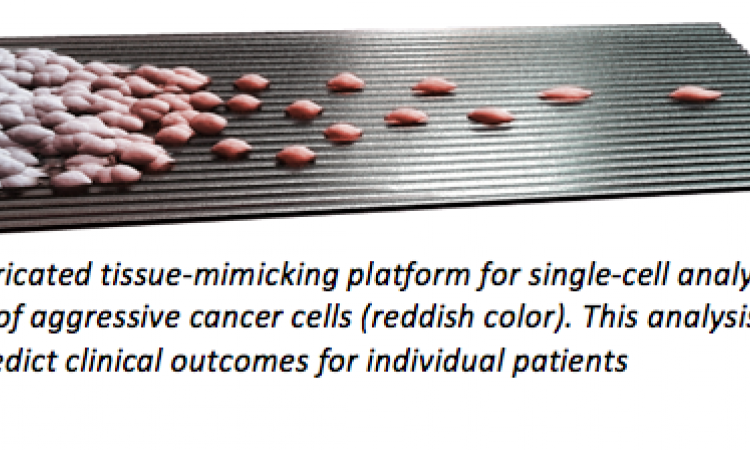
Among malignant brain tumours, astrocytoma is particularly common and equally dangerous: Surgical removal of this aggressively growing tumour can be difficult because the cells invade the healthy surrounding tissue. Moreover, in seven out of ten cases, the cancer returns after treatment, and the prognosis is correspondingly poor. The five-year survival rate is only about five percent. Now, a team from Empa and the hospital network HOCH Health Ostschweiz in St. Gallen led by neurosurgeon Isabel Hostettler wants to improve the chances of curing this type of tumour with a novel and gentler therapeutic approach based on so-called nanozymes. The project is being carried out thanks to the generous support by the Hedy Glor-Meyer Foundation, the Swiss Cancer Foundation, and four other foundations.
Bypassing the blood-brain barrier
Currently, surgery, radiation, and chemotherapy are combined to treat astrocytomas. However, the location of the tumour – the brain – poses a problem, particularly for drug therapy. This is because the body's own protective mechanism, the blood-brain barrier, which protects the organ from harmful influences from the bloodstream, also prevents certain therapeutics from gaining access to the brain.
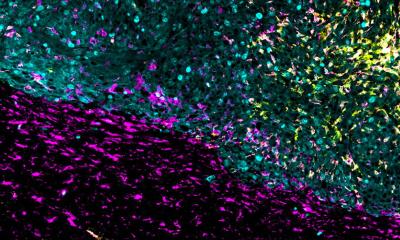
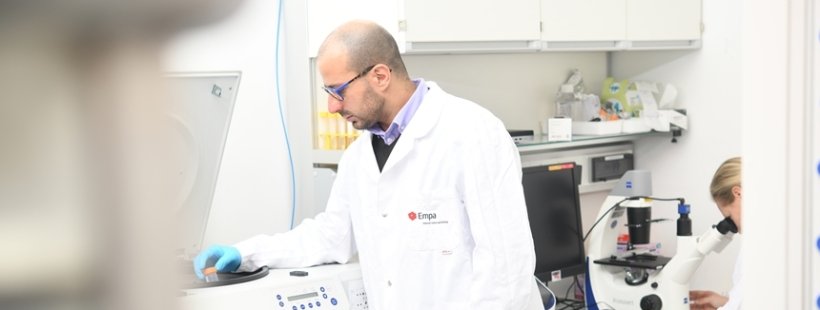
Empa researcher Giacomo Reina and his team from the Nanomaterials in Health laboratory in St. Gallen now want to circumvent this barrier with a clever approach: They are developing biocompatible nanomaterials acting as nanomedicine that can be used directly on-site during brain tumour surgery. "Since cancer cells have a particularly active metabolism, the drugs specifically accumulate in the tumour tissue," says Reina. Another advantage is that the nanozymes can be activated with near-infrared light for a particularly precise, controllable effect.
Gentle but powerful
This novel therapy combines several mechanisms of action: Nanozymes, nanomaterials with enzyme-like activity, can, for instance, activate inactive precursors of drugs or generate reactive oxygen compounds that damage tumour cells. Their tiny size allows them to penetrate deep into the tissue and attack malignant cells several millimetres away. In addition, thanks to the ability to be activated by IR light, the dosage and thus the side effects of the therapy can be kept to a minimum.
The team is now ready to tackle its ambitious goals. At the end of the four-year project, the nanomedicine should be ready for clinical testing as a minimally invasive and low-impact add-on to existing therapies. The researchers have high hopes: "Nanozymes could possibly even prevent relapses in astrocytoma if the cancer has already become resistant to conventional chemotherapy," says Giacomo Reina. What's more, the approach also has promising potential for the treatment of other brain and spinal cord tumours.
Source: Empa
06.05.2026