

© s-motive – stock.adobe.com
News • Promising biomarker for GHB
New method extends detection window for date-rape drug
Marker could provide victims with answers, assist the police in investigations and strengthen legal safeguards more broadly
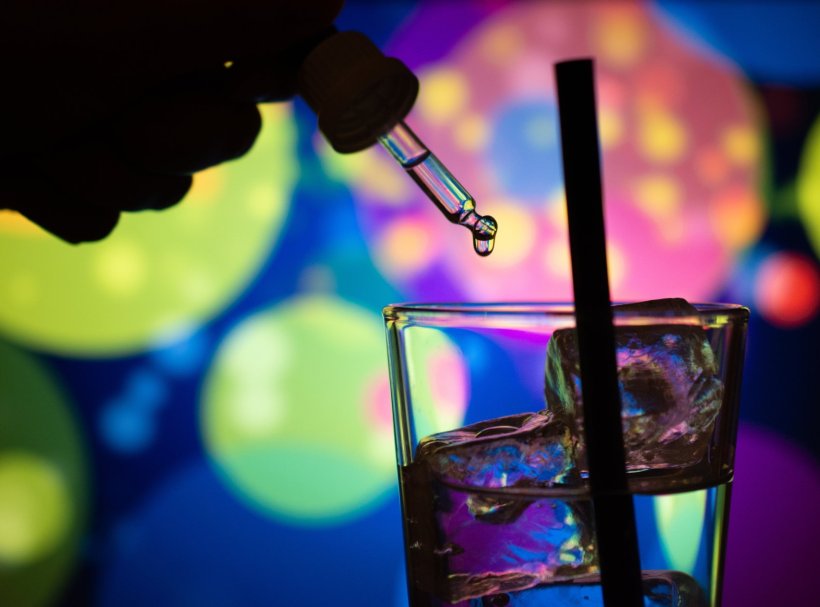
GHB (gamma-hydroxybutyrate) has long posed a major challenge for the criminal justice system. The substance is eliminated from the body so quickly that proving cases of drugging and drug-facilitated rape can be extremely difficult. Now, researchers at Aarhus University have made a crucial discovery.
A clear, tasteless liquid that causes drowsiness and memory loss and disappears from the body extremely quickly, GHB, also known as “G” and “fantasy”, has been virtually impossible to detect – until now. Researchers from the Department of Forensic Medicine at Aarhus University have identified a marker that can reveal GHB intake for up to 48 hours after ingestion. Until now, the detection window has been no more than 12 hours.
The study has just been published in the scientific journal Science Advances, and the findings could mark a paradigm shift for victims worldwide.
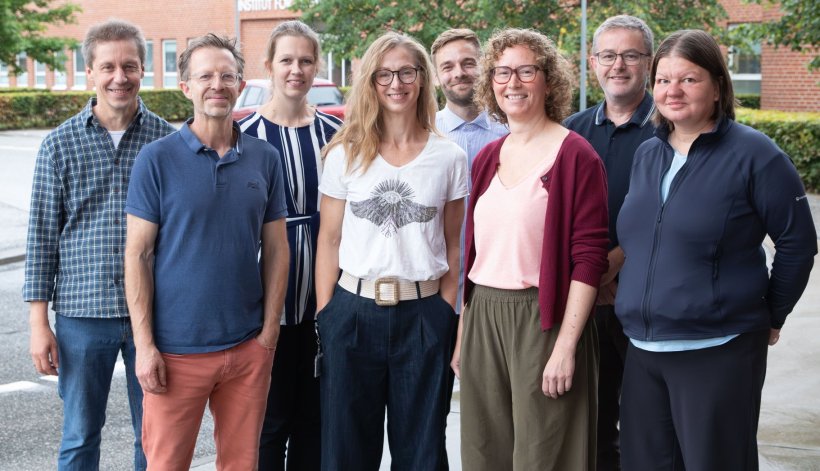
Image source: Aarhus University; photo: Simon Byrial Fischel
“We set out to solve a forensic challenge that has been known for 30 years – and remains highly relevant today,” says Charlotte Uggerhøj Andersen, consultant physician and clinical associate professor at the Department of Forensic Medicine.
GHB emerged as a recreational party drug in the 1990s, and it has probably been used for at least as long in drugging offences, including rape. Unlike most other illicit drugs, which can be detected in blood or urine for several days after ingestion, GHB has only been detectable in blood for a few hours and in urine for a maximum of 12 hours. This creates major challenges for the criminal justice system because blood and urine samples are rarely secured immediately after an offence. At the same time, victims are often left with uncertainty: Were they drugged, or had they simply consumed more alcohol than they could tolerate? That may now change, because the researchers have succeeded in identifying a molecule that can be detected in urine for up to 36 hours and in blood for up to 48 hours after GHB intake.
The substance has been like a ghost that we have been unable to catch
Jørgen Bo Hasselstrøm
The study began in 2023, and the breakthrough is the result of collaboration across several disciplines at Aarhus University, involving physicians, forensic chemists, and researchers in synthetic chemistry and metabolomics from the Department of Forensic Medicine and colleagues from the Department of Chemistry. In a clinical trial, 30 participants received either GHB or a placebo, after which the researchers began searching for relevant markers in both blood and urine. “You could say that we went fishing for differences between the two groups of participants,” explains Associate Professor Kirstine Lykke Nielsen.
The experiments confirmed that a previously unidentified molecule was present in higher concentrations in people who had taken GHB. Even more importantly, the molecule remained in the body significantly longer than GHB itself.
Through extensive scientific detective work, the research team developed a proposed chemical structure for the molecule. A central assumption was that GHB formed part of the new molecule. If so, the molecule could be directly linked to GHB intake. The decisive confirmation came when chemists from the Department of Chemistry synthesised the molecule and demonstrated that it was identical to the unknown substance identified in the clinical study. The molecule was also found in authentic samples collected by the police from drivers who were under the influence of GHB. This supports the biomarker’s potential value in forensic practice. The researchers have named the molecule GHB Beta Ribose, and work is now beginning to make the discovery applicable in the criminal justice system.
The publication of the study represents both a professional and personal culmination for many of the researchers involved, because the findings have the potential to strengthen legal safeguards in serious cases – both in Denmark and internationally. “The substance has been like a ghost that we have been unable to catch. We know it exists in society, we see it in blood samples from drivers, and hospitals encounter it in poisoning cases. We simply do not know very much about where and how it is being used,” says Senior Researcher Jørgen Bo Hasselstrøm, one of the initiators of the study. “But now that we know the structure of the molecule and can distribute the reference standard, colleagues around the world may eventually be able to implement the method in their laboratories and offer victims testing even when a day or more has passed. This could provide victims with answers, assist the police in investigations and strengthen legal safeguards more broadly. At the same time, it could give us better knowledge about the prevalence and use of the drug,” he says.
Before the method can be used in the criminal justice system, further validation is required. Among other things, the researchers are now investigating whether certain diseases or alcohol consumption affect the levels of the biomarker in biological samples.
Source: Aarhus University
29.11.2026