© Anatomy Insider – stock.adobe.com
News • "Second pair of eyes" for endoscopists
Colorectal cancer: AI-assisted colonoscopy improves adenoma detection
Colorectal cancer has long been the most commonly diagnosed cancer in Taiwan. Early detection and removal of precancerous adenomas remain the most effective strategy for preventing colorectal cancer.
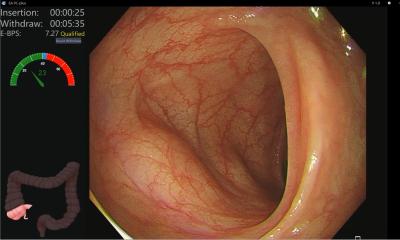
National Taiwan University Hospital (NTUH) recently led a multicenter randomized clinical trial demonstrating that real-time artificial intelligence (AI)-assisted colonoscopy significantly improves adenoma detection among individuals with positive fecal immunochemical test (FIT) results, a population at high risk for colorectal cancer. Even in high-volume medical centers where colonoscopy quality is already well above international benchmarks, AI further enhanced diagnostic performance, highlighting its clinical value in cancer screening. The study was published in the journal JAMA Network Open, and represents a major achievement of NTUH's AI Impact Research Center, one of the Ministry of Health and Welfare's three National Smart Healthcare Centers.
Among individuals with positive FIT results, identifying even one additional adenoma represents an opportunity to interrupt the progression to colorectal cancer
Han-Mo Chiu
The study was conducted collaboratively by National Taiwan University Hospital, Fu Jen Catholic University Hospital, Changhua Christian Hospital, and Shin Kong Wu Ho-Su Memorial Hospital. Between 2022 and 2024, a total of 1,356 participants aged 40 to 79 years undergoing colonoscopy were randomly assigned to receive either AI-assisted real-time colonoscopy or conventional high-definition colonoscopy. All participating institutions are recognized as high-quality colonoscopy centers, with adenoma detection rates already exceeding internationally recommended quality standards, providing an ideal setting to evaluate the additional clinical benefit of AI in an established healthcare system.
Among participants with positive FIT results, the adenoma detection rate reached approximately 65% in the AI-assisted group, compared with 57% in the conventional colonoscopy group. Overall, the adenoma detection rate was 59% in the AI-assisted group versus 53% in the standard colonoscopy group, indicating that AI further improved adenoma detection performance. Importantly, the use of AI did not increase unnecessary removal of normal or non-neoplastic tissue. The proportion of non-neoplastic lesions resected remained nearly identical in both groups (approximately 4%), demonstrating that AI serves as a decision-support tool while clinical judgment continues to rest with the endoscopist.
The study also showed that AI-assisted colonoscopy identified a greater number of adenomas per examination while increasing the overall procedure time by less than one minute. No increase in serious adverse events was observed, supporting both the safety and clinical feasibility of incorporating AI into routine colonoscopic practice.
Further analysis revealed that AI primarily improved detection of adenomas smaller than 1 cm. Although these lesions are relatively small, patients with positive FIT results carry a higher likelihood of harboring advanced pathological changes even within diminutive adenomas. Therefore, earlier detection and removal of these lesions may play an important role in reducing the future risk of colorectal cancer.
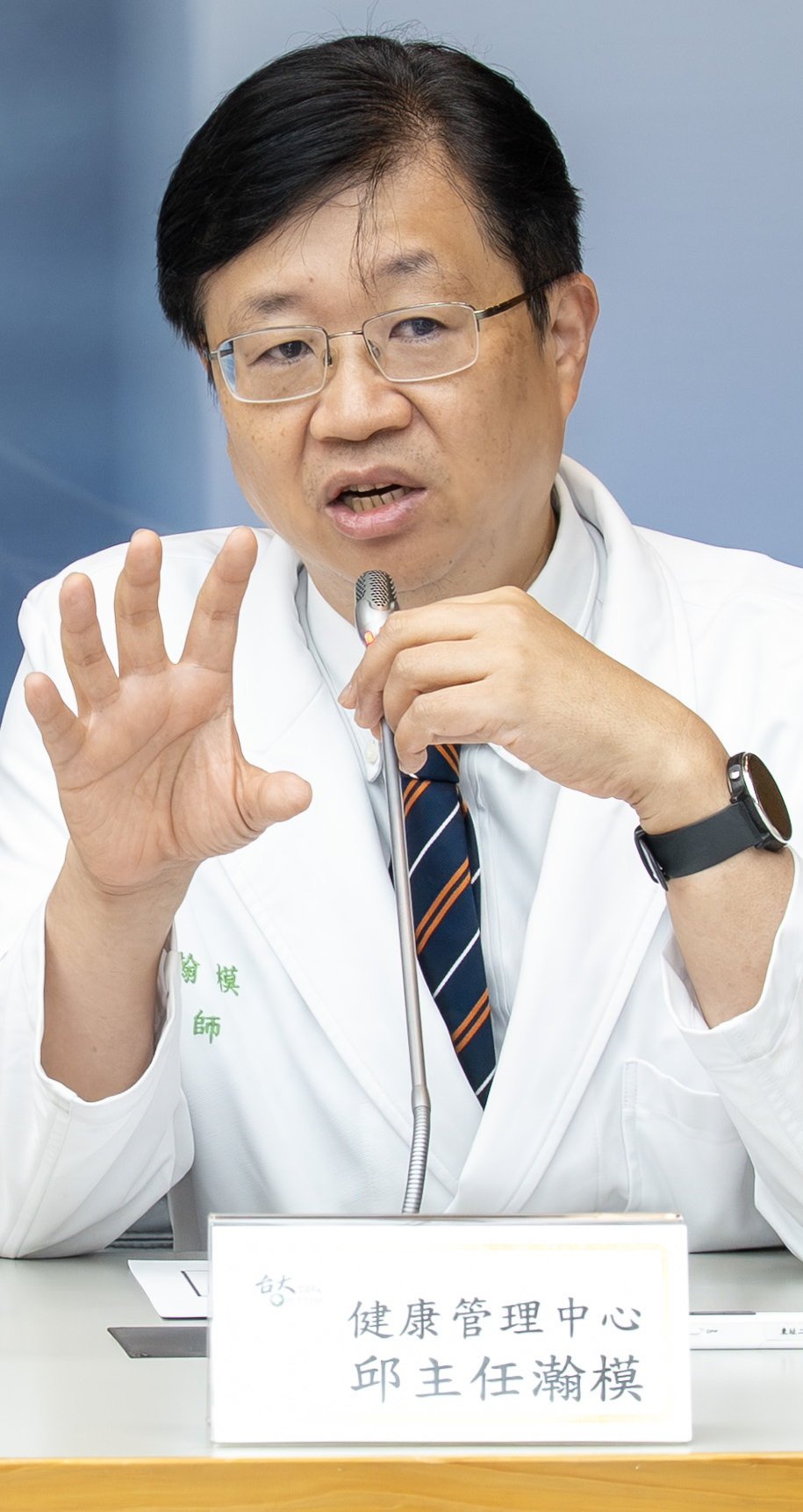
Image source: NTUH
Professor Han-Mo Chiu of the Department of Internal Medicine at NTUH, the corresponding author of the study, noted that the quality of colonoscopy plays a pivotal role in the early detection and removal of precancerous lesions.
"Among individuals with positive FIT results, identifying even one additional adenoma represents an opportunity to interrupt the progression to colorectal cancer," Professor Chiu said. "This study was intentionally conducted in medical centers where colonoscopy quality is already exceptionally high. The findings demonstrate that AI can further enhance detection performance even in experienced hands."
The study also found that AI provided greater benefit for less experienced endoscopists, helping improve adenoma detection rates and reduce variations in examination quality among physicians with different levels of experience. These findings suggest that AI has the potential to promote more consistent, high-quality colonoscopy across diverse clinical settings.
Professor Chiu emphasized that AI is designed to function as a clinical decision-support tool – a "second pair of eyes" for endoscopists – rather than a replacement for physician expertise. Future studies, including long-term clinical follow-up and health economic analyses, will further evaluate how AI can be optimally integrated into Taiwan's colorectal cancer screening program.
As one of the Ministry of Health and Welfare's three National Smart Healthcare Centers, NTUH's AI Impact Research Center is committed to generating high-quality clinical evidence that supports the safe and effective implementation of artificial intelligence in healthcare. Through multidisciplinary collaboration and multicenter clinical research, the Center continues to evaluate the real-world impact of AI technologies across a wide range of clinical applications.
The publication of this study in JAMA Network Open not only highlights Taiwan's internationally recognized strengths in smart healthcare research, but also provides important scientific evidence supporting the integration of AI into colorectal cancer screening. Looking ahead, NTUH will continue to advance AI-enabled precision medicine and accelerate the translation of innovative technologies into clinical practice, with the goal of improving cancer screening quality, enhancing patient outcomes, and delivering safer, more effective healthcare.
Source: National Taiwan University Hospital
08.07.2026