


AED - with spoken BLS instructions
For those without practised skills in using automatic external defibrillation (AED) and basic life support procedures, the prospect of coping with a case of sudden cardiac arrest is awesome.
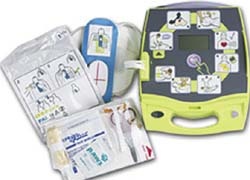
However, equipment called AED Plus, which incorporates a CPR feed back system and pre-connected electrode, guides users through the resuscitation process visually and verbally - giving vocal prompts such as ‘push harder’ or ‘good compression’ - while its adaptive metronome leads the user to the recommended 100 compression per minute rate.
Zoll, the manufacturer of AED Plus reports that a resuscitation study has confirmed that an audio-feed back system can improve the patient’s chances of survival. One of the parameters in this study was the depth of chest compressions. Nurses guided by voice prompts, which indicated the correct compression depth, showed a significantly better outcome from basic life support (BLS) skills.
01.07.2003
More on the subject: