
News • Prostate Cancer
Predicting and Preventing Prostate Cancer Spread
University of Adelaide researchers have uncovered a new pathway which regulates the spread of prostate cancer around the body.



University of Adelaide researchers have uncovered a new pathway which regulates the spread of prostate cancer around the body.
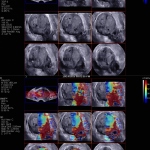
The prostate remains the only organ where random biopsies are performed to find cancer, notes Jean-Michel Correas MD PhD, from the Necker University Hospital in Paris. If we proposed this approach to a woman to search for breast cancer, it would be outrageous, he said.
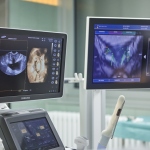
In mid-2015 the second generation of the ultrasound system H60 and the Urostation Touch was launched. At the Urology Department of the Hospital Fürth in Fürth, Germany the H60 and Urostation Touch are already being successfully used with 4 to 5 patients a week for prostate diagnostics.

One in six men will develop prostate cancer. It is the second leading cause of cancer death amongst men in both the US and the EU. Definite diagnosis at an early stage is vital for survival and early treatment minimizes the risk of adverse effects, such as incontinence, erectile dysfunction, or impotence. While there is no preventive screening there is a ray of hope. Prof. Jelle Barentsz,…

What you see is what you get - unfortunately, this doesn’t always apply in cancer imaging. Why is it that something which looks conspicuous on an image later turns out not to be a tumour? Why, on the other hand, are things overlooked that later turn out to be cancer? Pathological findings are extremely important to help improve diagnostic precision in radiology. Both disciplines therefore…

Pathology is the gold standard of prostate diagnostics. Whilst the radiologist makes interpretations based on shadows and grey scale values visible on an image, the pathologist has the ‘fait accompli’ under the microscope. Professor Glen Kristiansen, Director at the Institute for Pathology at the University Hospital Bonn, explains why image-guided biopsies also make sense from the…

Prostate cancer (PCa) is not only one of the most common, but also one of the deadliest types of cancer in men. Diagnostics are correspondingly sophisticated, from imaging via ultrasound or MRI to various biopsy techniques – often even in combination. Keep reading for current developments in early detection, staging, therapy and research.