

© Alessandro Grandini – stock.adobe.com
News • Promising procedure
Testicular tissue transplant offers fertility hope
New procedure seen as important step forward for young people whose future fertility may be affected by treatment for cancer and other serious illnesses
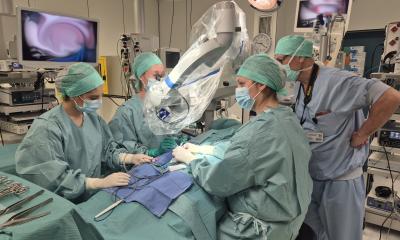
Doctors in Edinburgh have performed a pioneering procedure to transplant a young man's testicular tissue that was frozen before he underwent chemotherapy, in a potential breakthrough for male fertility preservation. The trial procedure, carried out by NHS Lothian and underpinned by a decade’s worth of research from the University of Edinburgh, is the first of its kind in the UK and only the second reported worldwide.
The 19-year-old student, who wishes to remain anonymous, had testicular tissue removed and frozen in 2023 before undergoing a bone marrow transplant to treat a serious blood disorder. Three years after his treatment, tests showed that the patient had no sperm in his semen. In August 2026, doctors transplanted some of his previously frozen testicular tissue back into his body in the hope that it will begin to produce sperm. He has recovered well following the procedure and will now be closely monitored. After eight months, some of the transplanted tissue will be removed and examined to determine whether sperm have been produced.
This is a big step towards helping boys facing treatments that damage their fertility to have children of their own
Rod Mitchell
The procedure could eventually offer a way for boys who have had testicular tissue preserved before undergoing sterilising cancer treatment to have children.
Semen freezing is an established fertility preservation option for adolescent and adult males, but it is not available to prepubertal boys because they do not yet produce sperm. As a result, there is currently no established clinical method to restore fertility in boys who face treatments that can cause permanent infertility.
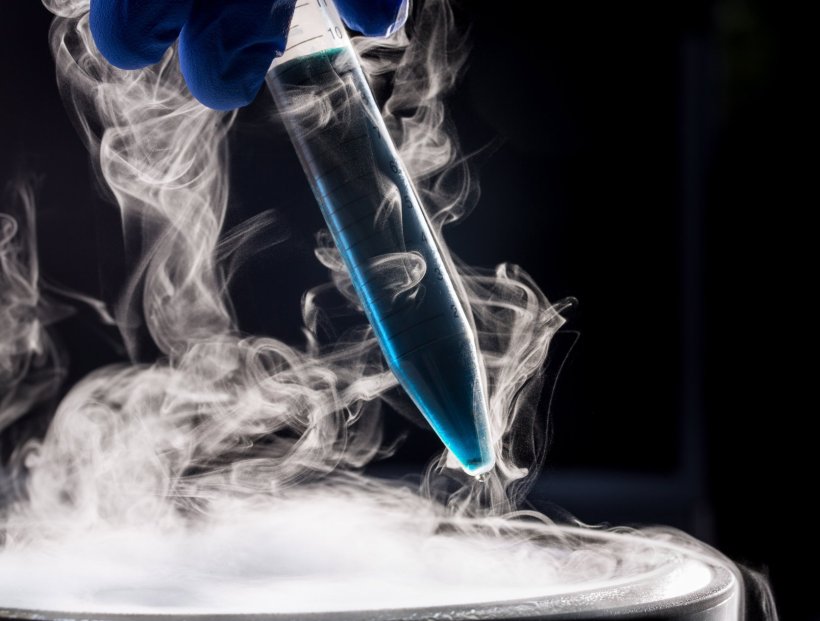
Researchers at the University of Edinburgh have spent more than 10 years developing a clinical research programme to preserve testicular tissue from boys before they undergo potentially sterilising treatment. The tissue contains spermatogonial stem cells, which are responsible for producing sperm from puberty onwards. By freezing the tissue before treatment, doctors hope that it can later be transplanted back into the patient and allow sperm production.
"This is a big step towards helping boys facing treatments that damage their fertility to have children of their own," says study lead Rod Mitchell, Professor of Developmental Endocrinology at the University of Edinburgh’s Institute for Regeneration and Repair. "Ten years ago, we started our research programme to freeze and store pieces of testicle from boys before they start chemotherapy, to preserve their fertility. We are beginning to see some of these young men return to explore their fertility options. This study offers real hope for future fertility in boys facing cancer treatment."
The Edinburgh testicular project was established with funding from Children with Cancer UK in 2015 and has since grown into a national programme. In 2024, the charity provided further funding to support the transplantation study. More than 1,200 patients in the UK and 3,100 worldwide have now had testicular tissue stored for potential future clinical use.
The Edinburgh procedure follows research in non-human primates which showed that testicular tissue frozen before sterilising chemotherapy could be transplanted back successfully. Mature sperm produced by the transplanted tissue were subsequently used in assisted reproduction, resulting in a live birth. The approach was first demonstrated in a human patient in Belgium earlier this year, when testicular tissue frozen before puberty was successfully transplanted back and subsequently produced mature sperm.
Recommended article
News • World first procedure
Testicular tissue transplant provides hope for restoring fertility after chemotherapy
A premiere that brings hope for fertility restoration to men who underwent chemotherapy during childhood: Researchers reintroduced cryopreserved immature testicular tissue taken 16 years prior.
"This landmark procedure is an important step forward for young people whose future fertility may be affected by the treatment they need to overcome serious illness," says Tracey Gillies, Medical Director at NHS Lothian. "The collaboration between NHS clinicians and researchers at the University of Edinburgh highlights the strength of clinical research in Edinburgh and our shared commitment to improving outcomes for patients across Scotland. This is a significant piece of world-leading work, and we are grateful to the patient and his family for helping advance research that could transform care for others in the future."
Source: University of Edinburgh
13.10.2026