

News • Immune response to viral infection
Multiple sclerosis: how EBV can evoke nerve damage
Study provides new insight into long-suspected link
The immune system’s reaction to the common Epstein-Barr virus can ultimately damage the brain and contribute to multiple sclerosis (MS). This is shown by new research from Karolinska Institutet, published in Cell. The study provides new insight into the long-suspected link between Epstein-Barr virus (EBV) and MS.
Multiple sclerosis is a chronic inflammatory disease in which the immune system attacks the central nervous system and causes nerve damage. It has long been known that everyone who develops MS has had an infection with the Epstein-Barr virus (EBV) – a common virus that often infects young people, sometimes causing glandular fever but often without any obvious symptoms. Exactly how this virus contributes to MS has long been unclear.

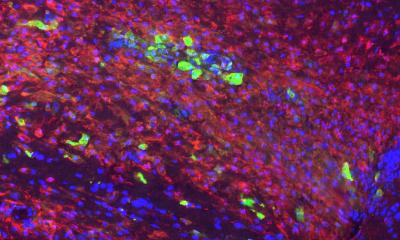
Image source: Karolinska Institutet; photo: Erik Holmgren
The new study shows that when the immune system fights EBV, certain T cells – which normally attack the virus – can also react to a protein in the brain called Anoctamin-2 (ANO2). This phenomenon is called molecular mimicry – immune cells mistaking the body's own proteins for those of the virus. The researchers found that these cross-reactive T cells are significantly more common in people with MS than in healthy controls. The study builds on previous research showing that misdirected antibodies after EBV infection may play a role.
"Our results provide mechanistic evidence that immune responses to EBV can directly damage the brain in MS. It is a complex neurological disease, and it may be that the molecular mechanisms vary between patients," says the study's first author, Olivia Thomas, assistant professor at the Department of Clinical Neuroscience at Karolinska Institutet.
The study is based on analyses of blood samples from people with MS and compared with healthy controls. The researchers were able to isolate T cells that react to both the EBV protein EBNA1 and ANO2 from people with MS. In addition, experiments in a mouse model showed that these cells can exacerbate MS-like symptoms and cause damage to the brain. According to the researchers, the results may help explain why some people develop MS after an EBV infection while others do not.

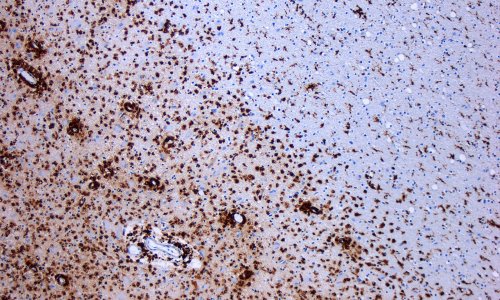
Image source: Karolinska Institutet; photo: Andreas Andersson
“The discovery opens up new treatments that target these cross-reactive immune cells. Since several EBV vaccines and antiviral drugs are now being tested in clinical trials, the results may be of great importance for future preventive and therapeutic efforts,” says Professor Tomas Olsson, who led the study together with Associate Professor Andre Ortlieb Guerreiro-Cacais at the same institution.
The study is a collaboration between several research groups at Karolinska Institutet and has been funded by, among others, the Swedish Research Council, the EU's Horizon program, the Swedish Brain Foundation, and the Swedish Neurological Association. Several of the article's authors have links to pharmaceutical companies; see the scientific article for a complete list of conflicts of interest.
Source: Karolinska Institutet
14.01.2026