

Sponsored • Digital Health
An echo reporting software developed by a cardiologist for all cardiologists
Addressing firsthand the growing complexity of echocardiography in clinical practice
Applying echocardiography guidelines in daily practice is still a manual and time-consuming process. Most importantly, it affects the quality of care provided to our patients. Cardiologists have to review hundreds of measurements and derived parameters, open the relevant guidelines in separate browser tabs, compare the required values with the specified cut-offs, and follow the guideline algorithms step by step to determine the diagnosis or severity grade.
Accurately diagnosing heart failure, aortic stenosis, mitral regurgitation, hypertrophic cardiomyopathy and many other conditions has never been more complex. Simultaneously, cardiologists are still expected to see more patients in less time. A newly CE-marked software could change that.
EchoRapp supports clinicians in automating measurements from echos imported by ultrasound devices, which are then fed into the software’s reporting layer. The software then extracts 350+ measurements from the echos and translates them into guideline-based reporting (e.g., EACVI, ASE). EchoRapp then provides a full-text report that can be exported to any electronic health record system.
But this is only the beginning: EchoRapp supports multiple clinicians to collaborate on the same echos, it educates junior fellows on how to apply guidelines in echo reporting, and it allows researchers to query measurements across their entire patient history.
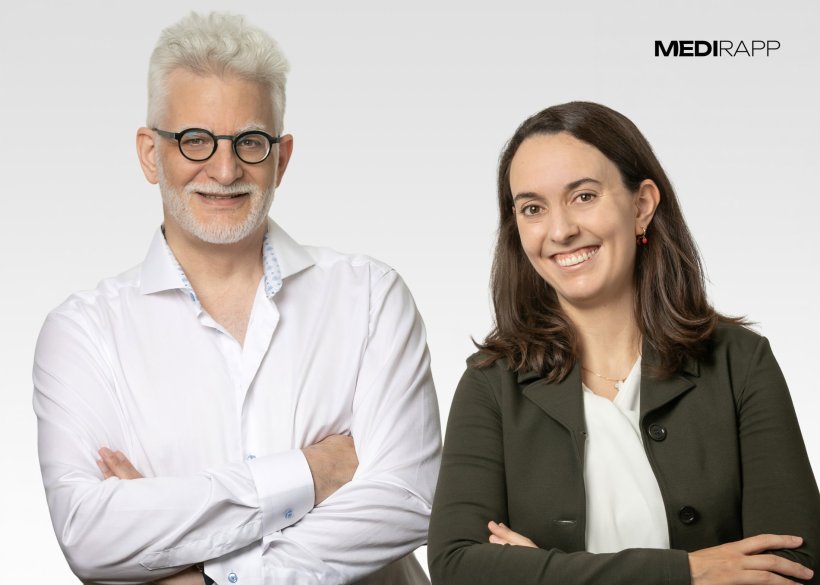
EchoRapp aims to make high-quality echocardiography accessible to all. This is the guiding mission of its founder, Dr. Schlomo Aschkenasy, a clinical cardiologist with his own cardiology practice in Zurich, Switzerland. He is also a software developer. Around 2014, he addressed the first major challenge in his practice. In his everyday work, he realised that manually copying data to create echo reports took up time that should have been spent interpreting measurements and arriving at a diagnosis. At this point, he created his first application that imported structural reports.
The second challenge came as echocardiography became more and more complex to perform in everyday practice. Cardiologists learned one day that mitral inflow alone wasn’t enough to understand the diastolic function anymore. This is when the guidelines were integrated into EchoRapp and shortly after that, imaging started. As AI opened up new possibilities in healthcare, it also brought new responsibilities around how the technology is developed and used. That is when Dr. Paola Daniore joined the company as its CEO, bringing with her a background in digital health epidemiology and responsible AI in healthcare. Together, Dr. Aschkenasy and Dr. Daniore have driven the focus of EchoRapp’s AI on its responsible use in practice.
What started as Dr. Aschkenasy’s personal helper in a “garage” has become a Class IIa CE-marked medical device, developed by a team of experts and ready to support clinicians in making complex decisions in echocardiography.
Explore EchoRapp at ESC in Munich, booth DH14, hall B2 on the Digital Health Stage, and see first hand how it supports clinicians in complex echocardiographic assessment, collaboration and reporting.
Reach out ahead of the conference if you’d like to connect write us an email info@medirapp.ai or send us a message on LinkedIn MediRapp AG
Source: MediRapp AG
28.08.2026